
Why Are the Cut Ends of My Bouquet Stems Turning Brown in the Vase?
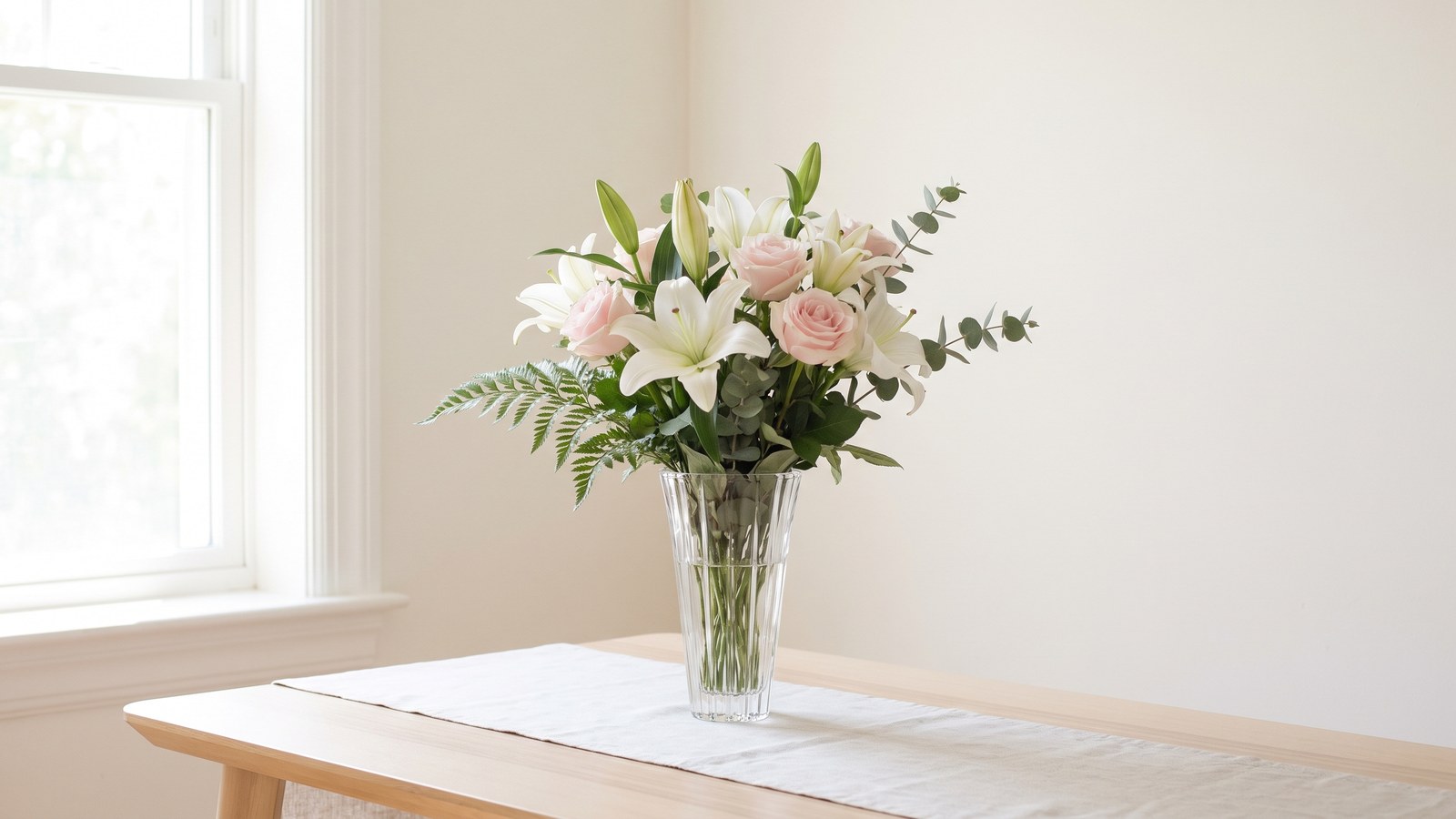
The cut ends of bouquet stems can turn brown as exposed tissue ages and oxidises, or as damaged tissue starts to decay in the water. A firm, slightly darkened end with clear water is less concerning than a soft, slimy end accompanied by cloudy water or an unpleasant smell. Check the texture, water and flower heads together before deciding whether the stems need a fresh cut.
At Pyat Tsvetov (5 Flowers), customers often ask whether brown stem ends mean their whole bouquet has gone bad. Colour alone cannot tell you how much useful vase life remains: flowers can still look fresh above a discoloured cut, while a green-looking stem may already be struggling to take up water. The useful distinction is between a small change at the exposed surface and deterioration extending into the stem.
Read the signs around the brown cut
Lift the bouquet out over the sink and examine several stems rather than judging through the vase. A thin brown rim or an evenly darkened cut can develop as exposed tissue changes after cutting, particularly on tougher stems. If the stem feels firm immediately above that surface and the flowers remain upright, the colour is not by itself a reason to discard it. Different flowers have different stem structures, so a mixed bouquet will not always age evenly.
Softness, a slippery coating, a sour smell or tissue that comes away under gentle pressure points more strongly towards decay. Cloudy water adds to the concern, although apparently clear water is not proof that everything is clean. Check for submerged leaves and loose plant fragments as well as the stem ends. These observations help you decide whether to refresh the whole vase or remove an individual deteriorating stem.
Why vase water and damaged stems matter
A vase contains plant material as well as water, and microorganisms can multiply there as the bouquet stands. Decaying leaves and damaged stem tissue add material that encourages this process. Contamination around the cut end can interfere with water uptake, so flowers may droop even when the vase still looks full. Our guide to cut stem vessel blockage explains why a supply of water does not always mean a stem can absorb it effectively.
Physical damage can make the same area deteriorate faster. A crushed end, a split caused by a blunt tool or a section bruised against the bottom of a vase deserves closer inspection. Brown tissue may also reflect the bouquet's age and handling before it reached your vase; its colour cannot establish when the damage occurred. Avoid diagnosing a particular infection from appearance alone, because several problems can produce similar signs.
Bouquets we can deliver




Clean the vase and make a fresh cut
If the ends feel slimy or the water is cloudy, take the flowers out and empty the vase completely. Wash the inside with washing-up liquid, reaching the base and any narrow corners with a suitable brush, then rinse thoroughly. Remove fallen petals and any leaves that would sit below the new waterline. Simply topping up dirty water leaves the existing residue in place, so it is not enough when there are signs of deterioration.
Use a clean, sharp blade or secateurs suited to the thickness of the stem, and cut above the discoloured or softened area into firm tissue. Inspect the new surface rather than relying on a fixed trimming length, since a shallow stain and a longer rotten section need different treatment. A modest angled cut is useful where practical, but avoiding crushing matters more than achieving a precise angle. Return the stems promptly to fresh water; see how to properly cut flower stems for more cutting guidance.
Add commercial cut-flower food if you have it, following the packet's dilution instructions for the actual volume of water. A stronger mixture is not a shortcut to recovery, and guessing the dose can create another problem. If you have no flower food, use clean water and give particular attention to vase hygiene. Do not combine household cleaners or improvise a mixture of sugar, bleach and other additives.
Decide which stems to keep and which to remove
Keep a stem if a fresh cut exposes firm tissue and enough length remains to arrange it securely in water. If the damaged section is longer, a shorter vase may let you retain a usable flower without leaving weak tissue at its base. Remove a stem if it remains mushy above successive cuts, is collapsing, or no longer has enough sound length to stand safely. Leaving a decaying stem among healthy ones adds deteriorating material to the shared water.
After cleaning and recutting, watch both the stems and the flowers over the following hours. Firmer foliage or a less drooping head can suggest that water uptake has improved, but a flower may not recover if it is already badly damaged or near the end of its vase life. Avoid repeated trimming merely because the new cut develops a little colour again. Compare each flower with its own earlier condition, and remember that bouquet vase life varies by flower type.
Prevent a small problem from returning
Check the water level every day, especially in a narrow vase where a small loss can leave some cut ends exposed. Keep all retained stem ends submerged while keeping leaves out of the water. Replace water promptly if it becomes cloudy, develops an odour or collects debris, and clean the vase when you do so. Follow any care instructions supplied with the flowers or flower food, since particular flowers and products can need different handling.
Place the arrangement away from radiators, direct sun and other sources of heat that accelerate water loss and ageing. Leave enough room in the vase to lift and inspect the stems without scraping or crushing them. When rearranging, remove loose foliage instead of pushing it down between the stems into the water. Never try to seal a brown end with glue or wax: the cut surface needs access to water, and covering it does not repair damaged tissue.
Help someone in Russia care for a delivered bouquet
When sending flowers from abroad, a brief care message can be more helpful than a complicated routine. Ask the recipient to use a clean vase, remove submerged leaves and check the water daily; if they later notice brown ends, ask about firmness, smell and wilting before advising a recut. We include a card with your text free of charge, so you can add a short practical note alongside your greeting. Delivery is anonymous by default: the courier does not name the sender, so sign the card if you want the recipient to know who sent it.
Pyat Tsvetov has operated since 2011 and has three own flower shops in Saint Petersburg; we deliver flowers across Russia. City delivery costs 500 RUB, while the operator confirms the price for remote districts and suburbs when confirming the order. Express delivery in large cities is available within 1–2 hours after order confirmation, and delivery in Saint Petersburg is around the clock. Consult delivery and payment information when planning the gift; online checkout uses CloudPayments, and customers abroad should check the payment options displayed there.
Frequently asked questions
Are brown stem ends always a sign of rot?
No. A firm cut surface can darken as exposed tissue ages, while softness, slime and an unpleasant smell are more concerning signs of decay.
Should I recut every stem if only one has turned brown?
Inspect each stem first and remove any soft or decaying material. If the shared water is cloudy or smells unpleasant, clean the vase and refresh the water for the whole bouquet.
Can I just add more water instead of changing it?
Topping up helps keep the ends submerged when the water is otherwise clean. It does not remove slime, debris or deteriorating plant material, so dirty water calls for a full change and a clean vase.
How much of a brown stem end should I cut off?
Cut above the affected area into firm tissue rather than choosing a fixed length. If that leaves the flower too short for the arrangement, use a smaller vase or remove the stem.
Will recutting save flowers that have already wilted?
It may help if reduced water uptake is the main problem and the remaining stem is sound. Flowers that are extensively decayed, damaged or naturally ageing may not recover after a fresh cut.
Ready to send a bouquet?
Pick a city, choose the flowers, and we will hand them over with a photo confirmation.
Choose a city →