
Which Bouquet Flowers Last the Longest: Answers From Our Shop Counter
Of the flowers that go into everyday bouquets, chrysanthemums, carnations, alstroemeria and cut orchids last the longest, usually two weeks and often closer to three with fresh water. Lisianthus (also sold as eustoma), spray roses, statice and greenery such as eucalyptus hold for ten days or more, while peonies, tulips, ranunculus and hydrangeas are the ones to enjoy within a week.
"Which bouquet will last longest" is one of the questions we hear most often in our three Saint Petersburg shops, where we have been making bouquets since 2011. The honest answer depends on the flowers, but also on the shape of the bouquet, the season and the flat it ends up in. Here is how we answer it at the counter, with the combinations we actually recommend.
The short answer we give at the counter
When a customer says the bouquet must still look good in two weeks, we reach for chrysanthemums first. Spray chrysanthemums, button varieties and large single heads hold 14-21 days because their dense petals open slowly and their firm stems resist bacteria in the water. Carnations come next at 14-20 days, and modern colours such as cream, coffee, dusty pink and deep burgundy make them look nothing like the stiff carnations many people remember from childhood.
Alstroemeria is our third choice, at 12-20 days. Each stem carries five or six buds that open one after another, so the bouquet looks fuller in its second week than on the day it arrived. Cymbidium and phalaenopsis orchids as cut flowers easily pass two weeks and suit a gift for someone who appreciates a restrained, elegant look. For a full ranking flower by flower, see our article which flowers last longest in a vase.
Combinations that stay fresh for two weeks
A single long-lasting variety is reliable, but most customers want something livelier, so we build mixes where every element has a similar vase life. A classic example is spray chrysanthemums, alstroemeria and eucalyptus: three textures, two weeks of freshness, nothing that fades early and drags the rest down. Another is carnations with lisianthus and pistachio leaves, which gives a soft, romantic bouquet that lasts 10-14 days.
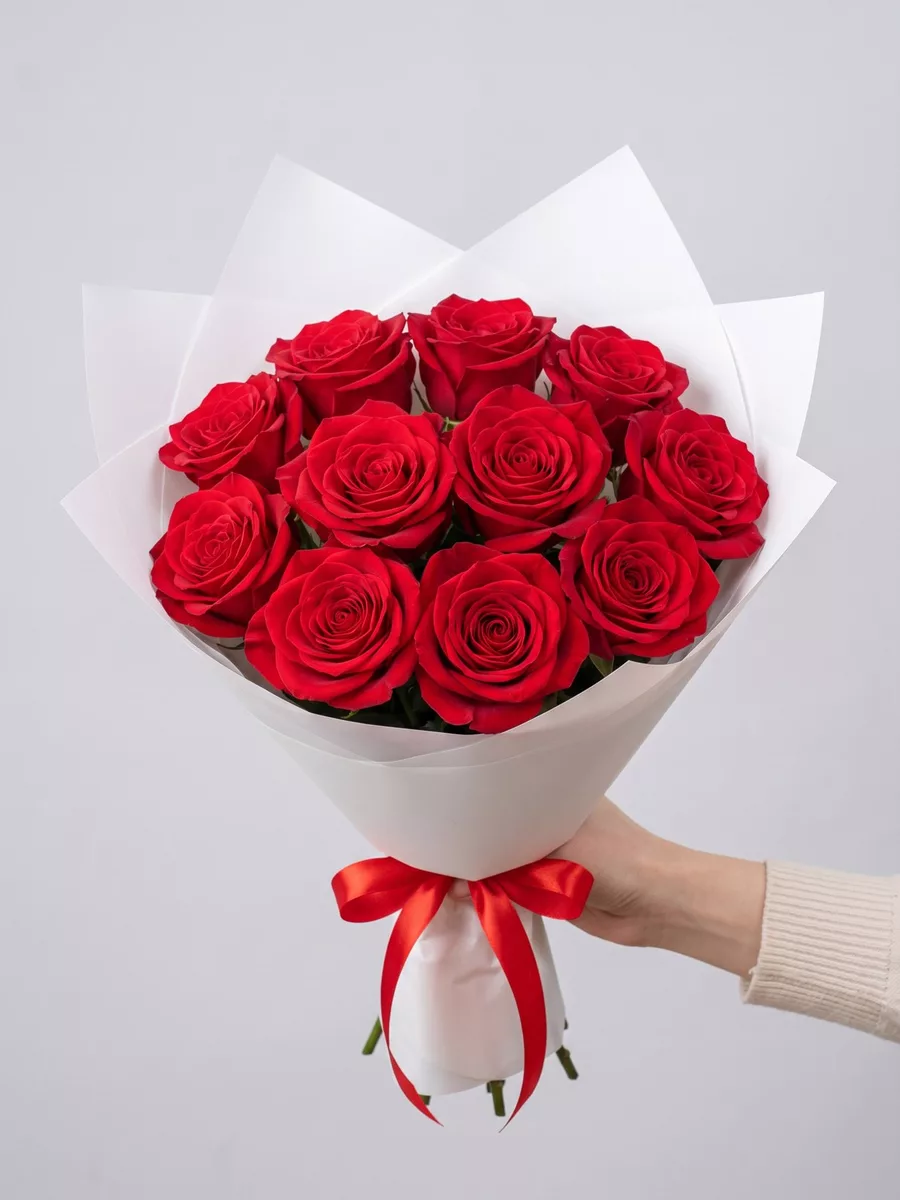
Roses are the most requested flower, and customers often ask whether they can last. Spray roses give 8-12 days and usually outlast large single-headed roses, which manage 7-10 days. If roses are a must, we pair them with long-lasting partners, so when the roses are taken out, the remaining chrysanthemums and greenery still make a complete arrangement in a smaller vase.
Statice and limonium deserve a special mention. They stay fresh for about two weeks and then dry on the stem while keeping their colour, so they are often the last thing left in the vase, sometimes months later.
Greenery quietly decides how long a bouquet looks finished. Eucalyptus, ruscus, pistachio and salal leaves stay fresh for 10-14 days or more, often outliving the flowers they frame. A bouquet with generous long-lasting greenery can be refreshed simply by removing the faded flowers and regrouping what is left, which customers who ask us for a two-week bouquet appreciate a lot.
Bouquets we can deliver



Flowers we warn customers about
Peonies are the most loved flower in early summer, and we always explain that they live 5-7 days once open. Bought in tight bud they give a little longer, and watching them open is half the pleasure, but they are not a two-week gift. Tulips last 5-8 days and keep growing in the vase, bending and stretching towards the light, which some people love and others find untidy.
Hydrangeas look spectacular but drink enormous amounts of water through their heads as well as their stems, and they can collapse in a warm room within a day. Ranunculus, anemones and sweet peas rarely pass a week. We still recommend all of these for the right moment, such as peonies for a June birthday or tulips for 8 March, but we tell customers clearly what to expect, and for longer life we add chrysanthemums or alstroemeria as a base.
What shortens vase life in a Russian flat
The most common reason a good bouquet fades early is heat. From October to April central heating in Saint Petersburg flats runs hot, and a vase placed on a windowsill above a radiator can lose half its life. A cool spot away from radiators, direct sun and the kitchen gives flowers several extra days; our article on where to place a vase so flowers last longer goes through each room.
The second reason is the fruit bowl. Apples, bananas and pears release ethylene, a gas that makes carnations, alstroemeria and orchids age fast. The third is dirty water: leaves left below the water line rot within a day or two and bacteria block the stems. Strip those leaves, use a clean vase and change the water every one to two days.
Each time you change the water, cut 2-3 cm off the stems at an angle with a sharp knife. Crushed or blunt cuts drink badly. Faded heads should come out at once, because they release ethylene that ages the flowers around them.
Season matters as much as variety
In winter, bouquets travel through frost, and the recipient should unwrap them in the hallway and let them warm up gradually rather than plunging them into hot water. Winter bouquets in a cool room often last longer than summer ones, because flowers age more slowly at lower temperatures. In summer the opposite happens: a bouquet in a sunny room at 26 degrees will not reach its potential, and a cooler bedroom overnight helps.
Some long-lasting flowers are at their best in particular months. Chrysanthemums and hypericum berries are excellent in autumn, alstroemeria and carnations are good all year, and orchids are a reliable choice in deep winter when garden-type flowers are scarce. For realistic day counts by season, see how long do flowers last in a vase.
Ordering a long-lasting bouquet to Saint Petersburg or elsewhere in Russia
We deliver flowers across Russia. In the bouquets catalogue look for compositions based on chrysanthemums, carnations, alstroemeria, lisianthus or orchids, or call us on 8 (812) 507-67-05 and ask for a bouquet that will last; we will suggest suitable options. City delivery costs 500 RUB, and for remote districts and suburbs the operator confirms the price when confirming the order.
In large cities express delivery takes 1-2 hours after the order is confirmed. You can also choose an exact time (plus or minus 30 minutes), a window of 09-12, 12-15, 15-18 or 18-21, or pre-order 1-30 days ahead. In Saint Petersburg delivery works around the clock. The courier calls the recipient about 15 minutes before arrival, and if nobody is home we agree a second delivery the same day or, with your consent, hand the flowers to a neighbour or concierge.
Delivery is anonymous by default, and a card with your text is free. Payment is online on the site by bank card, SBP or Yandex Pay, and foreign bank cards are accepted through Robokassa, which matters for customers ordering from abroad. We deliver bouquets across Russia in 1–2 hours.
Frequently asked questions
Which flower lasts longest in a bouquet?
Chrysanthemums usually last longest, often 14-21 days. Carnations, alstroemeria and cut orchids are close behind with about two weeks or more.
Do roses last as long as chrysanthemums?
No. Standard roses typically last 7-10 days and spray roses 8-12, while chrysanthemums can last up to three weeks with fresh water and trimmed stems.
Why did my bouquet fade in a few days?
The usual causes are a warm room or radiator, ripening fruit nearby and water that was not changed. Short-lived flowers such as peonies and tulips also fade sooner by nature.
Can I pay with a foreign card when ordering from abroad?
Yes, foreign bank cards are accepted on our site via Robokassa. You can also pay by Russian bank card, SBP or Yandex Pay.
How can I ask for a long-lasting bouquet?
Call us on 8 (812) 507-67-05 and say the bouquet should last as long as possible. We will suggest compositions built on chrysanthemums, carnations, alstroemeria or orchids.
Ready to send a bouquet?
Pick a city, choose the flowers, and we will hand them over with a photo confirmation.
Choose a city →