
Which vases work well for a single stem or a small bunch?
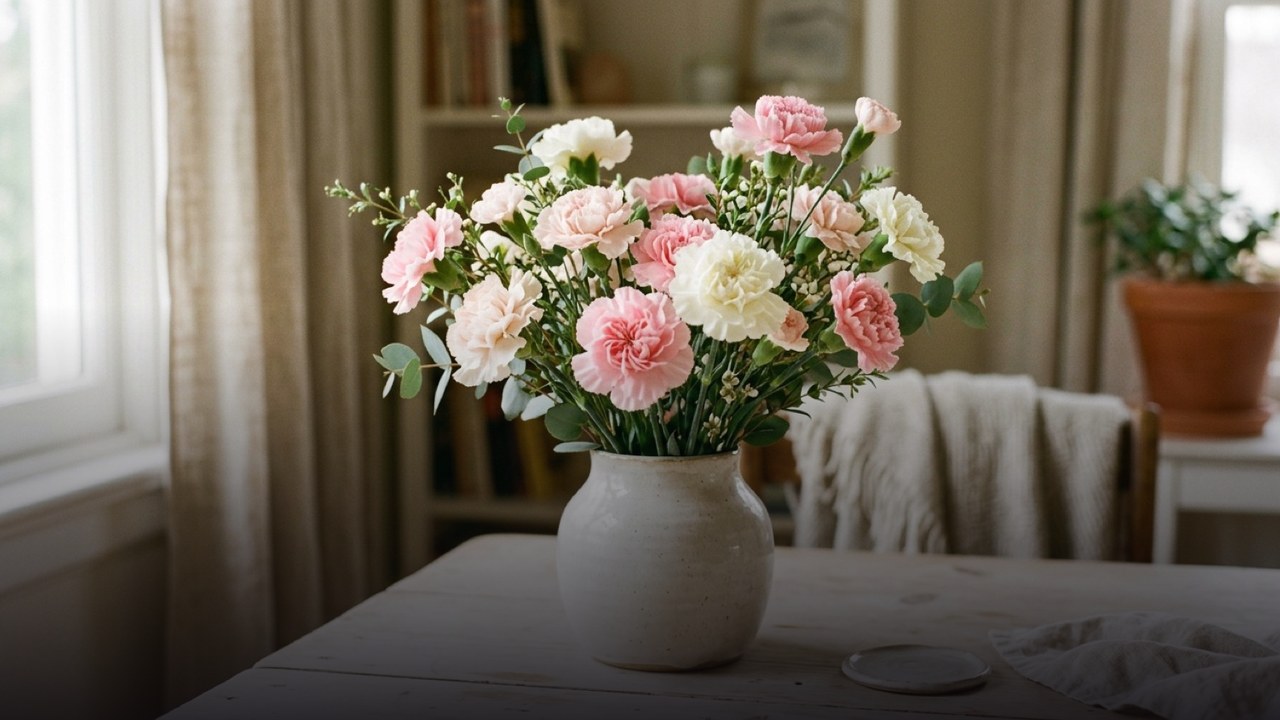
A narrow-necked bud vase works well for a single stem, while a small cylinder or a rounded vase with a gently narrowed opening suits a small bunch. Choose a vessel that supports the stems without squeezing them, holds enough water below the leaves and stays stable under the weight of the flowers.
Customers at Pyat Tsvetov (5 Flowers) often need a vase for just a few flowers on a desk, bedside table or kitchen shelf. The useful measurements are the vase height, its opening and its base: a decorative shape alone tells you little about how the flowers will sit. Our Saint Petersburg flower shops have been serving customers since 2011, and our practical starting point is simple: match the vessel to the stems you actually have.
For one flower, start with a bud vase
A bud vase has a relatively small opening that helps a single stem stand at an intentional angle instead of falling across the rim. A slim cylinder works for a straight stem, while a rounded body with a narrow neck gives more water capacity beneath the opening. Check that the stem slides in easily and can be removed without catching its leaves or damaging the flower.
Match the base to the flower head as well as the stem. A large rose or a branching stem can make a very light bottle unstable, particularly when the flower leans to one side. Choose a heavier base or a broader body, then place the filled vase on a level surface and check its balance before leaving it on a shelf.
A clean small bottle can serve the same purpose if its interior is accessible for washing and its mouth has no sharp edges. Avoid a neck so tight that you cannot see the water level or reach inside with a suitable brush. A vessel that looks delicate but is difficult to clean may be less useful than a plain, washable bud vase.
For a small bunch, choose controlled width
A small straight-sided cylinder is a useful choice when you want several stems to sit close together with their heads at slightly different heights. A rounded vase with a narrower opening encourages a loose fan while keeping the lower stems gathered. Start with an opening that supports the bunch naturally, without forcing you to pack extra foliage around it.
A wide bowl usually needs more stems or additional support to create a balanced arrangement. With only a few flowers, the stems can slide apart and leave the centre looking empty. If you already own a wide vase, try a smaller vessel first rather than cutting every stem short to make the bunch spread across the opening.
Leave enough space between stems to lift them out for fresh water and trimming. A bunch wedged tightly into a neck is awkward to maintain, and submerged leaves can be hard to spot. If the flowers have different stem thicknesses or branching habits, separate them into two small vases; our guide to a mixed bunch explains how different flowers work together.
Bouquets we can deliver




Judge height by support, weight and placement
As a starting point, let the whole arrangement stand roughly one and a half times the height of the vase, then adjust by eye. This is a design guide, not a rule: a heavy flower head may need a shorter stem, while a light branching stem can extend further. The rim should support the arrangement without pressing against petals or trapping leaves.
Hold the flowers beside the vase before making a cut. Remove a little length at a time, checking where the lowest leaves and flower heads will sit once the stems are inside. Our guide to cutting flower stems short helps you judge vase length before making an irreversible cut.
For a dining table or a desk, a low arrangement is often easier to live with because it leaves sightlines clear. On a narrow shelf, the base must fit fully on the surface, with no flowers leaning into a walkway. Keep any vase away from table edges and places where a sleeve, curtain or pet can catch an overhanging stem.
Choose a material you can keep clean
Clear glass lets you check the water level and notice cloudiness without lifting the arrangement. That is useful with a narrow vase, where a modest drop in water can leave a stem end exposed. Glass also makes the stems part of the display, so remove submerged foliage and keep the outside free of water marks.
Glazed ceramic gives a different look and hides the lower stems, but check that the vessel is watertight and intended to hold water. Unglazed pottery and decorative containers may leak or leave a damp ring beneath them. Test an unfamiliar vessel with water before arranging flowers, and protect furniture while you establish whether it is suitable.
Avoid using an unlined metal container unless it is intended for cut flowers, because its finish and suitability for prolonged water contact may be uncertain. An intact glass insert can make a decorative outer container easier to use and clean. Whichever material you choose, inspect the rim for chips and make sure the base does not wobble when filled.
Care for a small arrangement without overcrowding it
Wash the vase with detergent and rinse it thoroughly before adding fresh water. Remove every leaf that would sit below the waterline, and recut the stem ends with a clean, sharp tool before placing them in water. If you use commercial flower food, follow its dilution instructions rather than estimating a concentrated dose for a tiny vase.
Check the water daily, especially in a bud vase with little capacity. Top it up before the cut ends become exposed, and replace it promptly if it turns cloudy or develops an odour. When changing the water, wash the vase, rinse the stems gently and remove deteriorating leaves or flowers so they do not remain in the arrangement.
Place the flowers away from direct sun, radiators, heating vents and ripening fruit. A small bunch on a kitchen counter can be close to several of these without anyone noticing. If stems slump despite having water, inspect their condition and the vase support before adding more flowers; a narrower opening may solve a positioning problem, but it cannot restore a damaged stem.
Plan a small flower gift around the recipient's space
For a gift, consider where the recipient can put the flowers and whether they have a suitable vase. A single stem can suit a small desk, while a modest bunch needs enough space for its heads to open without touching nearby objects. If you do not know their preferences, keep the message personal and avoid treating a flower colour as a meaning everyone will interpret identically.
When ordering flowers to Russia, browse our bouquets catalogue and consider the arrangement's shape alongside the recipient's available space. We deliver across Russia; city delivery costs 500 RUB, while the operator confirms the cost for remote districts and suburbs when confirming the order. Online checkout uses CloudPayments, so check the payment options displayed there rather than assuming a particular foreign card will be accepted.
For timing, express delivery in large cities is available within 1–2 hours after order confirmation, alongside an exact time with a ±30-minute allowance or the windows 09–12, 12–15, 15–18 and 18–21. Orders can also be placed 1–30 days ahead, and delivery in Saint Petersburg operates around the clock. See delivery and payment for planning; delivery is anonymous by default, and a card with your text is free. For questions, call 8 (812) 507-67-05.
Frequently asked questions
What is the best vase for a single rose?
A narrow-necked bud vase with a stable base is a practical choice. Choose enough weight beneath the flower head, and shorten the stem gradually if the rose makes the vase lean.
Can I put a small bunch in a tall vase?
Yes, if the opening keeps the stems supported and the flower heads sit comfortably above the rim. If most of the flowers disappear inside or the stems fall apart, a shorter, narrower vase will usually work better.
Is glass better than ceramic for a few flowers?
Glass makes the water level and cleanliness easier to monitor. Glazed ceramic can work equally well if it is watertight, stable and easy to wash, but you will need to check the water inside.
How much water should a bud vase hold?
Add enough water to keep the cut stem ends comfortably submerged while leaving all foliage above the waterline. Check daily because a small vessel has little reserve, and follow any flower food instructions for the amount of water used.
Will the recipient get a call before flower delivery?
The courier calls the recipient about 15 minutes before arrival. If the recipient is absent, we agree a second delivery the same day or hand the flowers to a neighbour or concierge with the sender's consent.
Ready to send a bouquet?
Pick a city, choose the flowers, and we will hand them over with a photo confirmation.
Choose a city →