
Why Your Cut Lilies Are Dying in the Vase
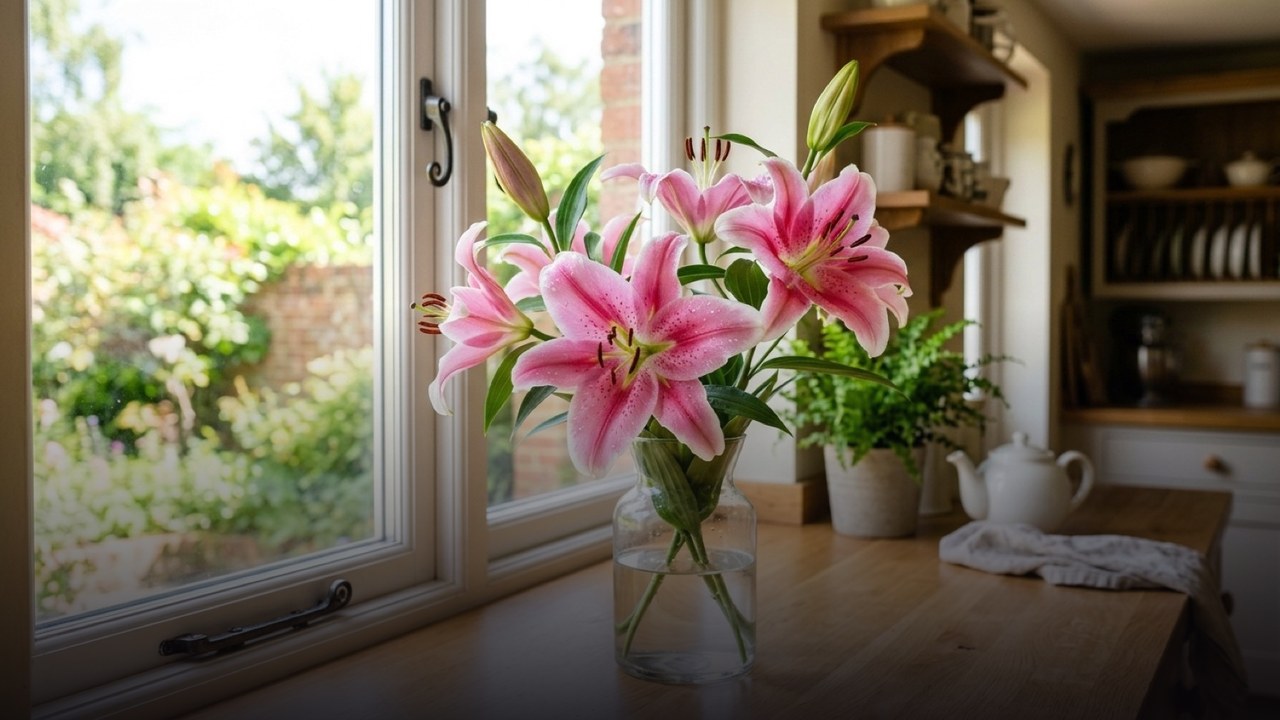
Lilies dying in a vase are usually struggling with poor water uptake, dirty water, heat or the natural ageing of individual flowers. Check the water level first, then clean the vase, recut the stems and move the bouquet away from direct sun and heating. Drooping flowers may recover if dehydration is the cause, but brown, translucent or dried petals will not become fresh again.
At Pyat Tsvetov (5 Flowers), customers often ask about a bouquet whose first lily has faded while the remaining buds are still closed. That can be normal: flowers on a cut lily stem open and age at different times, so one spent bloom does not mean the whole stem is dying. Our Saint Petersburg flower shops have been serving customers since 2011, and the most useful starting point is always the same: inspect the flowers, leaves, stems and water separately.
Read the symptoms before deciding the bouquet is lost
Soft, drooping flowers together with limp leaves suggest that the stem is not taking up enough water. An empty vase is an obvious cause, but cloudy water, a slimy stem base or leaves sitting below the waterline also point to a problem. A stem can be surrounded by water and still struggle to absorb it when its cut end is blocked or deteriorating. Check every stem individually, because one damaged stem may decline while the others remain firm.
Dry, curling edges on an older open flower usually indicate ageing or drying, especially beside a radiator or sunny window. Translucent, soft brown patches can indicate damaged or deteriorating tissue, so remove the affected bloom and inspect its neighbours. Yellow leaves alone do not identify the cause: their age, water condition and position on the stem all matter. If the remaining flowers are firm and the buds look healthy, preserve those parts instead of discarding the entire bouquet.
Give dehydrated lilies a clean start
Lift the stems out and wash the vase thoroughly with washing-up liquid, then rinse it well before adding fresh water. Remove every leaf that would sit below the waterline, along with loose petals or other debris. Using a clean, sharp blade or secateurs, cut roughly 1–2 cm from each stem base, or enough to remove a visibly damaged end. Return the stems to water promptly, leaving enough space between them to inspect their bases and change the water easily.
If the bouquet came with cut-flower food, mix it with the amount of water stated on the packet; a stronger solution is not a better rescue treatment. If you have no flower food, use clean water rather than guessing quantities of sugar, bleach or household remedies. Place the vase somewhere cool, away from direct sun, and reassess the flowers after several hours. Improvement supports dehydration as a cause, but repeated cutting will not repair a crushed stem or restore petals that have already deteriorated.
Bouquets we can deliver




Keep the water and position working in their favour
Check the water level daily, particularly when several flowers are opening at once, and keep all cut ends submerged. Replace the water regularly and immediately if it becomes cloudy or smells unpleasant; topping up dirty water leaves the underlying problem in place. Rinse the stems and clean the vase during a full water change, removing any soft or slimy material. Follow the flower-food instructions when preparing the replacement solution, rather than adding another dose to the old mixture.
Choose a position away from radiators, hot appliances, direct sunlight and air blowing straight from a heater or air conditioner. Keep lilies away from ripening fruit, which releases ethylene that can accelerate ageing in sensitive cut flowers. A comfortable room location is more practical than repeatedly moving the bouquet between sharply different conditions. Our guide to keeping lilies alive in a vase explains how to make these checks part of everyday care.
Understand closed buds, pollen and fading flowers
A closed bud is not necessarily a dying bud: lilies are often presented with a mixture of open flowers and developing buds. Firm buds showing colour are more encouraging than very small green buds, although appearance alone cannot guarantee that every bud will open. Brown, shrivelled buds or buds that soften and collapse are signs of deterioration. Give healthy buds clean water and suitable placement, but do not pull the petals apart or use hot water to force them open.
Remove individual flowers as they fade, taking care to leave the healthy buds and main stem intact. You can also gently remove the pollen-bearing anthers once a flower opens, before loose pollen marks the petals, furniture or clothing. This helps prevent stains; it does not reverse wilting or make an ageing flower young again. For differences between lily types, including fragrance and how a bouquet develops, see our guide to lily varieties and vase life.
Know when rescue is unlikely and when lilies are unsuitable
A stem that remains limp after fresh water and a clean recut may have damage farther up, particularly where it has been bent, pinched or crushed. Remove stems with a soft, rotting base that continues to deteriorate, and clean the vase before returning the healthy flowers. There is no reliable home treatment that restores dead tissue, and persistent bad water should not be accepted as part of keeping a bouquet. Judge progress by firm leaves and flowers, rather than expecting existing brown marks to disappear.
True lilies and daylilies are extremely toxic to cats, including their pollen and vase water. Removing the anthers or placing the vase on a high shelf does not make the bouquet safe for a household with cats; choose flowers known to be safe for that home instead. Suspected exposure needs immediate veterinary advice, even if the cat appears well. Calla lilies are botanically different and have their own toxicity concerns, so their shared name should not be treated as evidence that they are a safe alternative.
Plan a lily gift to Russia around the recipient
Before choosing lilies for someone in Russia, check whether they have cats and whether a strong floral scent would suit their home. For a dinner, bedside gift or small room, the recipient's comfort matters more than the symbolism of the flower. Allow for the fact that a bouquet with closed buds changes over time; do not assume every bloom will be open for a particular event. Browse our bouquets catalogue with those preferences in mind, and call 8 (812) 507-67-05 if you need to ask about your choice.
We deliver flowers across Russia: city delivery costs 500 RUB, while the operator confirms the price for remote districts and suburbs when confirming the order. Express delivery in large cities is available 1–2 hours after confirmation; other options include a specified time within ±30 minutes, the windows 09–12, 12–15, 15–18 or 18–21, and pre-ordering 1–30 days ahead. Delivery is around the clock in Saint Petersburg, and the courier calls the recipient about 15 minutes before arrival. A card with your text is free and delivery is anonymous by default, so sign the card if you want the recipient to know who sent it. Check delivery and payment details; online checkout uses CloudPayments, and customers paying from abroad should check the options displayed there without assuming every foreign card will be accepted.
Frequently asked questions
Can wilted lilies recover after I change the water?
They may recover if dehydration or a blocked stem end caused the wilting: clean the vase, add fresh water and recut the stems. Brown, dried or translucent petals will not recover, even if the rest of the stem improves.
Why are my lily buds turning brown without opening?
Buds can fail after dehydration, physical damage or deterioration, and very immature buds may never open. Keep firm, healthy buds in clean water, remove clearly deteriorating ones and avoid trying to force them open.
Does removing lily pollen make the flowers last longer?
Removing the pollen-bearing anthers mainly helps prevent stains on petals and nearby surfaces. It does not fix poor water uptake, reverse ageing or make lilies safe around cats.
Should I add sugar or bleach to the vase?
Use cut-flower food at the dilution stated on its packet if you have it. Otherwise, clean water and a clean vase are preferable to an improvised mixture with uncertain proportions.
Can I send flowers to Russia while I am abroad?
You can place an order through our website for delivery across Russia and include a free card with your message. Checkout uses CloudPayments; check the payment options displayed there, as acceptance of every foreign card cannot be guaranteed.
Ready to send a bouquet?
Pick a city, choose the flowers, and we will hand them over with a photo confirmation.
Choose a city →