
Will the Recipient Know How Much You Spent on the Bouquet?
This is one of the most common questions we hear at the counter and over the phone, usually asked quietly, as if the answer might be embarrassing either way. The short answer is no — the recipient will not see a price on anything that arrives with the flowers. But the longer answer matters more, because it explains exactly what does travel with the bouquet, what stays on our side, and the one or two situations where a number could accidentally surface if you are not paying attention when you order.
What physically arrives with the bouquet
When a delivery leaves our workshop in Saint Petersburg, the bouquet is wrapped, conditioned and accompanied by exactly two things: the flowers themselves and a printed gift card carrying the message you wrote during checkout. That card is produced in our shop, formatted like a greeting card, and contains only the sender name, recipient name and the personal text you submitted. There is no invoice stapled to it, no packing slip tucked inside the wrapping, and no sticker on the cellophane or kraft paper that references a transaction amount. The courier does not carry a paper receipt to hand over — the delivery confirmation goes to your email address, not to the recipient's door. We use a water-resistant outer wrap for transit, especially important in Saint Petersburg winters when temperatures drop below minus fifteen and condensation is a real concern for roses and ranunculus, but that wrap carries only our shop branding, not order data. The ribbon or twine used to close the arrangement is purely decorative. In short, the physical package that the recipient touches, unwraps and puts in a vase contains zero financial information. This is standard practice across professional flower delivery in Russia and reflects the straightforward logic that a gift should feel like a gift, not a commercial transaction dropped on someone's doorstep.
Bouquets we can deliver
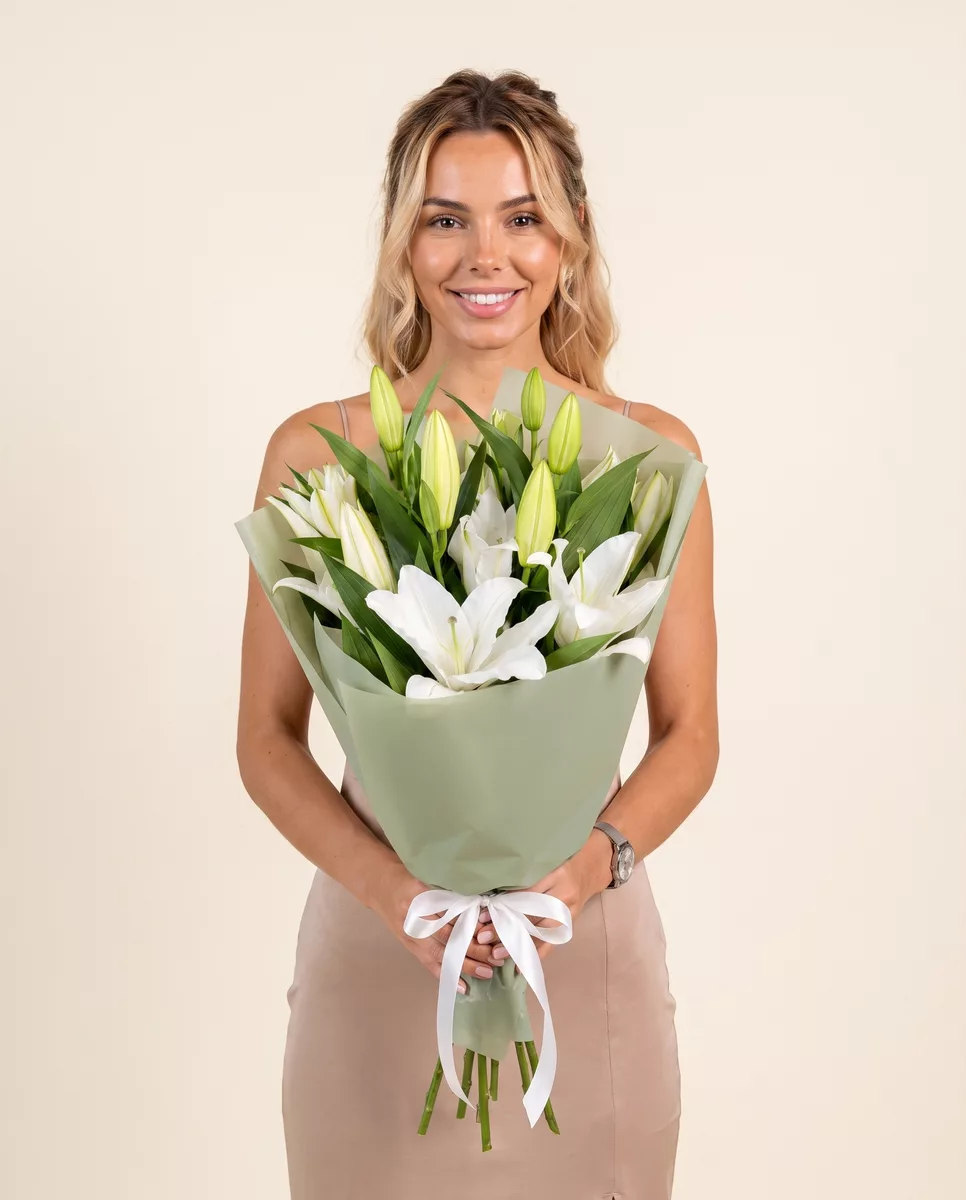
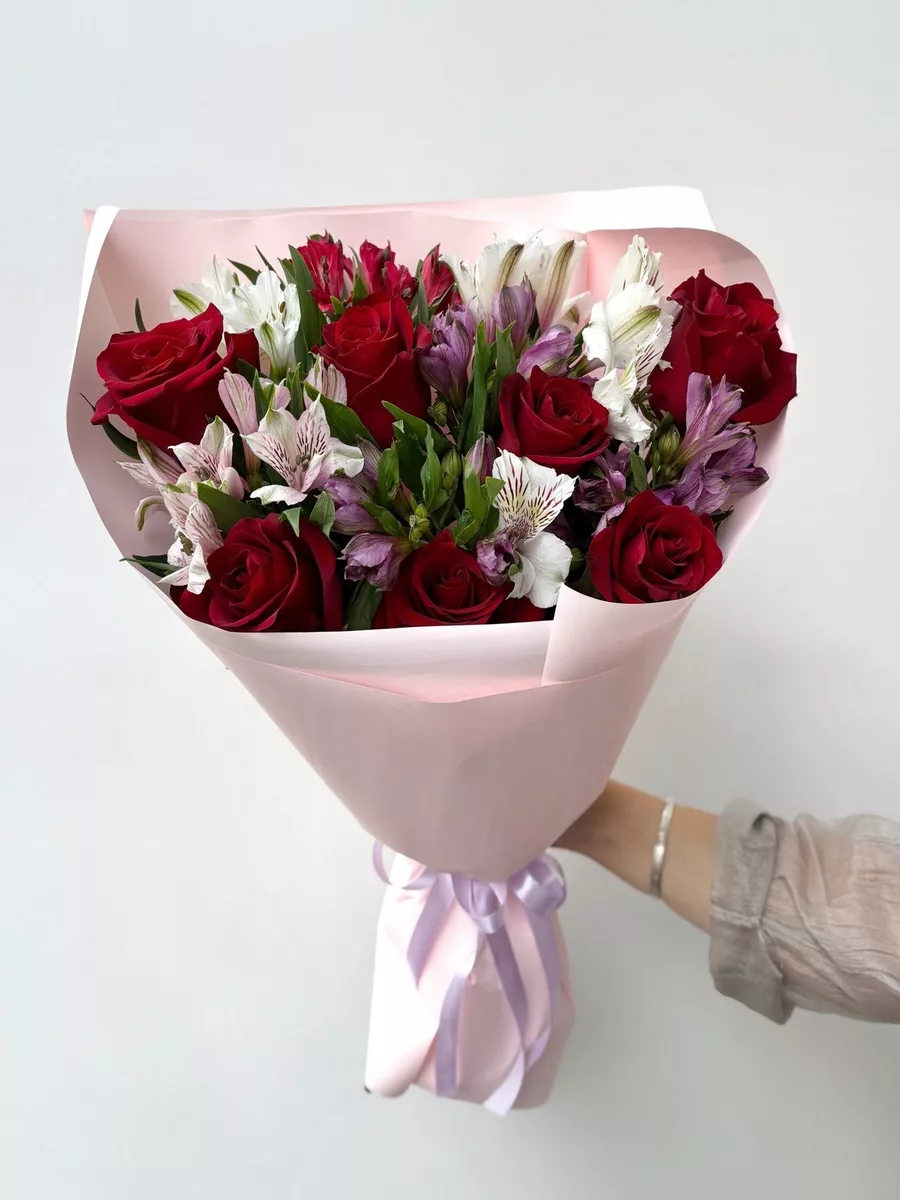
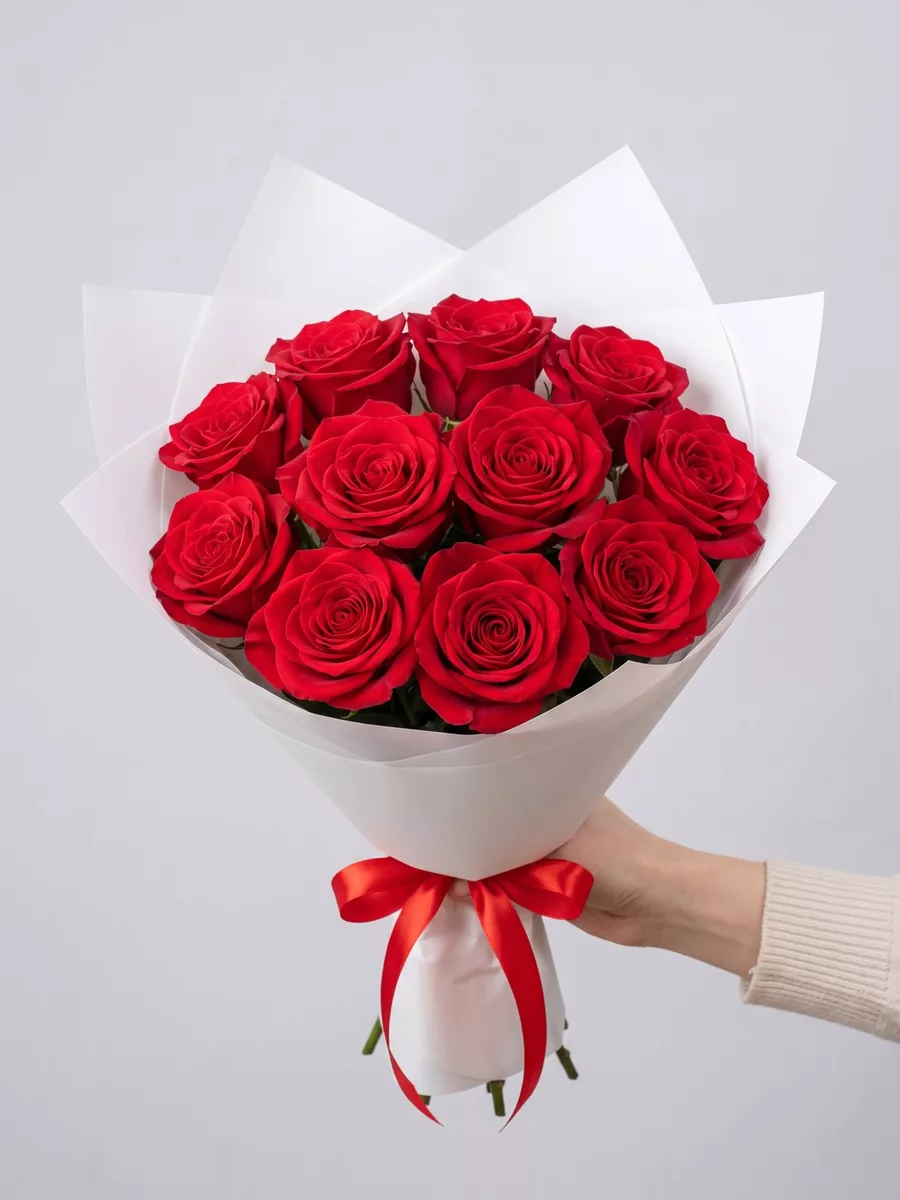

Where the price information actually goes
Every order generates a payment record, and that record lives entirely on the sender's side of the transaction. Once you complete checkout on our website or pay by phone, the fiscal receipt — required under Russian tax law — is sent to the email address you provided as the buyer. If you paid in cash at our Saint Petersburg shop, the paper receipt goes into your hand, not into the bouquet. The order confirmation, which lists the composition of the arrangement, the delivery window and the total cost, is also routed exclusively to the sender. Recipients are never copied on these documents automatically, and we do not send them any SMS or email that references the order value. The only message the recipient may receive from us is a brief delivery notification — something like a door-knock alert — if you opted into that feature, and even that message contains no pricing. From a practical standpoint this means the financial trail runs: your bank or card, our payment processor, your email inbox. The recipient stands entirely outside that chain. If you are ordering from abroad and your card statement will show a charge in roubles, that conversion is between you and your bank — it does not appear anywhere near the flowers. We keep order records on our end for accounting and customer service purposes, but those are internal documents that we would only share with the original buyer upon request and with verification.
The one situation where a number can slip through
There is a scenario worth knowing about, and it comes up a few times a month. Some customers use a payment link or QR code that they share directly with a third party — for example, asking a colleague to pay on their behalf. If that colleague completes the payment, the fiscal receipt goes to whatever contact details were entered at checkout, which might be the colleague's email rather than the original sender's. That is an internal coordination issue between the people involved, not something that reaches the recipient, but it illustrates why it matters to check the contact field carefully before confirming payment. A second situation: if you are sending flowers and you also add a physical item to the order — say, a small box of chocolates or a potted plant alongside a bouquet of spray roses or alstroemeria — and you request that a delivery note accompany those goods for customs or logistics reasons, that note may list item descriptions. We would flag this with you before dispatch, but it is worth mentioning. For a standard fresh flower bouquet delivered within Saint Petersburg or across Russia by our own couriers, none of this applies. The cleanest rule: fill in the gift card text yourself, double-check the email field at checkout belongs to you, and the recipient will receive flowers and words — nothing else.
Gift cards and personal messages — what the recipient actually reads
The gift card is the only document the recipient reads, and it is worth treating it seriously because it sets the entire tone of the delivery. We print it on card stock in a clean format: a line for the recipient's name at the top, your message in the body, and your name or sign-off at the bottom. The message is exactly what you type — we do not edit it, add to it or append any order reference numbers to it. Character limits are generous enough for a genuine note rather than just a name, so customers regularly write three or four sentences, and that is fine. In Russian gifting culture it is common to leave the sender anonymous — many people write only a first name or a nickname, and some leave the sender field blank entirely to create a moment of mystery. We accommodate all of these. What we do not do is print anything on the reverse of the card that references the order. Some customers assume the back of the card will have a barcode or order ID for tracking purposes — it does not. Tracking is handled digitally on our side. If you want the recipient to know the bouquet came from Five Flowers specifically, you can mention the shop in your message text, but our branding on the wrapping is visible anyway. Varieties like garden roses, peonies in season or lisianthus are named on the care instruction slip if you request one, but again, no prices appear there.
Care instructions and what they do and do not contain
A care instruction slip is an optional addition that some customers request, particularly when sending flowers to someone who is less experienced with keeping cut flowers alive. This slip is a short practical guide: it covers water temperature — cool, not cold, roughly fourteen to sixteen degrees Celsius works well for most varieties — how frequently to change the water, whether to recut stems and at what angle, and which flowers in the arrangement are sensitive to ethylene and should be kept away from fruit bowls. Tulips, for instance, continue to grow after cutting and will lean toward light sources, so the slip might note to rotate the vase. Narcissus excrete a sap that shortens the life of roses and anemones if mixed in the same water without a conditioning period, and that kind of detail is genuinely useful to include. What the care slip does not contain is any reference to the price of the arrangement, the names of individual stems beyond basic care groupings, or any order metadata. It is a horticultural document, not a commercial one. If you are sending a mixed seasonal bouquet with, say, ranunculus, sweet peas and tulips in early spring, a care slip is a thoughtful addition because those varieties have different water needs. You can request it in the order comments field. It will be placed inside the wrapping near the stems, visible when the recipient unwraps the bouquet, and it reads as practical advice from a florist, not as a receipt.
Checking your order before it goes out
The most effective moment to catch any potential issue is the order review screen before you confirm payment. Scan three fields in particular. First, the email address: confirm it is yours and not autofilled with a previously used address that belongs to someone else. Second, the gift card preview: read it as the recipient will read it, because once the card is printed and the courier has left, we cannot reprint and re-deliver without a new order. Third, if you have added any optional extras — a vase, a soft toy, a box of macarons alongside the flowers — check that the delivery note settings for those items are set correctly. For the flowers themselves, the bouquet composition is listed by category rather than by exact stem count in some cases, because a florist assembling a bouquet of, say, fifty centimetre-stem David Austin garden roses will make small adjustments based on what opened overnight in the cold room. That is normal and does not affect the price you were quoted. After the order is confirmed, you will receive a confirmation email with a summary. Keep it. If there is ever a question about what was ordered, that document is your reference — and it stays with you, not with the person receiving the flowers. Delivery across Russia takes one to two hours within our standard zones, and the bouquet is prepared close to departure time to arrive as fresh as possible.
The recipient will unwrap the bouquet, read your card and put the flowers in water — that is the complete experience on their end. No price, no receipt, no order number reaches them through any channel we control. The financial record of the transaction lives in your email and your payment history, which is exactly where it belongs. If you take two minutes on the order screen to verify your email address and read through your gift card message before confirming, the delivery will go out clean and the only thing the recipient will be thinking about is the flowers. We deliver bouquets across Russia in 1–2 hours.
Frequently asked questions
Does the courier tell the recipient how much the bouquet cost?
No. Our couriers are not given order value information and have no reason to discuss it. They hand over the bouquet and the gift card, confirm delivery and leave. The only conversation they might have with the recipient concerns finding the right entrance or floor in a building, not the transaction details.
Will the recipient get any email or SMS from Five Flowers mentioning the price?
The only message a recipient might receive from us is an optional delivery alert — a brief notification that the courier is nearby or has arrived. That message contains no pricing. All financial correspondence, including the fiscal receipt and order confirmation, goes exclusively to the contact details provided by the person who placed and paid for the order.
Is there a way to include the price in the bouquet if I actually want the recipient to know?
Yes — simply write it in your gift card message. That is the only place where pricing information would appear in the delivered package, and it appears only because you chose to put it there. We do not add it automatically under any circumstances, so the decision is entirely yours and requires a deliberate action on your part.
What if the recipient calls Five Flowers directly and asks how much the bouquet cost?
We do not share order details with recipients. Order information is confidential to the buyer who placed and paid for it. A recipient calling to ask the price would be told politely that we cannot disclose that information. If they want to know, the conversation needs to happen between them and the sender directly.
Does the care instruction slip name the specific varieties in the bouquet?
It may reference varieties in a general care context — for example, noting that tulips need shallow water or that roses should have their stems recut at an angle — but it does not list every stem with quantities or prices. It is written as practical advice for keeping the flowers fresh, not as an itemised description of the arrangement's commercial composition.
Ready to send a bouquet?
Pick a city, choose the flowers, and we will hand them over with a photo confirmation.
Choose a city →