
Conference and Forum Flower Orders: Planning the Logistics
Event managers ordering flowers for a two-day forum in Saint Petersburg usually call us the morning before setup and then discover the venue has no cool storage, the registration desk needs something that photographs well under LED panels, and the speaker table requires arrangements low enough that the moderator can see the audience. These are not edge cases — they come up at almost every conference order we handle. Getting the florals right for a multi-day event means thinking about variety selection, delivery windows, temperature holding, and the difference between a bouquet that lasts eight hours under spotlights and one that collapses by the afternoon coffee break.
Reading the Venue Before You Choose a Single Flower
The first thing we ask any conference client is not what flowers they like but what the venue looks like: ceiling height, lighting type, table configuration, and whether there is a back-of-house room that stays below eighteen degrees Celsius. Russian conference venues range from Soviet-era congress halls with no climate control to modern business centres with full air conditioning, and those two environments require completely different approaches. A grand foyer installation in a venue running at twenty-four degrees needs varieties with genuine heat tolerance — spray chrysanthemums, alstroemeria, and solidago hold reliably in warm interiors, while garden roses and sweet peas will show fatigue within four to five hours under hot LED panels. Ask the venue coordinator for the room temperature during the event, not the overnight temperature, because catering equipment and two hundred people raise the ambient heat considerably. If the venue has a service corridor or prep kitchen that stays cool, you can stage replacement stems there and rotate arrangements between sessions. Photograph the speaker table and registration desk in advance if you can, or ask the event manager to send a layout plan — the difference between a 120-centimetre-wide table and a 180-centimetre one changes the scale of every arrangement significantly. Ceiling height matters for floor installations: a three-metre arch looks proportionate in a ballroom and oversized in a breakout room. Getting these numbers before the order is placed saves negotiation on the day.
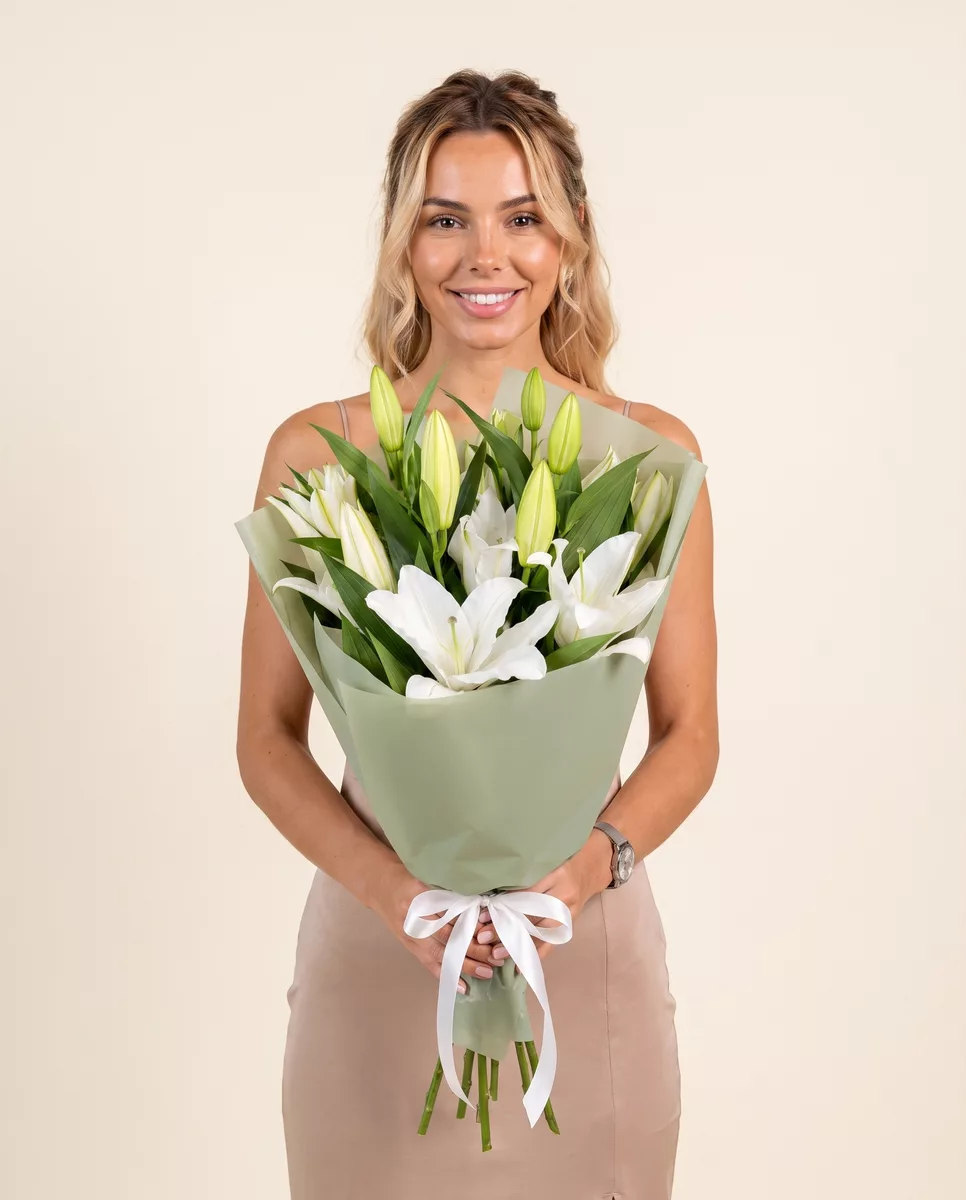
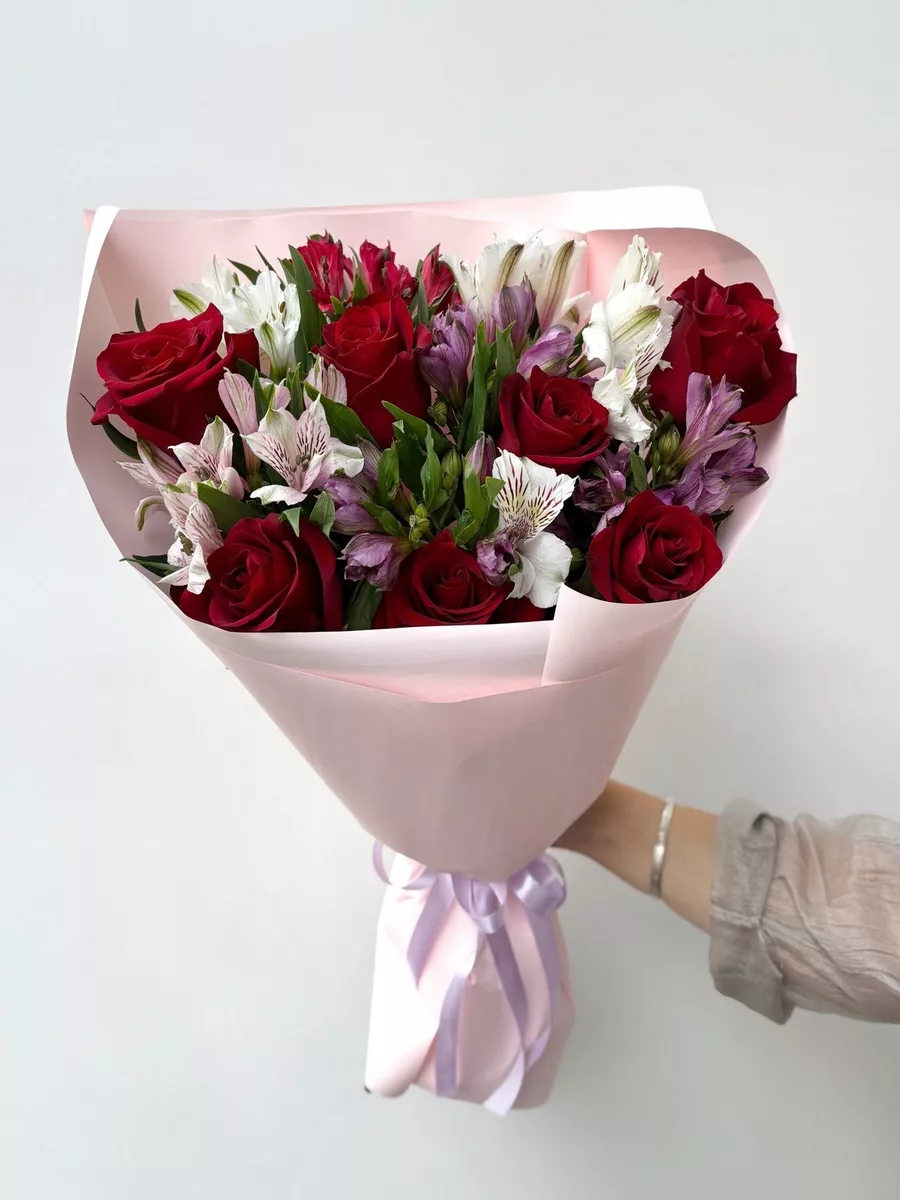
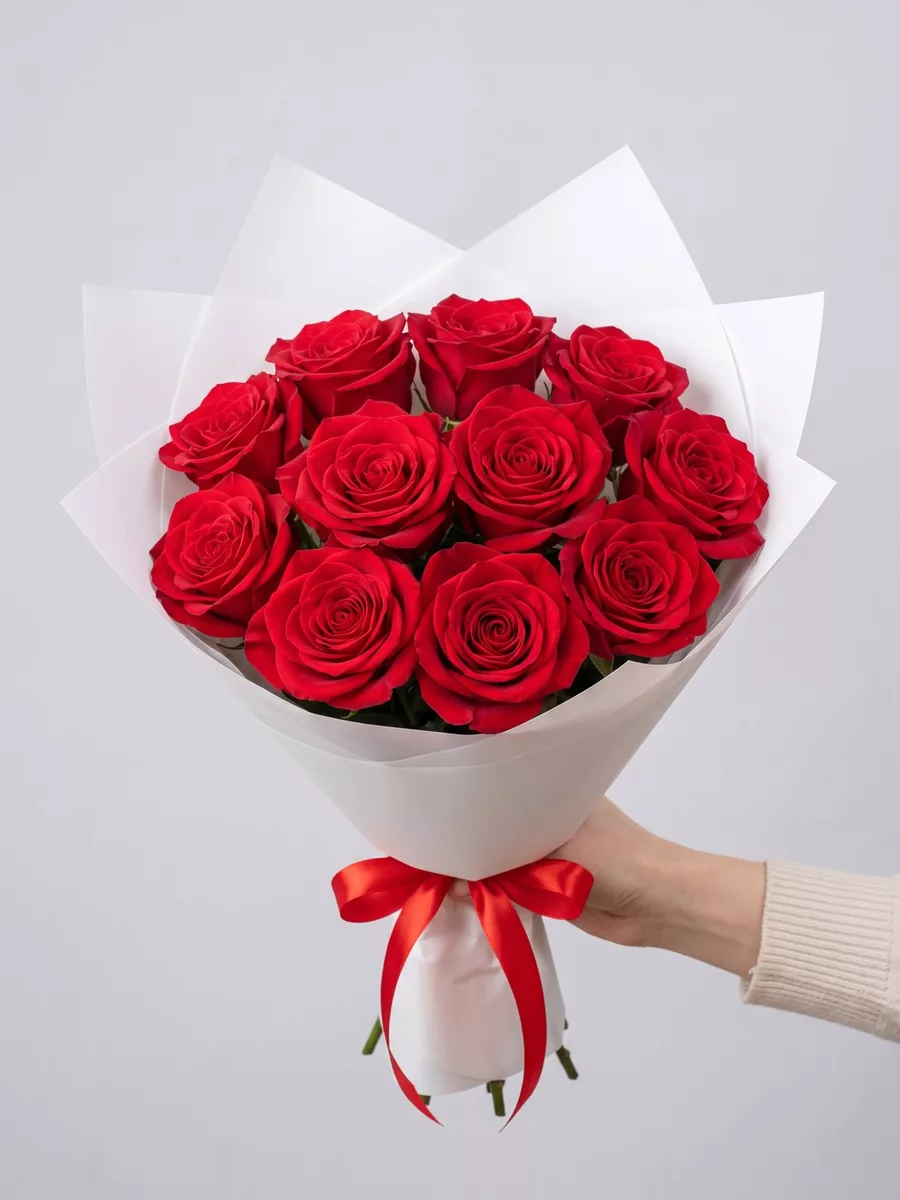
Bouquets we can deliver

Choosing Varieties That Last Across Multiple Conference Days
A single-day gala and a three-day international forum are completely different briefs, and the variety list should reflect that. For events running two or three days, we steer clients firmly toward flowers with documented longevity: standard chrysanthemums, alstroemeria, lisianthus, statice, and tropical varieties like anthuriums and tropical heliconias when the budget allows. Roses can work for a two-day event if they are kept in water and the room stays below twenty degrees, but they need to be fresh-cut stock, not flowers that have already spent three days in a wholesaler's cold room. Dutch tulips are a common request for Russian business events because they read as elegant and European, but they move and droop over the course of a day under any warmth, which makes them unsuitable for speaker tables where the arrangement needs to look composed in photographs taken across a twelve-hour programme. Lisianthus is underused at conferences — it has a ruffled, full appearance that reads as generous on camera, it tolerates indoor temperatures well, and it holds its form for three to four days in a vase. Carnations, despite their outdated reputation in some markets, are genuinely practical for large-scale conference orders: they are available in volume, consistent in stem length, and last four to five days without special treatment. For welcome bouquets presented to keynote speakers or honoured guests, we typically use a combination of garden roses, lisianthus, and eucalyptus — varieties that photograph beautifully and survive the journey from the stage to the speaker's hotel room.
Structuring the Order: Installations, Table Pieces and Welcome Bouquets
A conference floral order usually has three distinct layers, and each one has a different lead time, a different delivery window, and different handling requirements. The first layer is the large installation — an entrance arch, a branded backdrop arrangement, or a floor display near the registration desk. These are the pieces that take the longest to assemble on site and need to arrive first. For a nine o'clock conference opening, installation pieces should be delivered and placed by seven-thirty at the latest, which means leaving our workshop no later than six. The second layer is table arrangements: speaker-table pieces, panel discussion centrepieces, and anything on the main stage. These need to be low enough that seated speakers can see across the table — a maximum of thirty centimetres in height is a practical rule for any arrangement on a working conference table. Tall vases and high-domed arrangements belong at registration desks and in the foyer, not in front of microphones. The third layer is welcome bouquets for individual speakers or VIP guests. In Russian business culture, presenting a bouquet to a keynote speaker at the end of their session is standard practice, particularly for female speakers, though it is increasingly common for all featured presenters regardless of gender. These bouquets should be pre-wrapped, labelled if there are multiple recipients, and stored in a cool area backstage until the moment of presentation. Coordinating the handoff with the event manager or a designated staff member is essential — flowers left unattended backstage for two hours in a warm room are not going to look their best at the moment of presentation.
Delivery Windows and What Russian Venues Actually Require
Delivery logistics for a conference differ from a standard order in almost every way. The venue will have a loading dock schedule, a security check-in procedure, and possibly a freight elevator that is shared with catering and AV crews. We ask for the venue's delivery instructions at least forty-eight hours before the event, because arriving at a congress centre without a confirmed time slot means waiting in a queue behind the catering truck. In Saint Petersburg specifically, many of the larger conference venues in the centre — hotel ballrooms, cultural congress halls — have strict morning delivery windows, often between six and eight, before the main staff shift begins. If the event manager does not know the venue's loading procedures, we recommend they confirm with the venue's technical coordinator, not the event sales contact, because those are two different departments with different levels of operational knowledge. For multi-day events, the second-day delivery is often more complicated than the first because the venue is now occupied and the loading dock may be in use for other purposes. We plan second-day refresh deliveries — replacement stems, new welcome bouquets, replenishment of any pieces that have wilted — for early morning, before the first session begins, typically between seven and eight. The event manager should designate one person on-site who is responsible for receiving flowers on the second and third days, because that handoff tends to fall through the cracks when everyone is focused on the programme. A clear contact name and a direct mobile number for that person, given to us before the event starts, eliminates the most common delivery problem we encounter at multi-day conferences.
Temperature, Water and On-Site Flower Handling
Flowers at a conference are in a hostile environment for most of the day: warm rooms, dry air from HVAC systems, spotlights, and no one responsible for topping up water in vases. We always advise event managers that vase arrangements need to be checked at every break — a standard conference vase in a twenty-two-degree room with air conditioning running will lose water faster than the same vase at home. Oasis foam, which is the green floral foam used in many installations and table pieces, needs to be fully saturated before delivery and should be checked for moisture at lunchtime on any event running longer than six hours. Dry oasis is the single most common reason a conference installation looks tired by mid-afternoon. For speaker-table arrangements in ceramic or glass vessels, we use a generous water volume and add a floral preservative tablet, which slows bacterial growth and keeps stems fresh for an additional day. Arrangements that sit under high-intensity stage lighting — particularly older halogen systems still found in some Russian congress halls — will degrade faster than those in ambient light, and we factor that into the variety selection when a client tells us the stage lighting is intense. If the venue has a florist's prep room or a kitchen with a sink, we can stage extra stems in buckets of water there for same-day replacements. If there is no cool area at all, we recommend building the replacement cost into the order from the start rather than hoping the flowers will outlast the programme. Clients who have run large events before understand this; first-time conference clients sometimes resist it until they see what three hours under a spotlight does to an open rose.
What to Confirm When Placing the Order
A conference flower order needs more information upfront than almost any other type of order we receive, and the questions are specific. Start with the total number of arrangements and their locations — foyer, registration desk, main stage, breakout rooms — because each location has different size and variety requirements. Confirm the table dimensions for any speaker or panel table pieces, because this determines the maximum height and spread of the arrangement. Provide the venue address including the specific entrance for deliveries, the name of the on-site contact on the day, and their direct mobile number. If the event spans multiple days, confirm whether you need a full replacement on day two or just a refresh of specific pieces, because those are different orders with different costs and logistics. In Russian business event culture, it is common for the number of welcome bouquets to change between the initial order and the event day — a speaker cancels, a VIP guest is added — so we ask clients to give us a final count no later than the afternoon before the event. Changes after that point can usually be accommodated, but they require a direct call rather than a message, because morning delivery routes are planned the evening before. Confirm the colour palette against the event branding: many Russian corporate forums use specific brand colours on their stage design, and flowers that clash with the backdrop will show in every photograph. Finally, confirm who is responsible for removing the arrangements after the event — in most cases the venue will dispose of them, but some clients want the welcome bouquets returned to speakers, which requires a separate coordination step with the event staff.
Conference and forum florals are a logistics problem as much as a design one, and the clients who get the best results are the ones who treat them that way from the start. Knowing your venue temperature, your table dimensions, your delivery window, and your on-site contact before you place the order turns a stressful morning setup into a straightforward handoff. The flowers themselves — the right varieties in the right quantities, delivered at the right time — do the rest. More on this in What Information the Courier Needs to Deliver Your Flowers. We deliver bouquets across Russia in 1–2 hours.
Frequently asked questions
How far in advance should a conference flower order be placed?
For events with large installations or more than ten individual arrangements, place the order at least three to four days ahead. This allows us to confirm variety availability in the volumes you need, plan the delivery route, and coordinate the venue loading window. Last-minute conference orders are possible but limit variety choice significantly.
Which flowers work best for a speaker table that will be photographed throughout the day?
Lisianthus, spray chrysanthemums, and alstroemeria hold their form under event lighting for six to eight hours without wilting. Keep arrangements under thirty centimetres in height so seated speakers remain visible. Avoid open garden roses or tulips for speaker tables — both move and soften quickly under warm stage lighting.
Is it standard in Russia to give bouquets to conference speakers?
Yes, presenting a bouquet to a keynote or featured speaker at the end of their session is a well-established practice at Russian business events. It applies most commonly to female speakers but is increasingly extended to all presenters. Bouquets should be pre-wrapped and held backstage, ready for the moment of presentation.
Can flowers be refreshed or replaced on the second day of a multi-day forum?
Yes, and we recommend planning for it from the start rather than hoping day-one arrangements will last. We deliver replacement stems or full new pieces early on the second morning, typically between seven and eight, before sessions begin. You need to designate one on-site person to receive that delivery and confirm their mobile number in advance.
What happens if the venue has no cool storage for flowers before the event starts?
We adjust the variety selection toward heat-tolerant flowers — chrysanthemums, alstroemeria, anthuriums — and build replacement pieces into the order for anything that will sit under direct stage lighting for more than four hours. Delivering as close to the opening time as the venue allows also reduces the period flowers spend in a warm room before the event begins.
Ready to send a bouquet?
Pick a city, choose the flowers, and we will hand them over with a photo confirmation.
Choose a city →