
Daffodils in Russia: First Sign of Spring in the Flower Shop
Every year around the second week of February, the first bunches of daffodils appear on our shelves, and the reaction from customers is always the same — genuine surprise that something so cheerful exists in the middle of a Saint Petersburg winter. Daffodils are one of the most straightforward flowers we sell: they are inexpensive compared to roses or tulips, they have a clear and short season, and they last a predictable five to seven days when handled correctly. They are also one of the flowers customers most often mishandle, mostly because the rules are slightly different from everything else in the shop. This article covers when the season actually runs in Russia, which varieties you will realistically encounter, what the symbolism means locally, and what you need to know before placing an order.
When Daffodils Actually Appear in Russian Flower Shops
The daffodil season in Russia is genuinely brief. Cut daffodils begin arriving from Dutch and Israeli growers in the first half of February, and by the final days of March the supply drops sharply as warmer European weather pushes growers toward other crops. The peak — meaning the widest variety selection and the lowest prices — falls in the three weeks straddling International Women's Day on 8 March, which is the single largest flower-buying occasion in the Russian calendar. In the days immediately before 8 March, demand across the country spikes so hard that daffodil bunches can sell out within hours of delivery, so ordering even two days ahead is not overcautious, it is simply practical. After 8 March the season winds down fast. By the first week of April you may still find daffodils in the shop, but the stems are shorter, the selection narrows to one or two varieties, and the flowers have often been in transit longer than ideal. If you want daffodils at their best, the window is February 10 through March 8. Outside that window you are buying the tail end of the harvest, and it shows in how quickly the blooms open after purchase. Domestic greenhouse production exists in Russia but remains limited for daffodils specifically, so almost everything you see in a Saint Petersburg shop in February arrived by air freight from the Netherlands or by road from warmer growing regions.
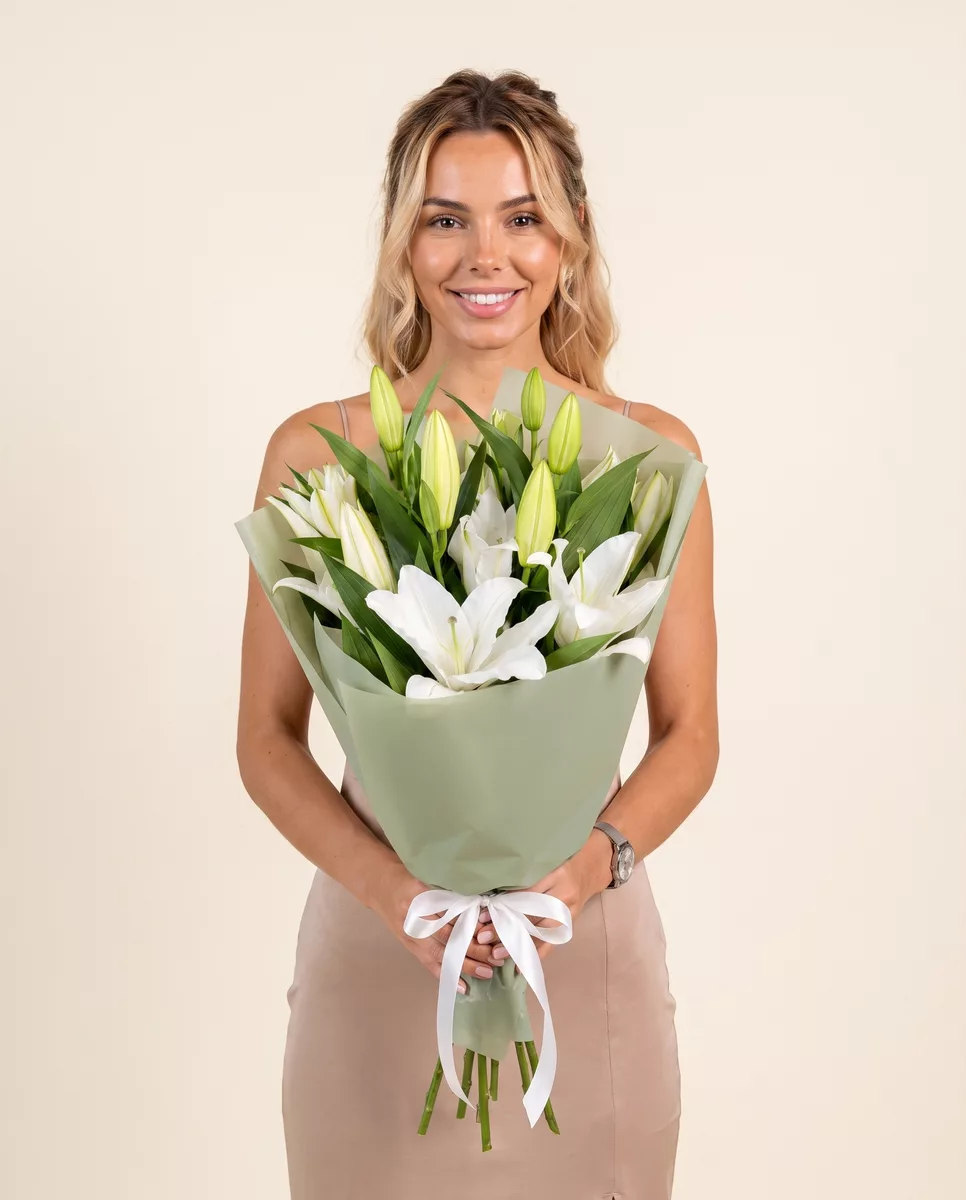
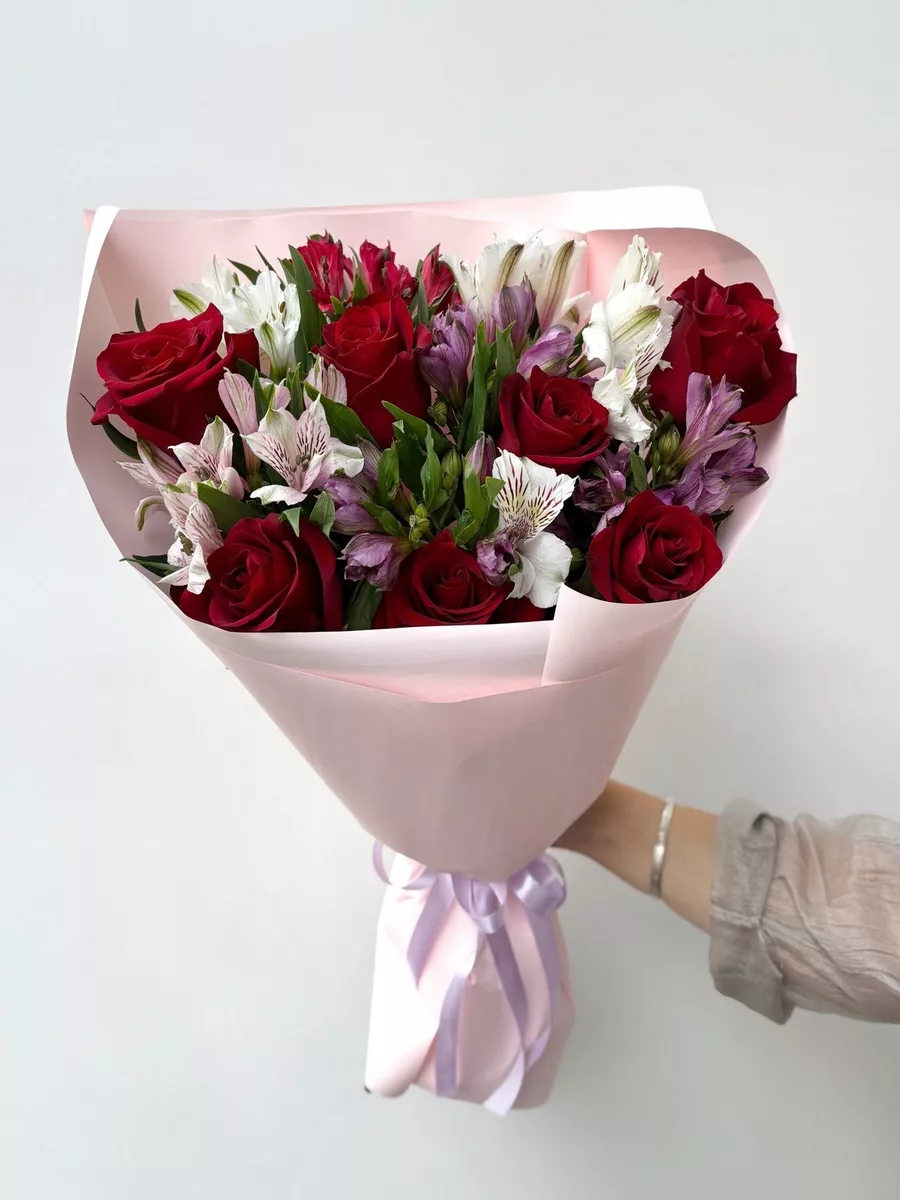
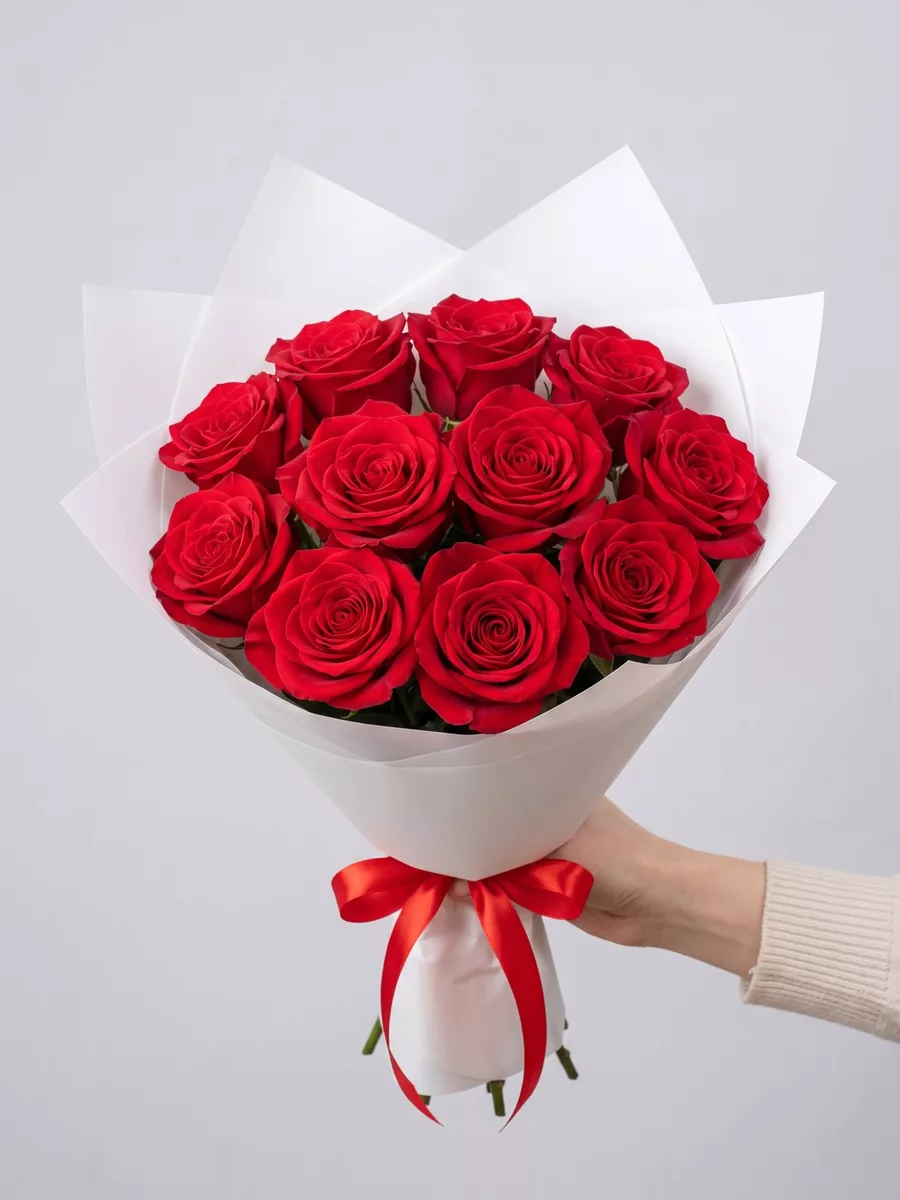
Bouquets we can deliver

Varieties You Will Find and What Sets Them Apart
Russian flower shops during the daffodil season stock a narrower range of varieties than a specialist Dutch grower would carry, but there is still meaningful choice. The most common type is the standard large-cupped daffodil with a single yellow bloom per stem — varieties like Carlton and Dutch Master appear regularly because they travel well and open reliably. Alongside these you will typically find white-petalled varieties with a small orange or yellow cup, such as Ice Follies, which has a broad flat perianth and a very pale lemon cup that almost reads as white in photographs. Tazetta types, which carry multiple small flowers on a single stem, show up less consistently but are worth asking about because one stem gives considerably more visual density in a small arrangement. Double-flowered daffodils, which have layered petals rather than the classic trumpet shape, do appear occasionally under names like Tahiti, but supply is irregular. What you will almost never find in a standard Russian flower shop is the delicate split-corona type or the miniature species varieties — those stay in specialist collections. When you are ordering, it is worth specifying whether you want single-stem or multi-headed varieties, because the difference in how a finished bouquet looks is significant. A bunch of twelve Carlton stems reads as a loose, airy arrangement, while the same number of multi-headed stems produces something considerably fuller.
What Daffodils Mean in Russian Culture Around 8 March
For readers unfamiliar with Russian customs, International Women's Day on 8 March is not a minor observance — it is closer in social weight to a combination of Mother's Day and Valentine's Day, and it is celebrated across generations and relationships. Men give flowers to mothers, grandmothers, colleagues, teachers, and partners, and the expectation of receiving flowers is genuinely widespread. Daffodils fit this occasion well for practical reasons: they are available in large quantities precisely at the right moment, they are affordable enough to buy in meaningful numbers, and their yellow and white colouring reads as festive rather than intimate, which makes them appropriate for a workplace or a school as well as a home. In Russian everyday speech, daffodils are called nartsissy, and they carry broadly positive associations — renewal, the end of winter, the approach of warmth. There is no significant negative symbolism attached to daffodils in Russian popular culture for celebratory contexts, which occasionally surprises customers who have heard that the flower carries difficult associations in some Western traditions. The practical upshot is that a mixed bouquet combining daffodils with tulips or hyacinths is a completely standard and well-received 8 March gift. Florists in Saint Petersburg put together a large number of exactly these combinations every year, and they land well across a wide range of recipients. If you are ordering for someone you do not know extremely well, a spring mix anchored by daffodils is a safe and genuinely pleasant choice.
Why Daffodils Are Priced Lower Than Most Cut Flowers
Customers sometimes assume that because daffodils are inexpensive they are a lesser flower, and that assumption is worth correcting directly. Daffodils are field-grown bulb flowers that produce very high yields per hectare compared to roses or lilies, and the Dutch growing industry has had decades to optimise the harvest and cold-chain logistics. The result is that a bunch of ten good-quality daffodil stems costs significantly less than a comparable bunch of roses, not because the flower is inferior but because the economics of production are fundamentally different. Within the daffodil category itself, price differences between varieties are relatively small compared to, say, the difference between standard and premium rose grades. The main cost variables are stem length, the number of buds per stem, and how recently the batch arrived from the grower. Stems that are 50 centimetres or longer cost more than shorter stems, and multi-headed varieties are generally priced slightly higher per stem than single-bloom types because of the greater visual yield. What drives the price up around 8 March is not a change in the flower itself but simple supply and demand — the same bunch that costs one amount on February 20 may cost noticeably more on March 6. If budget matters, ordering a week before the holiday rather than the day before is the single most effective way to manage it. The quality at that point is also often better because the flowers have not been sitting in a warehouse waiting for peak demand.
Five to Seven Days: Making the Most of Daffodil Vase Life
Daffodils have a vase life of five to seven days under normal home conditions, and that number is fairly consistent across varieties — it does not vary as dramatically as it does with, say, gerberas or anemones. The main factors that shorten this window are warm room temperature, direct sunlight, and one specific chemical issue that most customers do not know about. Daffodil stems release a mucilaginous sap when cut that is toxic to most other cut flowers, particularly tulips. If you put freshly cut daffodils directly into a mixed vase with tulips, the tulips will collapse within a day. The correct approach is to condition daffodils separately for several hours in their own water after cutting the stems, then transfer them to the mixed arrangement without re-cutting. After that initial conditioning period the sap release slows significantly and they can coexist safely. Water temperature matters: daffodils prefer cool water, and a vase kept in a room above 20 degrees Celsius will lose a day or two of life compared to one kept in a cooler spot. Change the water every two days and trim the stems by a centimetre each time. Daffodils bought in tight bud — which is how a good florist will send them — will open over the first 24 to 48 hours at room temperature. If you want them to open more slowly, keep them in a cool hallway or near a window that does not get direct sun. If you want them open for an event, bring them into a warm room the day before.
What to Check When Ordering Daffodils for Delivery
Ordering daffodils for delivery in Russia involves a few checks that are specific to this flower and to the season. First, confirm that the shop is offering daffodils from current stock rather than from a catalogue image — during peak 8 March demand, some arrangements shown online may not be available in the variety pictured. At Five Flowers we update availability daily during the season precisely because stock changes quickly. Second, ask about bud stage. Daffodils delivered in fully open bloom are already a day or two into their vase life, whereas buds that are just showing colour will give the recipient the full five to seven days. For same-day delivery, tight buds are almost always the better choice. Third, consider the packaging for cold weather. Saint Petersburg in February and early March regularly sees temperatures below minus ten degrees Celsius, and daffodil blooms can be damaged by frost exposure during the last few metres of a delivery if they are not properly wrapped. Our couriers use insulated packaging for flower deliveries in winter, but it is worth confirming this when you order if temperatures are particularly low that day. Finally, if you are combining daffodils with other flowers in one bouquet, mention it explicitly so the florist can condition the daffodils separately before assembly. This is standard practice in a professional shop but easy to skip under time pressure if nobody flags it.
Daffodils are one of the more honest flowers in the shop: the season is short, the price is fair, the vase life is predictable, and the rules for keeping them are learnable in five minutes. They arrive in February as a reliable signal that the year is turning, they carry the right associations for the biggest flower-giving occasion in the Russian calendar, and they work in a simple bunch or as part of a mixed spring arrangement with equal success. The customers who get the most out of them are the ones who order before the 8 March rush, ask for tight buds, keep the vase cool, and remember the simple rule about conditioning them separately before mixing with tulips. Everything else takes care of itself. We deliver bouquets across Russia in 1–2 hours. More on this in Yellow Flowers in Russia: The Superstition Explained. We deliver bouquets across Russia in 1–2 hours.
Frequently asked questions
Can I order daffodils for delivery in Saint Petersburg outside of February and March?
In most years, no. The cut daffodil season in Russia runs from early February through late March, with supply dropping sharply after 8 March. By April, stock is minimal and quality is inconsistent. If you want daffodils, February 10 to March 8 is the reliable window. Outside that period we can suggest tulips or other spring bulb flowers as alternatives.
Is it true that daffodils are toxic to other flowers in the same vase?
Yes, and it is the most common mistake customers make with daffodils. Freshly cut daffodil stems release a sap that damages most other cut flowers, especially tulips. Condition daffodils alone in water for four to six hours after cutting, then transfer them to a mixed arrangement without re-cutting the stems. After that initial period the sap release slows and they coexist safely.
What is the difference between single-stem and multi-headed daffodil varieties?
Single-stem varieties like Carlton or Dutch Master produce one flower per stem and give a classic, airy look. Multi-headed varieties, sometimes called tazetta types, carry several smaller blooms on one stem and create a denser, fuller effect with fewer stems. For a small bouquet where visual fullness matters, multi-headed varieties are more efficient. For a loose, natural arrangement, single-stem types work better.
How should I store daffodils if delivery arrives before the recipient is home?
Keep them in a cool place — an unheated hallway or near a cold window is ideal. Do not put them in a warm room or direct sunlight. If they arrive wrapped without water, unwrap them, trim the stems at an angle, and place them in cool water immediately. Avoid putting them in the refrigerator alongside fruit, as ethylene gas from fruit accelerates petal drop in most cut flowers.
Are daffodils an appropriate gift for International Women's Day in Russia?
Completely appropriate and very common. Daffodils are one of the defining flowers of 8 March in Russia precisely because they are in peak season, affordable in quantity, and cheerful without being overly intimate. They work for colleagues, family members, teachers, and partners alike. A bunch of yellow daffodils or a mixed spring bouquet combining daffodils with tulips is a standard and well-received gift across all age groups.
Ready to send a bouquet?
Pick a city, choose the flowers, and we will hand them over with a photo confirmation.
Choose a city →