
The Origin of the Florist's Chrysanthemum
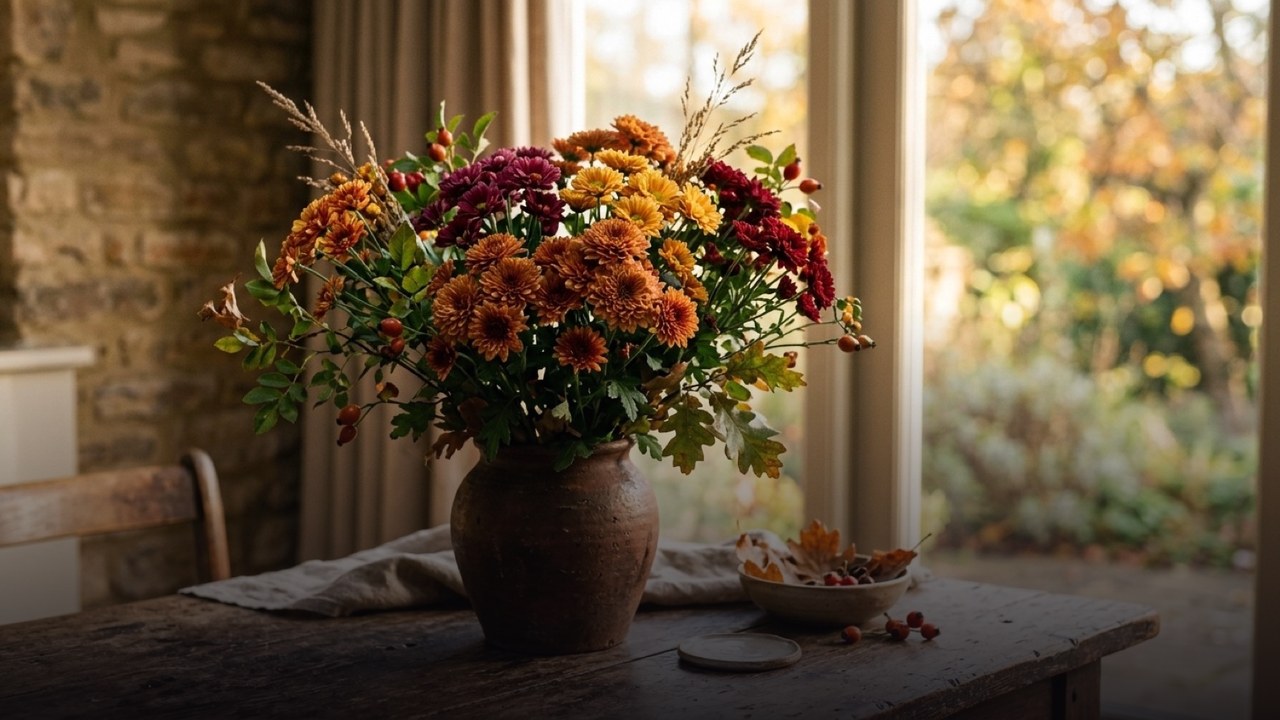
The florist's chrysanthemum originated through centuries of cultivation in China, followed by further development in Japan and later European breeding. Commonly called Chrysanthemum × morifolium, it is a cultivated hybrid group rather than a single wild species with one precisely documented birthplace. The chrysanthemums sold as cut flowers today reflect that long history of selection for flower shape, colour and growth.
Customers choosing chrysanthemums often want to know whether the name describes a particular flower, where it comes from and whether it makes an appropriate gift. At Pyat Tsvetov (5 Flowers), established in Saint Petersburg in 2011, those questions connect directly with practical choices: a single large bloom looks very different from a branching stem covered in smaller flowers. Understanding that difference helps you judge a bouquet's proportions and explain what you want. Origin provides useful context, while the recipient's preferences should guide the final choice.
Chinese origins and the journey to Japan
Chrysanthemums have a long history of cultivation in China, where gardeners selected plants for desirable flowers over many generations. Today's florist's chrysanthemum emerged from that cultivated tradition, with a complex ancestry involving more than one species. Calling it simply a wild Chinese flower therefore misses an essential distinction: the bouquet flower is the result of sustained human selection.
Chrysanthemums later became established in Japan, where cultivation developed its own distinctive forms and cultural importance. The flower acquired strong associations with the Japanese imperial household, which explains why people sometimes assume it originated there. Japan is central to its history, but the earlier Chinese cultivation remains the starting point for explaining the florist's chrysanthemum's origin.
European cultivation and breeding added another stage to this history, helping produce the diversity familiar in modern gardens and bouquets. There is no single original colour or petal arrangement that represents every florist's chrysanthemum. A rounded pompon, a daisy-like head and a flower with long, narrow petals can all belong to the same broad cultivated group.
What the botanical name tells you
The name Chrysanthemum × morifolium is commonly used for the florist's chrysanthemum, although botanical and horticultural references do not always label cultivated chrysanthemums identically. The multiplication sign indicates hybrid origin; it does not mean the flower was recently created. You may also encounter the older name Dendranthema in books or plant records, so a different label does not necessarily identify a different bouquet flower.
The word chrysanthemum comes from Greek words meaning gold and flower. That name is a linguistic clue, not evidence that the cultivated plant originated in Greece. Modern varieties extend well beyond yellow, including white, pink, purple and bronze tones. When selecting a bouquet, use the pictured colour and flower form rather than expecting the historical name to describe its appearance.
A botanical name also cannot establish where an individual cut stem was grown. The historical origin of a cultivated group and the growing location of a particular flower are separate facts. For a gift, the useful details are the bouquet's visible form, its colour balance and how the stems will sit together in a vase.
Bouquets we can deliver




How flower forms change the look of a bouquet
Florists commonly distinguish between spray chrysanthemums, which carry several flower heads on a branching stem, and large-headed forms presented with one main bloom per stem. During cultivation, removing selected buds can direct growth towards a larger individual flower. This means a stem count alone gives an incomplete impression of size: several branching stems can create a broad, full arrangement.
Choose spray forms when you like a mixture of open flowers and smaller heads distributed through the bouquet. Large individual blooms give a more pronounced focal point and make each stem visually distinct. Neither form is inherently more thoughtful or appropriate; the effect depends on the recipient's taste and the arrangement. Compare the visible flower heads and overall outline when browsing the bouquets catalogue.
Daisy-like forms show a clear central disc, while densely petalled forms may conceal the centre almost entirely. Naturally narrow or curled petals should not be mistaken for damage simply because they differ from a familiar daisy shape. When assessing freshness, look instead for firm stems, sound foliage and petals without extensive browning or collapse. Flower form and flower condition need to be judged separately.
Meanings and gift etiquette in Russia
Chrysanthemum meanings vary with country, occasion and personal experience. They can suggest longevity, dignity or seasonal beauty in East Asian traditions, while in some European countries they have a strong association with remembrance. Those associations are not universal instructions for giving flowers. For a recipient in Russia, their own preferences and the reason for the gift are more useful guides than an online colour dictionary.
In Russia, chrysanthemums are used in everyday gift bouquets as well as arrangements for remembrance. For celebratory gifts, an odd number of stems is the usual convention, while even numbers are associated with mourning. With spray chrysanthemums, count stems rather than every individual flower head when discussing this convention. In a mixed bouquet, clarify the intended occasion so the overall arrangement fits the message.
Avoid assigning a fixed emotional meaning to yellow, white or purple without knowing the recipient's expectations. A favourite colour is a stronger reason to choose flowers than a claim that one shade always means friendship or separation. For someone whose family follows a different flower-giving tradition, let that knowledge guide you. A short card naming the occasion can also make the intention clear.
Caring for cut chrysanthemums at home
Prepare a clean vase before unwrapping the bouquet, and remove any leaves that would sit below the waterline. Recut the stem ends with a clean, sharp tool, then place them in fresh water promptly. Submerged leaves break down and make the water dirty, so removing them is a practical first step. Keep the stems loosely arranged enough for you to inspect the water and remove damaged foliage.
Place the vase away from direct sun, radiators and ripening fruit. Check the water daily, top it up as needed and replace it when it becomes cloudy; wash the vase when changing dirty water. If flower food is supplied, follow its packet directions rather than estimating a stronger dose. These habits support vase life, but no fixed number of fresh-looking days can be promised for every bouquet.
Remove individual fading flowers and deteriorating leaves as they appear, especially on branching stems with several heads at different stages. If the bouquet must wait before presentation, keep it in water in a cool room rather than leaving it wrapped beside a heater. Avoid crushing the flower heads under bags or tight packaging during the wait. Our cut-flower care guide explains the daily routine in more detail.
Sending chrysanthemums to someone in Russia
To arrange a gift from abroad, start with the recipient's city, delivery address and occasion, then choose the bouquet and your card message. Pyat Tsvetov delivers flowers across Russia, and a card with your text is free. City delivery costs 500 RUB; for remote districts and suburbs, the operator confirms the price when confirming the order. Check the delivery and payment information when planning the order.
In large cities, express delivery is available in 1–2 hours after the order is confirmed. Other options include an exact time with a tolerance of plus or minus 30 minutes, or the windows 09–12, 12–15, 15–18 and 18–21; orders can also be placed 1–30 days ahead. Saint Petersburg delivery operates around the clock. When ordering across time zones, check that the requested date and time match the recipient's location.
Delivery is anonymous by default: the courier does not name the sender, so include your name in the card if you want the recipient to know who sent it. The courier calls about 15 minutes before arrival; if the recipient is absent, we agree a second delivery that day or a handover to a neighbour or concierge with the sender's consent. Online checkout uses CloudPayments, and customers abroad should check the payment options displayed there because acceptance of every foreign card is not guaranteed. For questions, call 8 (812) 507-67-05.
Frequently asked questions
Where did the florist's chrysanthemum originate?
Its history begins with chrysanthemum cultivation in China, followed by further development in Japan and later European breeding. The modern florist's chrysanthemum is a cultivated hybrid group with complex ancestry, rather than a single unchanged wild species.
Is Chrysanthemum morifolium the same as the florist's chrysanthemum?
Chrysanthemum × morifolium is a commonly used botanical name for the florist's chrysanthemum. Naming varies between references, and older sources may use Dendranthema.
Are chrysanthemums suitable for a birthday in Russia?
Yes, chrysanthemums are used in celebratory gift bouquets in Russia. An odd number of stems is the usual convention for a celebration, and the recipient's preferred colours are a useful guide.
Does one spray chrysanthemum stem count as several flowers?
A spray stem carries several flower heads, but it remains one stem. When discussing bouquet quantities or Russian odd-number gift etiquette, distinguish the stem count from the number of visible blooms.
Can I order chrysanthemums to Russia from abroad?
You can place an online order for delivery across Russia, with payment through CloudPayments at checkout. Check the options displayed there, since acceptance of every foreign card is not guaranteed.
Ready to send a bouquet?
Pick a city, choose the flowers, and we will hand them over with a photo confirmation.
Choose a city →