
What Does a Withering Flower Mean?
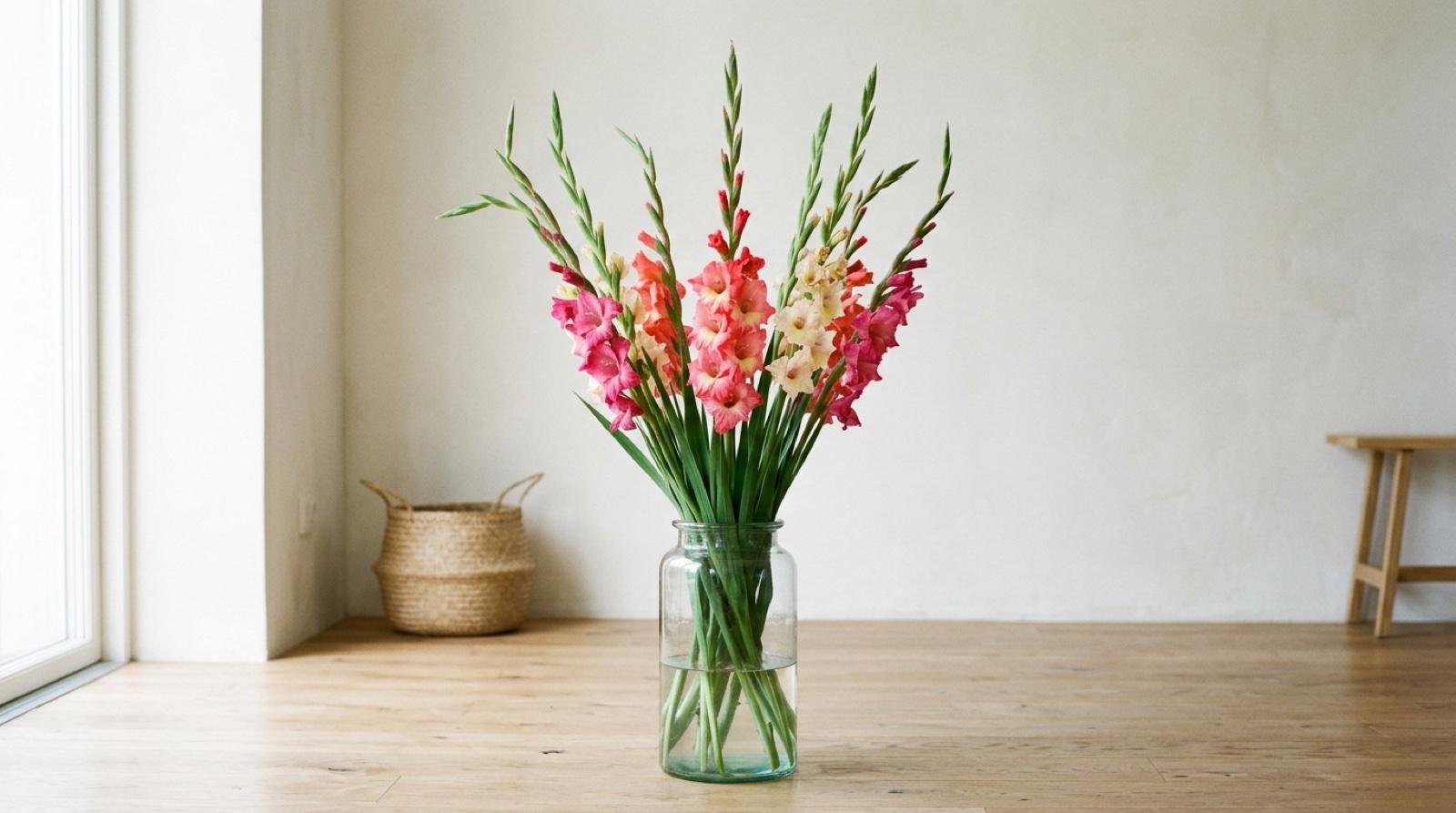
When customers ask what a withering flower means, we explain that it usually describes a bloom losing firmness and freshness as it loses water or ages. Symbolically, a withering flower can represent passing time, loss or an ending, but its meaning depends on the context.
At Pyat Tsvetov (5 Flowers), we have been helping customers with flowers in Saint Petersburg since 2011. For a bouquet at home, the useful first step is to check the water, stems and petals before interpreting fading as a message.
Withering, wilting and drying describe different changes
Wilting usually means that petals, leaves or stems have lost firmness because the flower cannot take up enough water to replace what it loses. Withering is a broader term for declining freshness: a flower may droop, shrivel, develop dry edges or turn brown. Wilting can sometimes improve with care; ageing petals will not become fresh again.
Drying is not always an unwanted change. Some flowers are deliberately preserved for arrangements, and their papery texture does not mean they need more water. Statice is one example; our guide to statice care and drying explains how it can be used fresh or dried.
What a withering flower symbolises
In poetry, art or a personal message, a fading bloom may suggest the brevity of beauty, grief, separation or a stage of life coming to an end. The surrounding words and occasion matter more than the flower alone. There is no single meaning that applies to every withered rose or drooping bouquet.
A gift bouquet fading at home is not evidence of the sender’s feelings or a prediction about a relationship. Cut flowers have a limited vase life, and their condition is affected by water uptake, handling and the room where they stand. If you are interpreting an image or a message, look at its context; if you are caring for real flowers, start with their condition.
Bouquets we can deliver




What to do when a bouquet starts to wilt
Check whether the stem ends are submerged. If the vase is dirty or the water is cloudy, wash the vase and refill it with clean water. Remove any leaves below the waterline, then use a clean, sharp tool to trim the stem ends before returning the flowers promptly to water.
Place the bouquet away from direct sunlight, radiators and draughts. Use cut-flower food according to its packet instructions if you have it. Check the water daily and remove decaying material so it does not remain in the vase.
Flowers that have briefly gone short of water may regain some firmness over the next few hours. Brown, brittle or translucent petals and soft, rotting stems are signs of damage that fresh water cannot reverse. Avoid boiling-water treatments or improvised household mixtures: care methods vary by flower.
Sending flowers to someone in Russia
When choosing a fresh gift, focus on the occasion and your card message rather than trying to assign a hidden meaning to every stage of a flower’s life. You can choose from our bouquets catalogue; a card with your text is free. Delivery is anonymous by default, so include your name in the card if you want the recipient to know who sent it.
We deliver flowers across Russia. City delivery costs 500 RUB; the operator confirms the price for remote districts and suburbs when confirming the order. You can pre-order 1–30 days ahead. See delivery and payment details when planning your order.
Online checkout uses CloudPayments; check the payment options displayed there when ordering from abroad. For questions, call 8 (812) 507-67-05.
Frequently asked questions
Does a withering flower mean the plant is dying?
A single fading bloom on a living plant can be part of its normal flowering cycle. If leaves and stems are also wilting, check the soil moisture and the plant’s specific care needs before watering, because both dry soil and waterlogged roots can cause wilting.
Ready to send a bouquet?
Pick a city, choose the flowers, and we will hand them over with a photo confirmation.
Choose a city →