
Flowers for a Russian Boss: Varieties and Choices That Signal Respect
Every week someone calls us in a mild panic: they need flowers for their director, their department head, or a senior colleague they barely know, and they have no idea where the line is between respectful and embarrassing. Russian workplace culture has specific expectations around gifting upward — expectations that are easy to miss if you did not grow up inside them. The wrong bouquet does not just look careless; it can read as presumptuous, cheap, or oddly intimate. This article walks through what actually works, variety by variety, so you can order with confidence.
Why Gifting a Russian Manager Is Different From Gifting a Friend
In Russian professional culture, the hierarchy between a manager and a report is taken seriously and is expected to be visible in how you behave — including what you give as a gift. A bouquet that would be perfect for a close friend, full of wildflowers and loose, informal wrapping, reads as either naive or disrespectful when given upward. The gift should look considered, not casual. This does not mean expensive in a showy way; it means structured, composed, and appropriate in scale to the occasion.
The most common mistake we see is customers choosing what they personally find beautiful rather than what communicates formality. Sunflowers, for example, are cheerful and widely loved, but they carry an informal, almost rustic feeling that most people would not attach to a director's desk. Similarly, a single large flower — one dramatic protea or one sunflower — works beautifully as a modern gift between friends but feels underdressed in a professional upward context.
The second mistake is ignoring the number of flowers. In Russia, even numbers of flowers are associated with mourning and are never given as celebratory gifts. This applies regardless of the occasion — a birthday, a professional anniversary, or a holiday. Always order an odd number: five, seven, nine, eleven stems. This is non-negotiable and something a good florist will do automatically, but it is worth confirming when you place your order, especially if you are customising the arrangement.
Bouquets we can deliver
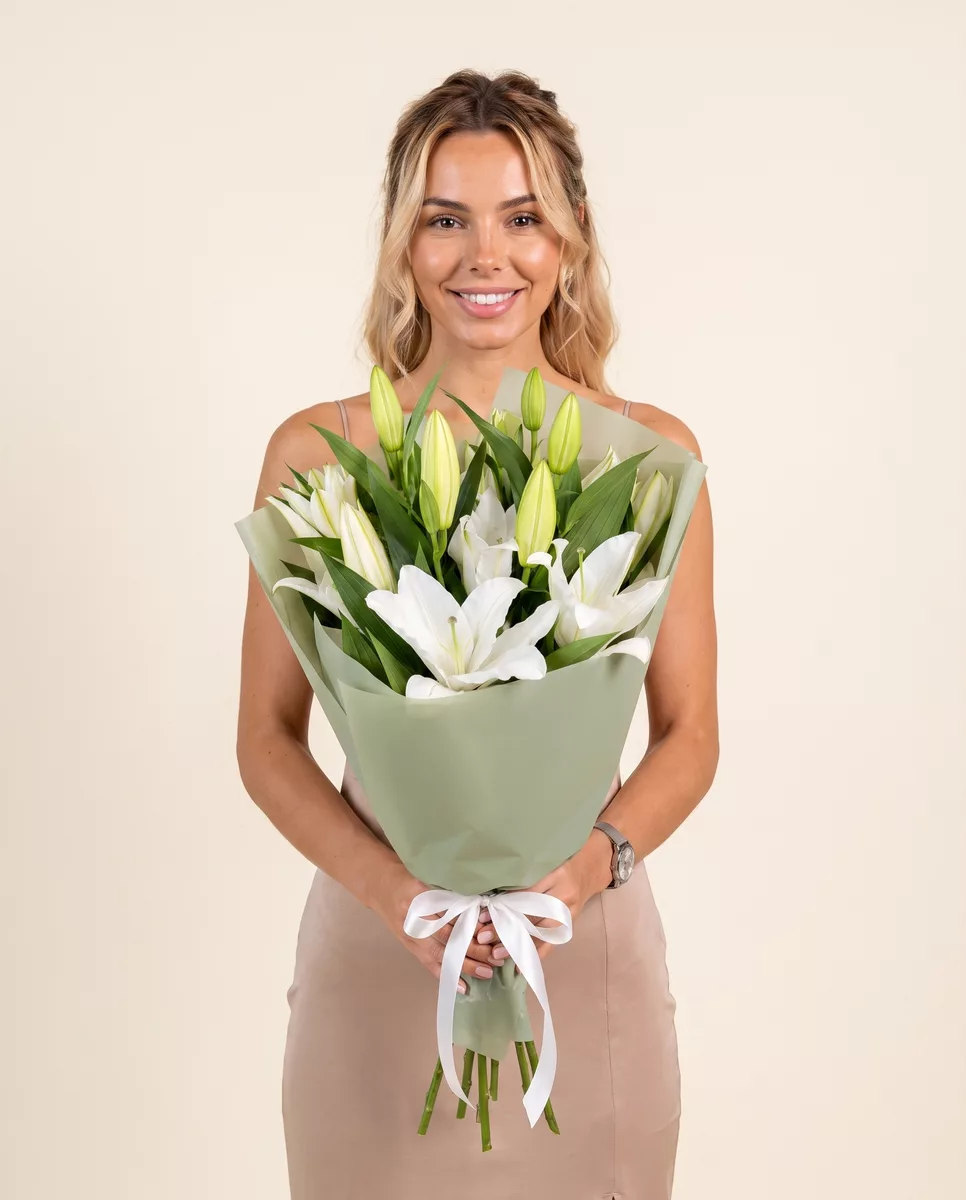
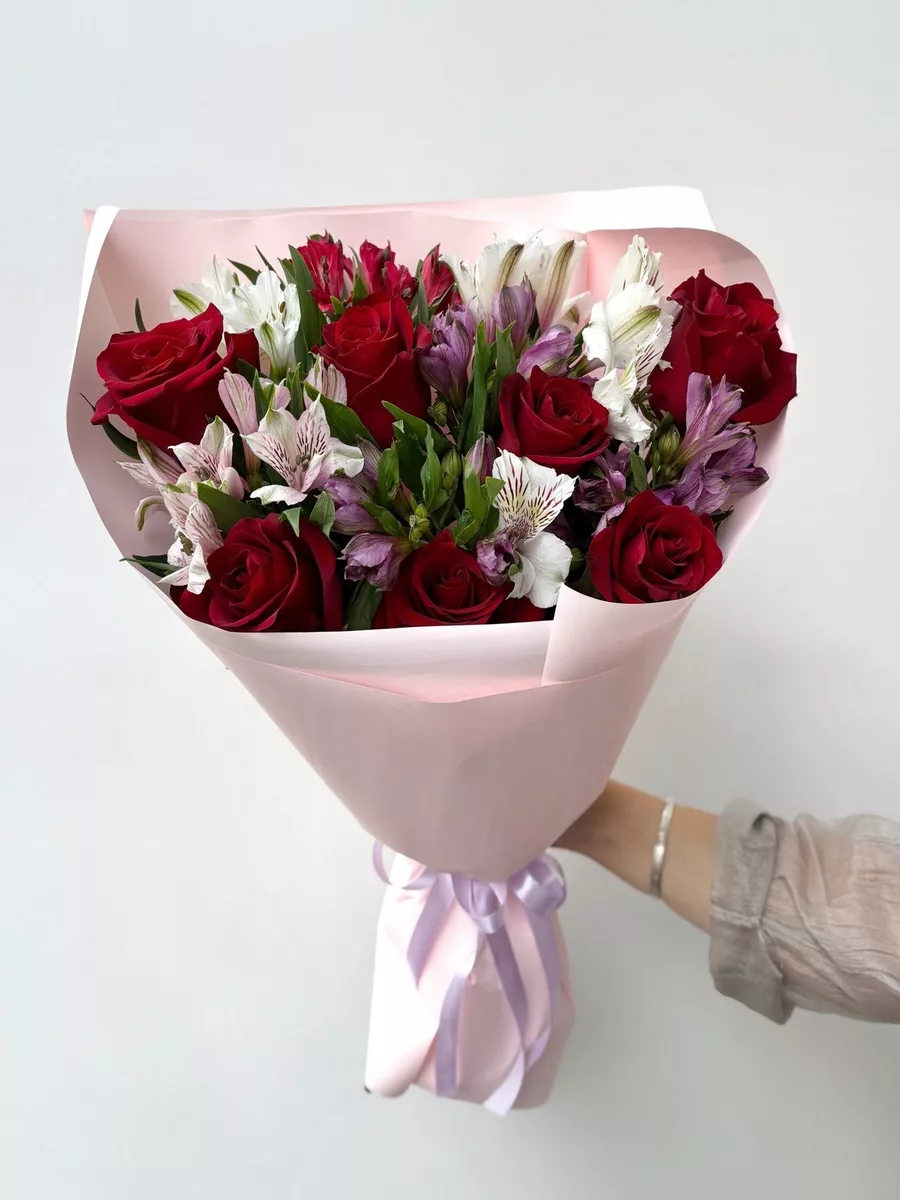
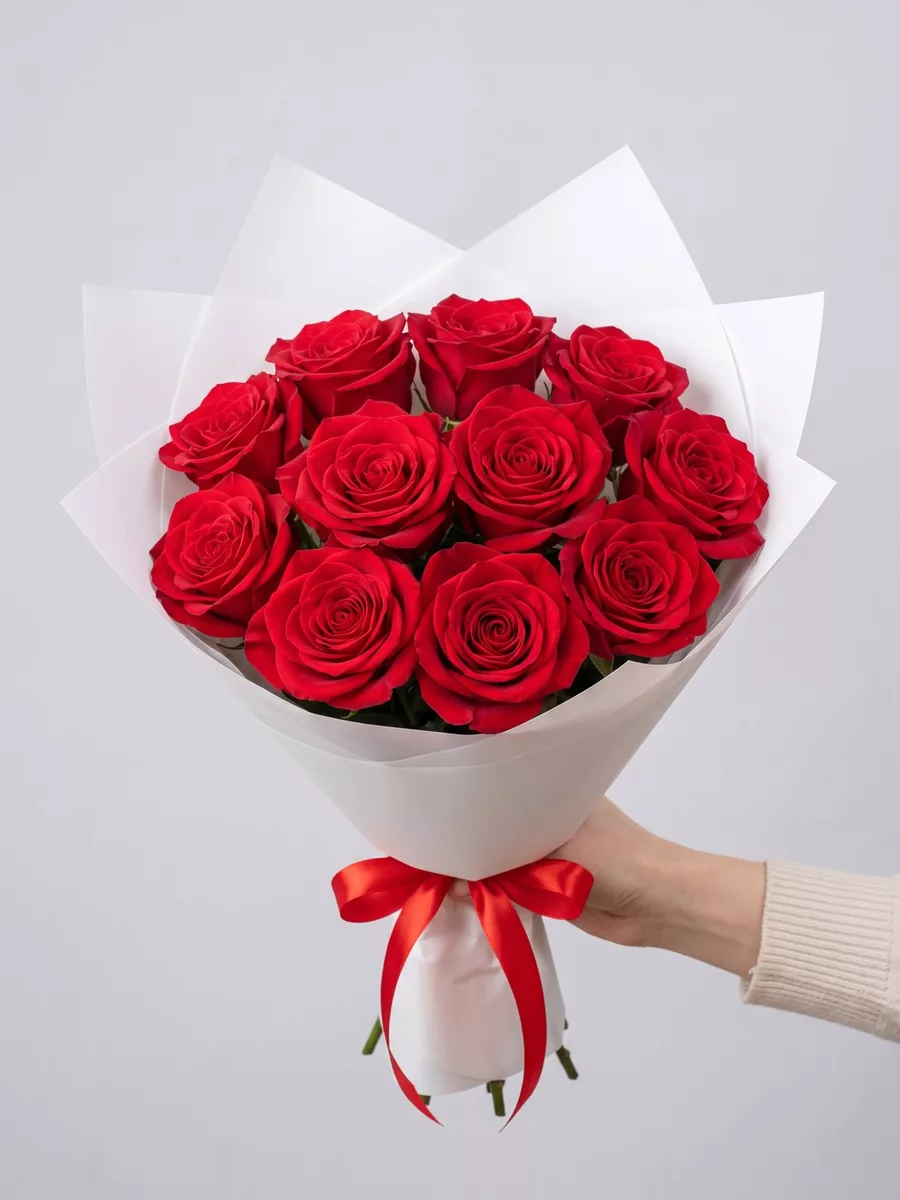

Roses: The Default Choice and How to Use Them Well
Roses are the most common choice for a senior figure in Russia, and for good reason — they carry a universal association with quality and care. The key is selecting the right variety and colour. Long-stemmed roses, particularly those with a bud diameter of 5 cm or more, read as formal and high-quality. Varieties like Grand Prix, Explorer, and Red Naomi are well known for their large heads, deep colour, and strong stems that hold up well in a warm office environment. These are not novelty flowers; they are workhorses of the professional gifting market.
For colour, red remains the most formal and respectful choice in a Russian professional context. White roses are also appropriate — they signal purity and respect without any romantic undertone when presented in a structured bouquet. Pale pink works if the recipient is a woman, but deeper pinks and hot pinks can veer toward the personal. Orange and yellow roses are warmer and more casual; they are better suited to colleagues of equal standing than to a manager.
The number of stems matters more than the size of each flower. A bouquet of eleven or fifteen long-stemmed red roses in a tight, formal arrangement with minimal filler — perhaps a little greenery, nothing distracting — is the clearest possible signal of respect. Avoid adding baby's breath or cheap filler greens; they dilute the message and lower the perceived quality of the bouquet. If you want to add texture, ask for eucalyptus or ruscus, which read as contemporary and intentional rather than filler.
Alternatives to Roses That Still Read as Formal
Not every manager wants roses, and sometimes a repeat gift-giver needs to vary the choice without losing formality. Chrysanthemums are widely used in Russia for professional occasions and are significantly more durable than roses in a warm office — they can last ten days or more with minimal care. Large-headed spray chrysanthemums in white or cream are appropriate for senior figures; avoid the small pompom varieties, which feel too casual. Single-stem chrysanthemums with a large bloom diameter are a clean, modern choice that works well for a male manager.
Eustoma, sometimes called lisianthus, is another strong option. It has a layered, rose-like appearance but a softer, more refined silhouette. White and deep purple eustoma arranged in a structured bouquet look genuinely expensive and hold their shape well in transit and in a vase. They are less commonly given than roses, which can actually work in your favour — it shows thought rather than default behaviour.
Freesia is worth considering when the recipient is known to appreciate fragrance. It is a delicate flower with a clean, fresh scent that is not overpowering, which makes it office-appropriate. However, freesia stems are thin and the flowers small, so a freesia bouquet needs to be generous in quantity — fewer than fifteen stems looks sparse. Orchid branches, specifically Cymbidium or Dendrobium varieties, are another formal option that signals sophistication; they last exceptionally well and are increasingly common in professional gifting in major Russian cities.
What to Avoid: Flowers That Send the Wrong Signal
Several flowers that are perfectly lovely in other contexts become problematic when given to a senior figure in a Russian workplace. Tulips are the clearest example. They are hugely popular in Russia — especially around March 8th, International Women's Day — but they are considered an informal, friendly flower. Giving your director tulips on her birthday signals that you see her as a peer or friend, not as a superior. This is not a disaster, but it is a missed opportunity to show the kind of professional awareness that actually matters in Russian office culture.
Gerberas have a similar problem. Bright, cheerful, and inexpensive-looking even when they are not, gerberas are associated with casual celebrations and children's events. They are not the right flower for a director's office. Carnations occupy a complicated space — in some regions of Russia they are strongly associated with Soviet-era formality and official occasions, which can feel dated. In others they are simply seen as cheap. Unless you have specific knowledge that the recipient likes them, it is safer to avoid carnations entirely.
Mixed bouquets with many different flower types can also misfire. When you mix roses with gerberas, tulips, and alstroemeria all in one arrangement, the result looks like a supermarket bunch rather than a considered gift. A professional upward gift should ideally feature one or two flower types, well chosen, in sufficient quantity. Restraint in variety reads as confidence and taste. More than three flower types in one arrangement is almost always too busy for this context.
Timing, Freshness and Delivery Logistics for Office Gifting
Delivering flowers to an office in Russia introduces practical constraints that home delivery does not. Most offices have a reception or a security desk, and flowers need to arrive during working hours — typically between 9:00 and 18:00 on weekdays. If the occasion is a birthday, delivering in the first half of the day is strongly preferred; arriving at 17:30 means the recipient may be leaving and the moment is lost. When you place your order, specify the delivery window explicitly and confirm that someone will be available to receive the bouquet.
Freshness is directly connected to how the flowers were stored before dispatch. Roses should be kept at 2 to 5 degrees Celsius before delivery; anything warmer accelerates wilting. In summer, this matters especially for office deliveries where the flowers may sit in a warm reception area for an hour before reaching the recipient. When ordering in July or August, ask about the storage conditions and choose hardier varieties — chrysanthemums and eustoma tolerate warmth better than roses or tulips.
For same-day delivery, place your order at least three to four hours before the desired delivery window. This gives the florist time to cut stems at the correct angle, condition the flowers in water, and arrange them properly rather than rushing. A rushed bouquet shows — stems are uneven, wrapping is hasty, water tubes on individual stems may be missing. If you are ordering the day before, specify that the flowers should be cut and conditioned the morning of delivery, not the evening before, to maximise freshness on arrival.
Presentation, Packaging and the Card
In Russian professional gifting, the packaging of a bouquet is read as carefully as the flowers themselves. A formal bouquet for a senior figure should be wrapped in paper or fabric, not left bare. Kraft paper is widely used and reads as contemporary and intentional. Avoid cellophane wrapping, which looks cheap regardless of what is inside it. The colour of the wrapping should complement the flowers — white or cream paper for red roses, dark green or charcoal for white flowers. Ask the florist to wrap tightly at the base so the bouquet stands upright and does not droop during transit.
A ribbon is appropriate; a large bow is not. A single satin ribbon tied neatly at the stems is the correct level of formality. Anything more elaborate — multiple ribbons, decorative picks, glitter — moves the arrangement toward birthday party territory rather than professional respect.
The card is where many people make their final mistake. In Russian professional culture, the message should be brief, warm, and formal. Use the recipient's first name and patronymic — for example, Irina Vladimirovna — rather than just their first name, unless you have an established informal relationship. A message of four to six lines is appropriate; anything longer feels excessive. Express respect and good wishes without excessive compliments about their personal qualities. Something like acknowledging the occasion, wishing continued success, and signing with your name and role is exactly right. Avoid anything that could be read as flattery of their appearance or personal life — keep it professional and sincere.
Getting flowers right for a Russian manager is not complicated once you understand what the gesture is actually communicating. The bouquet is not about your taste — it is about signalling that you understand the relationship and take it seriously. Odd numbers, formal varieties, restrained colour palettes, quality packaging, and a brief professional card: these five elements together produce a gift that lands correctly every time. The flowers themselves — long-stemmed roses, structured eustoma, formal chrysanthemums — are not difficult to source or order. What takes thought is the combination, and that is exactly where a working florist can save you from the most common errors. We deliver bouquets across Russia in 1–2 hours. We deliver bouquets across Russia in 1–2 hours.
Frequently asked questions
Is it appropriate to give flowers to a male manager in Russia?
Yes, absolutely. Giving flowers to a male superior is normal in Russian professional culture, particularly on significant dates like his birthday or February 23rd, the national Defender of the Fatherland Day. Choose structured, single-variety bouquets — white or red chrysanthemums, or long-stemmed roses — rather than soft, mixed arrangements, which are more commonly associated with female recipients.
How many flowers should be in a bouquet for a boss?
Always an odd number — this is a firm rule in Russian gifting culture. For a senior figure, seven, nine, or eleven stems is a respectful quantity for a single-variety bouquet. Fifteen or more stems signals a significant occasion or a particularly close professional relationship. Even numbers of any kind are associated with mourning and should never appear in a celebratory gift.
What is the best flower for a boss's birthday in winter?
Long-stemmed roses are the most reliable choice in winter — Grand Prix and Red Naomi varieties hold well in cold transit and look formal and high-quality on arrival. Eustoma is also excellent in winter, as it is typically cold-chain grown and arrives in strong condition. Avoid spring flowers like tulips or anemones in January or February, as their quality and availability are less consistent.
Can I send flowers to an office without knowing the exact delivery time?
You can, but it creates risk. Office receptions sometimes refuse to accept deliveries without prior notice, and flowers left at a desk in a warm room for several hours lose freshness quickly. It is better to give the florist a two-hour delivery window during core working hours and let the recipient's assistant know to expect a delivery. This also ensures the moment of presentation is not lost.
Are white flowers acceptable for a professional gift in Russia, or are they associated with funerals?
White flowers are entirely appropriate for professional gifting in Russia. The association with mourning applies specifically to all-white wreaths and loose single stems given in a funeral context, not to composed bouquets. A structured arrangement of white roses, white eustoma, or white chrysanthemums reads as elegant and respectful — it is a common and well-received choice for senior recipients.
Ready to send a bouquet?
Pick a city, choose the flowers, and we will hand them over with a photo confirmation.
Choose a city →