
Flowers of Colombia, South America: A Practical Flower Guide
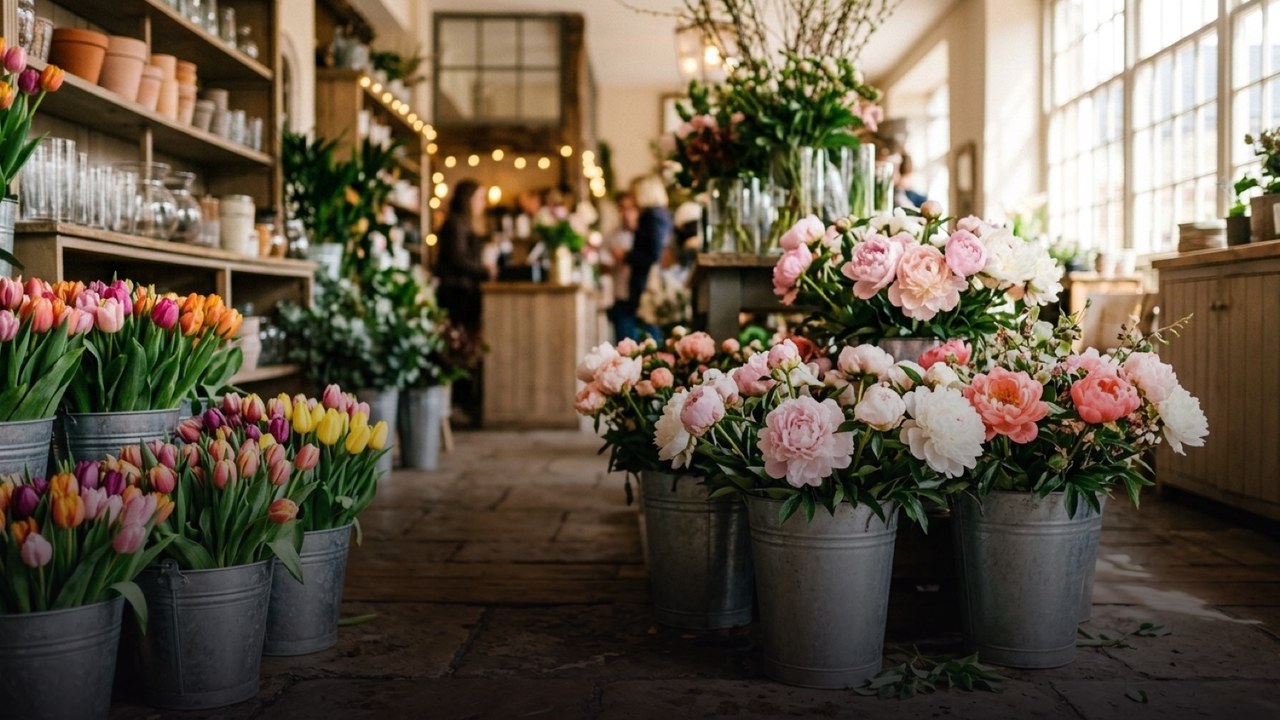
The flowers of Colombia, South America, include roses, carnations, chrysanthemums, orchids and tropical plants such as heliconias. Colombia’s national flower is the orchid Cattleya trianae, while roses and carnations are particularly familiar as cut flowers used in bouquets. For a gift, the useful distinction is between flowers associated with Colombia’s natural landscapes and stems suitable for a vase.
At Pyat Tsvetov (5 Flowers), customers choosing roses often want to understand what a country name tells them about a bouquet. Our Saint Petersburg flower shops have been operating since 2011, and our practical advice is to consider the flower variety, condition, colour and intended recipient together. Colombian origin alone does not tell you a rose’s fragrance, its eventual opening size or how long a particular stem will last.
Colombia’s national flower and its familiar bouquet flowers
Cattleya trianae is an orchid native to Colombia, recognised for its showy flowers and prominent lip. It is useful to know its name when researching the country’s floral identity, but a photograph of this orchid is not a guide to everyday bouquet availability. A potted orchid and a cut orchid stem also need different care. Identify which form you are considering before following watering or display advice.
Roses, carnations and chrysanthemums offer a more practical starting point for understanding Colombian cut flowers. Roses provide a strong focal point, carnations contribute ruffled texture, and spray chrysanthemums can give a bouquet a branching outline. Each group contains many varieties with different shapes and colours. The country name describes origin; it does not identify a single standard appearance.
Heliconias and anthuriums belong to the tropical side of the subject, with bold forms that differ markedly from a rounded rose bouquet. Their scale and outline can suit a spacious display, whereas a smaller arrangement may be easier to place on a desk or bedside table. Use images to identify the shape you enjoy, then check the actual product description. Our guide to Colombian flowers explores roses, carnations and their differences.
How to assess Colombian roses beyond the origin label
Begin with the flower head, stem and leaves rather than assuming that the tallest rose is the best choice. Look for a firm stem, leaves without extensive yellowing and petals without widespread translucent or softened patches. Some outer petals naturally protect the bloom and may look less neat than the inner petals. Several damaged petals throughout the head deserve closer attention than one imperfect outer petal.
The stage of opening matters as much as the size of the bud. A tightly closed rose may change substantially in the vase, but opening depends on the variety and the condition of the stem. A more open flower gives an immediate display without necessarily being unsuitable. Choose for the occasion and avoid treating a closed bud as a guarantee of longer vase life.
Stem length affects proportion and handling, so consider the recipient’s vase before choosing an especially tall arrangement. Long stems need a sufficiently tall, stable container; shorter stems can work well in a compact display. Fragrance also varies, so neither a large head nor Colombian origin guarantees a strong scent. See our Colombian rose guide for more detail on choosing and caring for a bouquet.
Bouquets we can deliver




Choose flower colours and quantities for the recipient
Red roses commonly communicate romantic affection, while pink can express warmth, gratitude or admiration. White often feels restrained and formal, although its meaning depends on the occasion and the recipient’s traditions. Yellow may suggest friendship and brightness, but associations differ between families and cultures. A known favourite colour is usually a more reliable choice than a rigid list of flower meanings.
For a gift to someone in Russia, pay attention to the number of stems when it is clearly countable. Odd numbers are customary for celebratory gifts, while even numbers are traditionally associated with mourning. This convention is especially relevant to a small bouquet of roses or carnations. Mixed arrangements with many branching stems are less naturally read as a simple count, but the occasion should still guide the choice.
For a colleague or host, consider whether the bouquet will fit comfortably in the setting and be easy to carry home. For a personal anniversary, a favourite flower or a reference to a shared memory can make the choice more specific. Add a short card explaining the sentiment when the colour alone could be ambiguous. A direct message such as “Thank you for looking after us” is clearer than expecting the flowers to convey every detail.
Care for cut roses, carnations and mixed bouquets
Prepare a clean vase before unwrapping the stems, and remove leaves that would sit below the waterline. Recut the stem ends with a clean, sharp tool and place the flowers promptly into fresh water. If flower food is supplied, follow its stated dilution rather than adding an improvised amount. Keep decorative wrapping clear of the water so it does not become soaked or interfere with the stems.
Choose a display position away from radiators, strong direct sunlight and ripening fruit. Check the water level daily, especially when several stems share a narrow vase. Refresh the water and clean the container regularly, removing loose leaves or petals that fall into it. These simple steps help maintain clean conditions, although they cannot establish a fixed lifespan for every variety.
In a mixed bouquet, individual flowers may age at different rates. Remove deteriorating stems while keeping the healthy ones, and recut remaining stems when needed to suit a smaller clean vase. Do not apply cut-flower instructions to a potted orchid, whose roots and growing medium require separate care. If the arrangement includes unfamiliar tropical stems, identify them before assuming that every component needs identical treatment.
Ordering flowers for someone in Russia
Searching for Colombian flowers may help you choose a style, but it does not establish the origin or availability of a particular bouquet. Start with the bouquets catalogue, read the composition and choose for the recipient’s occasion. If Colombian origin is essential, clarify that detail before ordering rather than inferring it from the photograph. A similar-looking rose can belong to a different variety or have a different origin.
We deliver flowers across Russia, with city delivery costing 500 RUB. For remote districts and suburbs, the operator confirms the delivery price when confirming the order. In large cities, express delivery is available within 1–2 hours after the order is confirmed. You can also choose an exact time with a tolerance of plus or minus 30 minutes, or a delivery window of 09–12, 12–15, 15–18 or 18–21.
Orders can be placed 1–30 days ahead, which helps when arranging a birthday or anniversary from abroad. Use the date and time at the recipient’s destination when selecting delivery, particularly if you are ordering from another time zone. Saint Petersburg delivery operates around the clock. For questions about the order or its delivery details, call 8 (812) 507-67-05.
Payment, anonymous gifts and the final delivery details
Online checkout uses CloudPayments; check the payment options displayed there before planning your purchase around a particular card. Acceptance of every foreign-issued card cannot be assumed. Review the recipient’s address, contact number and selected delivery time before completing checkout. The delivery and payment information is a useful reference while preparing the order.
Delivery is anonymous by default, so the courier does not name the sender. A card with your text is free, and you can sign it if you want the recipient to know who sent the gift. Read the message once for names and spelling, especially when switching between English and Russian. Anonymous delivery concerns the sender’s identity; the recipient may still need a call to receive the flowers.
The courier calls the recipient about 15 minutes before arrival. If the recipient is absent, we agree a second delivery that day or, with the sender’s consent, handing the flowers to a neighbour or concierge. Do not assume that leaving a bouquet with someone else is automatic. Choose a time when the recipient is likely to be available, particularly for a workplace, appointment or short visit.
Frequently asked questions
What is the national flower of Colombia?
Colombia’s national flower is Cattleya trianae, an orchid native to the country. It is distinct from the roses and carnations commonly associated with Colombian cut-flower production.
Are all Colombian flowers tropical?
No. Colombia is associated with tropical flowers such as heliconias and orchids, as well as familiar bouquet flowers including roses, carnations and chrysanthemums.
Does Colombian origin guarantee that roses will last longer?
Origin alone does not guarantee vase life. Variety, flower condition, handling and care after arrival all affect how a bouquet develops.
Can I order flowers to Russia while living abroad?
We deliver flowers across Russia, and online checkout uses CloudPayments. Check the options shown at checkout because acceptance of every foreign-issued card is not guaranteed.
Will the recipient know who sent the bouquet?
The courier does not name the sender because delivery is anonymous by default. You can identify yourself in the free card included with your text.
Ready to send a bouquet?
Pick a city, choose the flowers, and we will hand them over with a photo confirmation.
Choose a city →