
Corporate Flower Orders: Realistic Lead Times from Same-Day to Two Weeks
Every week someone calls at noon asking for forty identical arrangements by six o'clock, and the conversation always starts the same way: 'It's just flowers, how complicated can it be?' The answer depends entirely on what you are ordering, how many stems are involved, and what month of the calendar you happen to be in. This article lays out the actual timelines we work with at Five Flowers — not the optimistic version, but the one that gets your order delivered on time and looking the way it should.
Why Corporate Orders Are Different from a Single Bouquet
A single bouquet of fifteen spray roses or a mixed seasonal arrangement is something a florist can pull together in twenty to thirty minutes from stock already in the cooler. A corporate order is a different category of work entirely. When a company needs thirty matching centerpieces for a conference table, fifty identical welcome bouquets for a product launch, or a series of branded arrangements with specific color codes, the florist is no longer working from existing inventory — she is sourcing, conditioning and processing a specific quantity of specific stems, often across multiple varieties. Conditioning alone takes time: fresh-cut roses need a minimum of four to six hours in temperature-controlled water at around two to four degrees Celsius before they open to the right stage for an event. Lisianthus, which is a popular corporate choice because of its long vase life and clean silhouette, needs even longer — sometimes overnight — to fully hydrate and open properly. Tulips, often requested in spring, are notorious for continuing to grow after cutting and must be staged carefully so they are not overblown by the time the event starts. Beyond the flowers themselves, large orders require dedicated assembly time, matching vessels or wrapping, and coordinated delivery logistics so that thirty arrangements arrive at one address within the same window rather than trickling in over two hours. All of this is why the first question we ask any corporate client is not 'what flowers do you want' but 'when is the event and how many pieces do you need.'
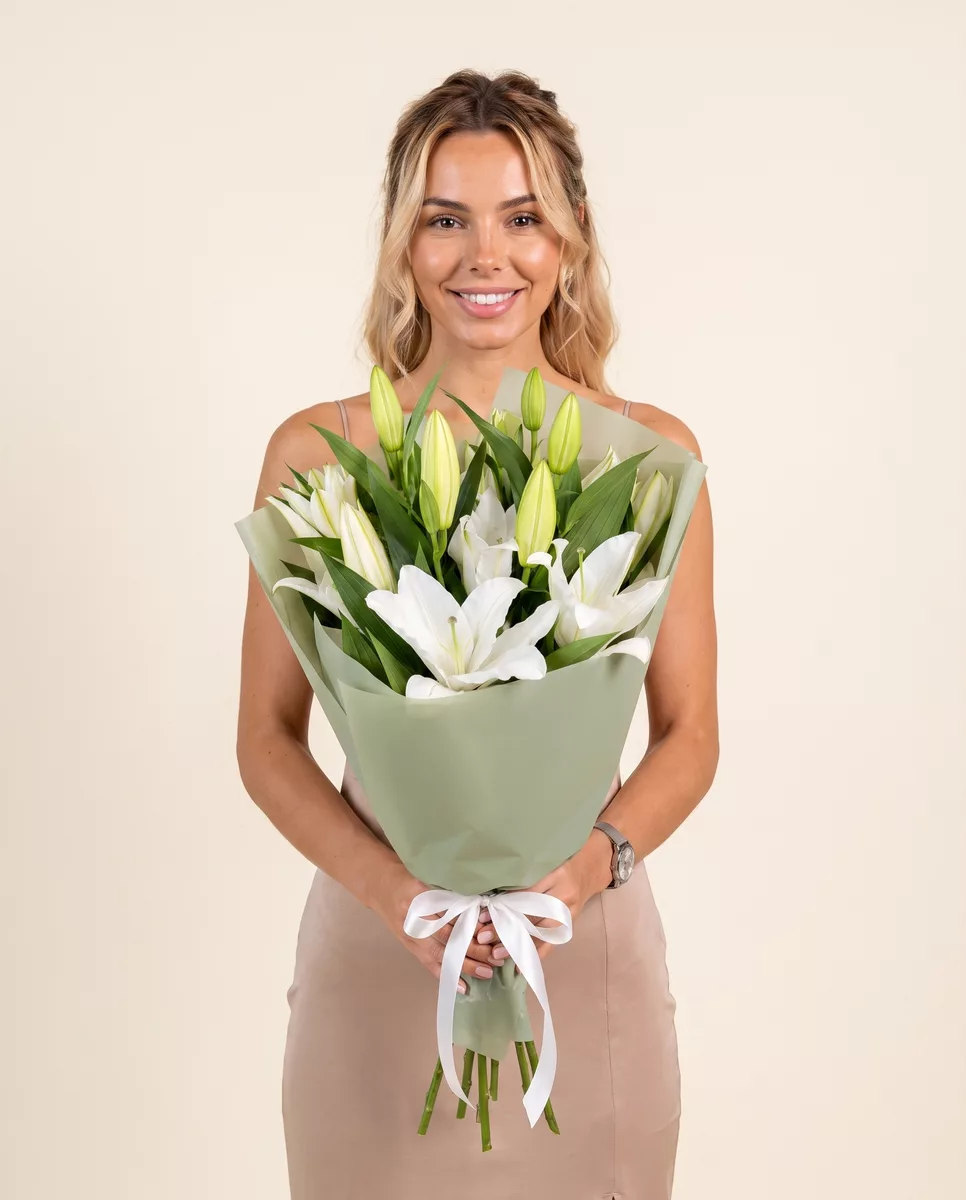
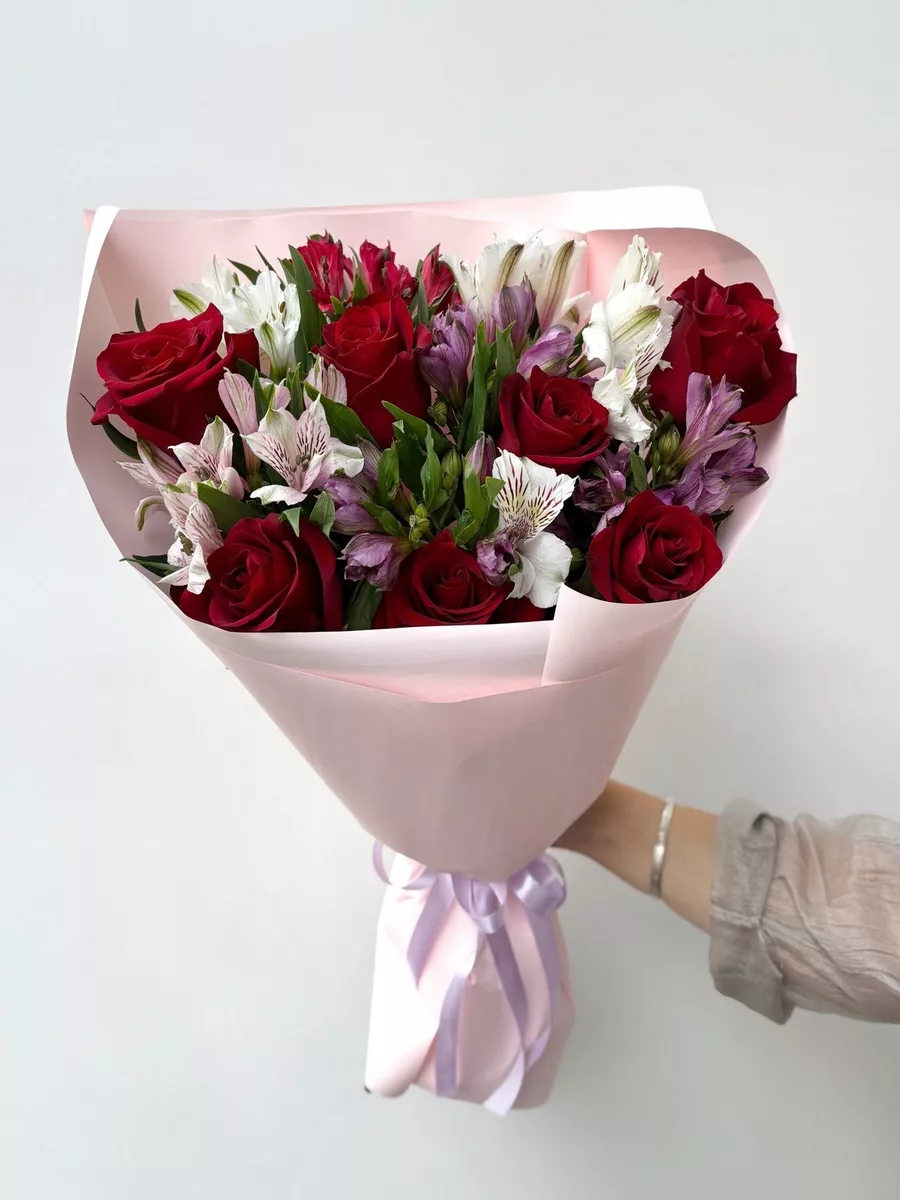
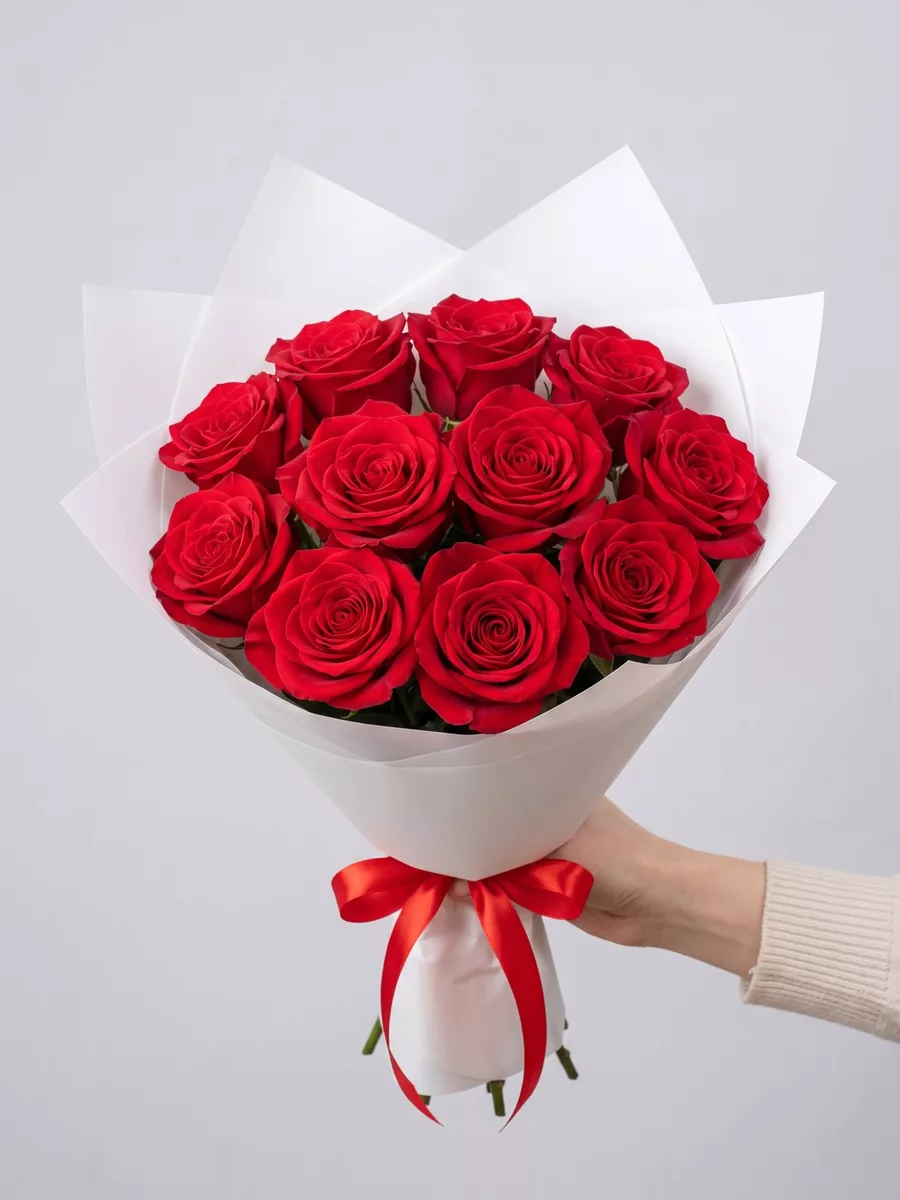
Bouquets we can deliver

Same-Day Corporate Orders: What Is Actually Possible
Same-day fulfillment for a corporate order is possible, but the window is narrower than most clients expect. If you contact us before ten in the morning on a weekday, we can realistically assemble and deliver up to ten to twelve matching arrangements within the city on the same day, provided the varieties you need are already in our cooler. The safest choices for same-day corporate work are flowers that condition quickly and hold their shape reliably: chrysanthemums in standard or santini form, alstroemeria, carnations, and single-variety rose bouquets in colors we carry as standing stock. These are not lesser flowers — chrysanthemums in particular last two weeks in a vase and look architectural and deliberate in a corporate setting. What does not work well on same-day timelines is anything that requires sourcing from the flower market, custom color matching, or varieties that need overnight hydration. Peonies, for example, arrive from suppliers in tight bud and need eighteen to twenty-four hours minimum to open to a presentable stage — ordering them the morning of your event almost always results in tight green balls rather than the full bloom shown in the reference photo. The other limit on same-day corporate orders is quantity. Ten arrangements is manageable; twenty-five is not, because the assembly and quality-check time alone pushes the timeline past what a same-day delivery window allows. If you are not sure whether your order qualifies, call us with the number of pieces, the delivery address and the required time — we will tell you within a few minutes whether it is feasible.
The 48-Hour Window: Standard Corporate Events
For most corporate events — office anniversary celebrations, client appreciation deliveries, product launches, welcome arrangements for visiting delegations — a forty-eight-hour lead time is the practical standard we recommend. This window gives us enough time to place a targeted order with our suppliers for the exact stems and quantities you need, receive the flowers the following morning, condition them through the day, and assemble your order on the day of delivery. With forty-eight hours, the range of available varieties expands considerably. Dutch roses in specific head sizes, ranunculus in season, eustoma in white or purple, ornamental branches like eucalyptus or ruscus for structure — all of these become accessible because we have time to source them deliberately rather than work from whatever is already on the shelf. Forty-eight hours also gives us time to discuss the brief properly. Corporate clients often have brand guidelines: a company with a dark green and gold identity does not want hot pink roses regardless of what is on sale that week. With two days of lead time we can confirm stem counts, vessel choices and color palette before committing to the order, which eliminates the most common source of disappointment. One practical note: if your event is on a Monday, forty-eight hours means you need to confirm by Saturday morning at the latest, because flower market supply on Sundays is limited. Events early in the week consistently catch clients off guard on this point. Build the weekend into your planning calendar and the Monday delivery becomes straightforward.
Large-Scale Orders and the 72-Hour Minimum
Once an order crosses roughly twenty-five to thirty individual arrangements, or involves flowers that require special sourcing — garden roses, specific peony varieties, large-format tropical stems like anthurium or bird of paradise — the minimum lead time moves to seventy-two hours. At this scale the logistics are closer to event floristry than to standard delivery: stems arrive in multiple batches, conditioning happens in stages, and assembly requires dedicated workspace and time that has to be scheduled in advance. Garden roses are the clearest example of why this timeline exists. Unlike standard commercial roses, garden varieties such as David Austin types have significantly more petals and a more complex internal structure, which means they need longer conditioning at lower temperatures to open evenly. Rushing them produces an arrangement where the outer petals are blown and the center is still tight — a result that looks unfinished in photographs and on a conference table. Anthurium and tropical stems travel well but need time to acclimatize after refrigerated transit before they are stable enough to arrange. The seventy-two-hour window also covers the administrative side of large orders. For orders above a certain size, corporate clients typically need a formal quotation, approval from a procurement department, and a confirmed invoice before work begins. None of that can happen in forty-eight hours if the approval chain involves more than one person. We ask that the brief — variety preferences, quantities, delivery address, event time — be finalized before the clock starts, because changes to stem counts or color direction after sourcing has begun can mean starting over.
Seasonal Peaks in Russia: When Two Weeks Is Not Enough
Russia has three dates in the calendar that compress the entire flower supply chain simultaneously: the eighth of March, which is International Women's Day and by far the largest flower-buying event of the year; the first of September, when children traditionally bring flowers to teachers on the first day of school; and Valentine's Day on the fourteenth of February, which has grown significantly in recent years. Around the eighth of March in particular, demand across the country spikes so sharply that wholesale prices for roses and tulips can multiply several times over in the space of a week, and supply of specific varieties becomes genuinely uncertain regardless of how much you are willing to spend. For corporate orders around these dates, two weeks of lead time is a minimum, not a buffer. We have had clients contact us ten days before the eighth of March expecting to order three hundred individual bouquets for female staff members and been unable to guarantee specific varieties because the supply was already committed. The varieties that hold up best under peak-season pressure are those grown domestically or in nearby countries: Ecuadorian roses are widely available but travel time becomes a factor, while Dutch tulips and spray roses sourced closer to the date are more reliable. If your company has a tradition of gifting flowers to staff or clients around these dates, the only strategy that consistently works is placing a confirmed order with full payment at least two weeks in advance, locking in both the stems and the delivery slots. Waiting to see the final headcount or budget approval until the week before is the single most common mistake we see from corporate clients.
What to Include in a Corporate Brief to Avoid Delays
The speed with which we can confirm and begin a corporate order depends almost entirely on the quality of the brief we receive. A complete brief has six elements: the event date and the required delivery time window, the delivery address including floor and contact name, the number of individual pieces needed, any color or variety preferences or restrictions, the approximate budget range per piece or total, and whether vessels — vases, boxes, kraft wrapping — are included or if the client is providing their own. Missing any of these creates a round of back-and-forth that costs time. The most frequently missing element is the delivery time window. 'Morning' means different things to different people: a corporate client who says 'morning delivery' and means seven-thirty before the guests arrive, but whose florist interprets that as any time before noon, ends up with arrangements sitting in an empty lobby for four hours or delivered after the event has started. Be specific: 'delivery between eight and nine on the fifteenth' is actionable. The second most common gap is vessel information. If your company has branded vases or the venue is providing containers, we need to know the opening diameter and height to size the arrangement correctly. An arrangement designed for a wide-mouth cylinder looks wrong in a narrow-neck vase and cannot simply be reassembled on arrival. Sending a photograph of the vessel, or even a rough sketch with dimensions, takes two minutes and eliminates one of the most common causes of a mismatch between expectation and result. The more complete the brief, the faster we can confirm the order and begin sourcing.
How to Check That Your Order Is on Track Before Delivery Day
Once a corporate order is confirmed, there are three checkpoints that experienced clients use to make sure everything is proceeding correctly. The first is the sourcing confirmation, which should come from us within twenty-four hours of your order being placed: this tells you which specific varieties have been secured and flags any substitutions if a requested stem was unavailable. If you ordered white garden roses and we have sourced white spray roses instead, that conversation needs to happen two days before the event, not the morning of. The second checkpoint is an assembly update on the day before delivery, particularly for orders of twenty pieces or more. At this stage the flowers are conditioned and the arrangements are being built; if there is a problem with stem quality from a particular batch, we identify it here and have time to address it before the order leaves our workshop. The third checkpoint is the delivery confirmation itself — a specific time window, not just a date, with a contact number for the driver. For corporate deliveries to office buildings in Saint Petersburg, access to the building often requires advance notice to security or a pass for the delivery vehicle. If the building requires a vehicle pass, that information needs to reach us at least the day before. Receptions and lobbies in large business centers often have restricted loading windows in the morning — typically before nine or after eleven to avoid peak foot traffic — and knowing this in advance lets us schedule the delivery slot accordingly. Confirming these logistics is the client's responsibility, but asking about them is ours, and we do.
The pattern across every corporate order we handle is the same: the clients who are happiest with the result are the ones who contacted us earliest, gave us the clearest brief, and treated the flower order as a logistics item with a real timeline rather than a last-minute detail. Flowers are a biological product with conditioning requirements, sourcing lead times and seasonal constraints that do not bend to urgency the way a printed banner or a catering order might. Same-day is possible for small quantities; forty-eight hours covers most standard corporate events; seventy-two hours handles large or complex orders; and anything around the eighth of March or the first of September needs two weeks minimum. Work within those windows and the result looks the way it should. We deliver bouquets across Russia in 1–2 hours.
Frequently asked questions
Can we add pieces to a confirmed corporate order after it has been placed?
Small additions of two or three pieces are usually possible if requested at least forty-eight hours before delivery, because we can pull from conditioned stock. Larger additions effectively restart the sourcing process, so the original lead-time rules apply to the added quantity. Contact us as soon as you know the revised number — do not wait until the day before.
What happens if a variety we requested becomes unavailable before our event?
We notify you immediately when a sourcing gap appears and propose the closest available alternative in form, color and stem length. You approve or redirect before we proceed. We never substitute silently. This is why sourcing confirmation within twenty-four hours of your order matters — it surfaces problems while there is still time to solve them properly.
Do flowers for a corporate order need to be in full bloom on delivery, or slightly closed?
It depends on the event. For same-day use — a conference table, a reception — flowers should be open and presentable. For a two-day event where arrangements need to look good on both days, we stage them slightly less open so they peak on day two. Tell us the duration of your event when you brief us and we condition accordingly.
Is the eighth of March really as difficult as florists say, or is that an exaggeration?
It is not an exaggeration. The eighth of March is to Russian floristry what Christmas Eve is to delivery services. Wholesale prices for tulips and roses rise sharply the week before, specific varieties sell out weeks in advance, and delivery slots fill completely. Corporate orders for that date placed less than ten days out face genuine supply constraints regardless of budget.
We need flowers delivered to multiple addresses across Saint Petersburg on the same morning. Is that possible?
Yes, with adequate lead time. Multi-address corporate deliveries require route planning and staggered assembly so that each batch travels in optimal condition. We need all addresses, contact names and required time windows confirmed at least seventy-two hours before delivery. Same-day multi-address corporate runs are not something we can reliably execute without that advance notice.
Ready to send a bouquet?
Pick a city, choose the flowers, and we will hand them over with a photo confirmation.
Choose a city →