
Flower Delivery to Zheleznovodsk from Abroad: What Senders Need to Know
Customers calling from Germany, the UAE, Israel and the United States ask us the same opening question: can you actually get fresh flowers to Zheleznovodsk today? The answer is yes, but the details matter more than the yes. Zheleznovodsk sits in the Caucasus Mineral Waters resort cluster in Stavropol Krai, roughly 170 kilometres from Mineralnye Vody airport, and the city's compact size and resort character shape everything about how an order should be built — which varieties hold up in summer heat, what address information the recipient actually needs to give, and how a sender in a different time zone avoids the most common mistakes.
Where Zheleznovodsk Is and Why It Matters for Your Order
Zheleznovodsk is a balneological resort city with a population of around 25,000, built on the slopes of Mount Zheleznaya in Stavropol Krai. It is the smallest of the four Caucasus Mineral Waters cities — the others being Kislovodsk, Pyatigorsk and Yessentuki — and many recipients there are not permanent residents but visitors staying in sanatoriums, boarding houses or rented apartments for weeks at a time. This is the first thing a sender from abroad needs to understand: the address you have may be a sanatorium name and a room number rather than a street address, and that is perfectly usable for delivery as long as the building name is spelled correctly in Russian transliteration or Cyrillic. Senders often write the address in English phonetics, which can be ambiguous — ask your recipient to send you a screenshot of their accommodation address in Russian so you can paste it directly into the order form. The city itself is walkable and delivery within its central zone is straightforward. The resort season runs from late April through October, when the population swells with visitors from across Russia and from Russian-speaking communities abroad. Outside that window, the city is quieter but deliveries still run. Altitude is modest — around 630 metres above sea level — so the climate is warmer and drier than, say, mountain villages further into the Caucasus, but summer afternoons regularly reach 30 degrees Celsius, which is directly relevant to which flowers you should choose.
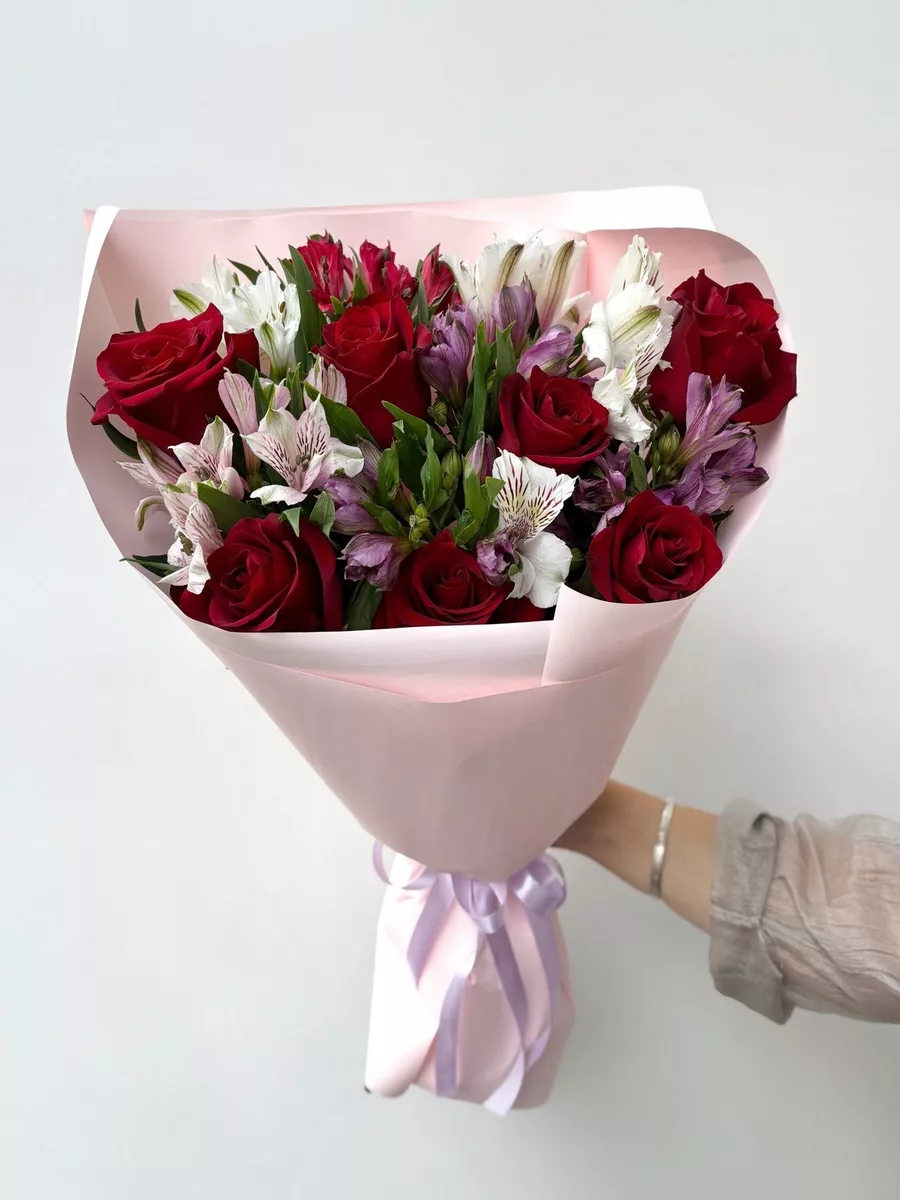
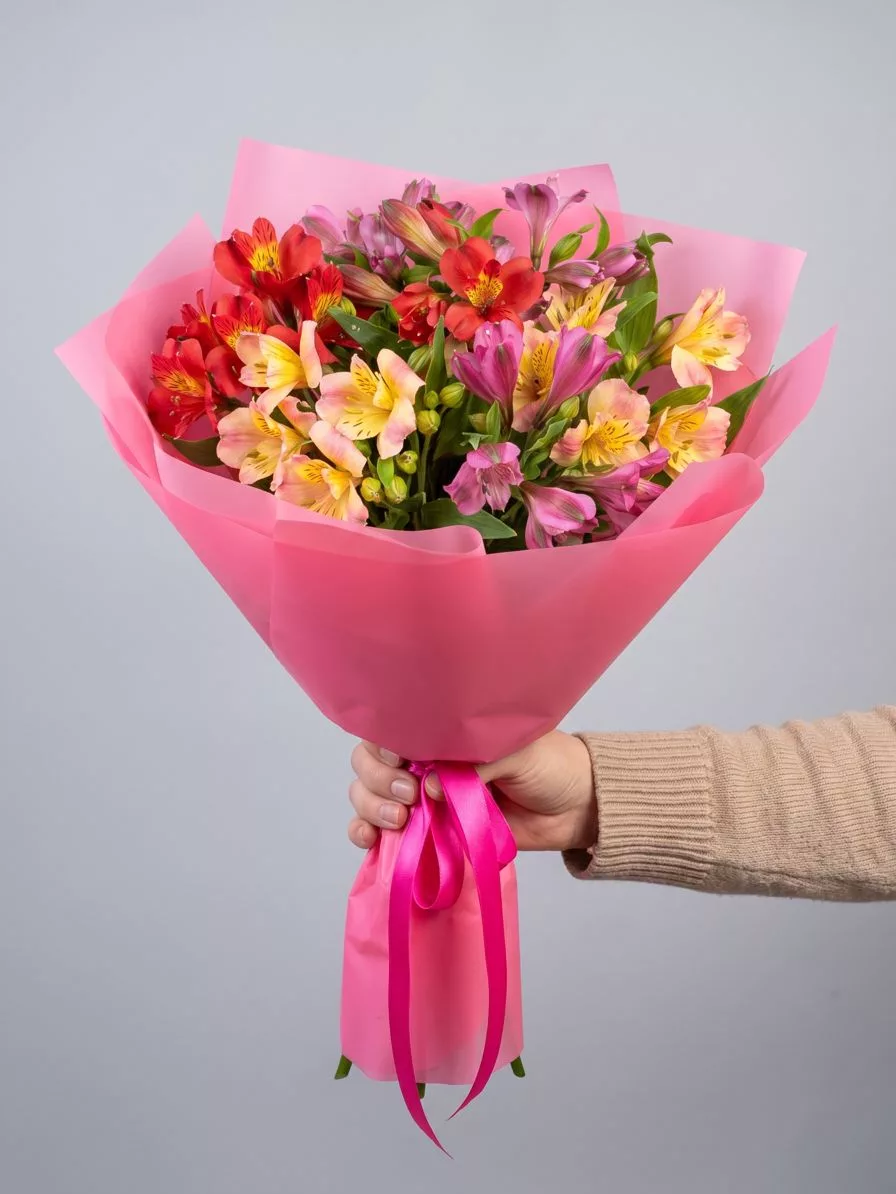
Bouquets we can deliver


Time Zones: Calculating the Right Moment to Place Your Order
Zheleznovodsk runs on Moscow Standard Time, which is UTC+3 year-round — Russia does not observe daylight saving. If you are ordering from Central Europe, you are two hours behind in winter and one hour behind in summer. From the US East Coast you are eight hours behind in winter, seven in summer. From Dubai or Abu Dhabi, which also run UTC+4 in winter and UTC+4 year-round, you are actually one hour ahead of Zheleznovodsk. The practical consequence is that senders in the Americas placing an order in the morning their time are often placing it in the early evening Moscow time, which can push delivery into the next morning. If you want same-day delivery, the cutoff is not midnight your time — it is the delivery window closing in Zheleznovodsk. A sender in Los Angeles at 9 a.m. Pacific is already at 8 p.m. Moscow time, and an order placed then will deliver the following morning. This is not a problem as long as you plan for it. The mistake we see repeatedly is a sender who wants flowers delivered on a birthday at noon Zheleznovodsk time but places the order at noon their own time, not accounting for the gap. Work backwards from the desired delivery hour in Zheleznovodsk and add your offset. When in doubt, place the order the evening before your local time — that typically lands in the morning Moscow time, giving the full day for delivery. Always confirm the recipient will be at the address during the delivery window, especially if they are at a sanatorium with scheduled treatment sessions.
Varieties That Travel Well in Zheleznovodsk's Summer Heat
The Caucasus Mineral Waters region has hot, dry summers, and Zheleznovodsk is no exception. Choosing the wrong flowers for a July or August delivery means the recipient opens a box of wilted stems. Roses are the most requested flower for deliveries to this city, and they hold up reasonably well if the variety is right — spray roses and garden roses with tightly packed petals fare better in heat than large-headed hybrid tea roses with thin outer petals. Chrysanthemums are exceptionally heat-tolerant and are a strong choice for summer: both the large single-bloom santini type and the branched spray varieties last well even after an afternoon in a warm car. Alstroemeria is another reliable option — its waxy petals handle temperature swings better than lilies, which are beautiful but whose open blooms bruise easily in transit. Eustoma, also known as lisianthus, is a popular resort gift flower and holds its shape well in moderate heat as long as it is cut at the bud stage rather than fully open. For cooler months — November through March — the range expands: ranunculus, tulips and anemones all become viable because ambient temperatures in transit stay low enough to protect delicate petals. Hydrangeas are a frequent request from senders who have seen them in European florist windows, but they are high-water-demand flowers and suffer badly in summer heat; we steer customers toward them only for spring or autumn orders. Foliage such as ruscus and eucalyptus adds structure and travels reliably across all seasons.
What Counts as a Complete Delivery Address in Russia
Russian postal addresses follow a specific order that differs from most Western formats, and incomplete addresses are the single most common reason a delivery is delayed. A full Russian address runs: country, region or oblast, city, street name, building number, apartment or office number, and recipient name. For Zheleznovodsk, the region is Stavropol Krai. Many senders write only the city and a street, omitting the building corpus number — in Russian cities, a single street address often has multiple buildings labeled with a letter suffix or a corpus number, and without it the courier cannot identify the correct entrance. Sanatoriums and boarding houses have their own named addresses and sometimes their own internal room numbering systems; the room number alone is not sufficient without the full institution name. When your recipient is staying somewhere temporarily, ask them to confirm the address on the day of delivery, not a week in advance, because sanatorium room assignments sometimes change. Russian addresses should ideally be written in Cyrillic for the courier, but a careful Latin transliteration following standard Russian romanization is workable — the key is consistency. Do not mix Russian and English words in the same address field. The recipient's mobile phone number is mandatory for Russian deliveries: the courier will call or send an SMS before arrival, and if the number is unreachable, the order waits. International callers sometimes provide a foreign number for the recipient — make sure you provide the recipient's Russian mobile number, not your own number abroad. A +7 prefix is the Russian country code.
Payment from Outside Russia: What Actually Works
Since 2022, the Russian banking system has been significantly separated from Western payment infrastructure, and senders from Europe, North America and many other regions cannot use Visa or Mastercard issued by non-Russian banks to pay Russian merchants directly. This is the practical reality and it affects every international order. The most reliable route for senders abroad is payment through systems that bridge this gap: some shops accept payment via international bank transfer, some accept cryptocurrency, and some work through payment intermediaries that process the transaction on the sender's side. At Five Flowers, we handle international orders individually and advise each customer on the current working payment method at the time of their order — the landscape changes, and what worked six months ago may not work today. What does not work: trying to pay with a European or American card directly on a Russian checkout page. It will decline. Plan for a slightly longer checkout process if you are ordering for the first time from abroad — budget an extra 15 to 30 minutes to sort the payment step. If you are sending flowers for a time-sensitive occasion such as a birthday or anniversary, place the order at least 24 hours in advance specifically to allow time to resolve the payment without pressure. Senders who have family members with Russian bank accounts sometimes route payment through them — this is common and practical. The order confirmation you receive should include a delivery time window, the bouquet composition and a contact number you can reach if you need to update the address.
Russian Flower Customs a Sender from Abroad Should Know
If you did not grow up in Russia or a post-Soviet country, a few conventions around flowers will be unfamiliar and worth knowing before you order. The most important one is the odd-number rule: flowers in Russia are given in odd numbers — 3, 5, 7, 11, 15 — because even-numbered bouquets are traditionally associated with funerals and mourning. A bouquet of 10 roses, which would be perfectly normal in France or the United States, reads as a funeral gesture to a Russian recipient. Always specify an odd number when customizing your order, or let the florist compose the bouquet in the standard way, which will already follow this convention. Yellow flowers carry a secondary association with separation or infidelity in Russian popular belief, though this is a cultural superstition rather than a universal rule — many younger Russians are indifferent to it. If you are unsure, stick to white, pink, red or mixed-color bouquets. Wrapping style in Russia tends toward full coverage: the stems and lower foliage are wrapped in paper or fabric, and the whole bouquet is often presented in a cone or box rather than left bare. A bouquet handed over unwrapped looks unfinished to a Russian recipient. Greeting cards in Russian shops are typically small folded cards attached to the bouquet; the message can be in any language, but if you write in English and your recipient does not read English well, consider writing your message in Russian or asking the shop to translate a short phrase. A few words in Russian — even phonetically written — are appreciated far more than a long English message the recipient cannot read.
Checking Your Order Before You Confirm: A Practical List
Once you have chosen the bouquet and entered the details, pause before hitting confirm and run through these points. First, verify the recipient's address is complete: city spelled as Zheleznovodsk, street name in Cyrillic or careful transliteration, building number including any corpus or letter suffix, apartment or room number, and the institution name if it is a sanatorium or boarding house. Second, confirm the recipient's Russian mobile number starts with +7 and has ten digits after the country code — a common error is including an extra digit or omitting the area code. Third, check the delivery date and time window against Moscow time, not your local time. Fourth, read the bouquet composition in the order summary: if you requested roses, confirm the color and approximate stem count are as discussed. Fifth, check that the card message is exactly as you want it — spelling errors in a card message cannot be corrected after the bouquet is assembled. Sixth, confirm the payment has actually cleared and you have received an order confirmation number, not just a cart summary page. Seventh, if the occasion is date-specific — a birthday, an anniversary, a graduation — note the order number and the shop's contact and check in the morning of the delivery day Zheleznovodsk time to confirm dispatch. Most deliveries go smoothly, but a direct line of communication between the sender and the shop resolves the rare address issue in minutes rather than hours. Senders in distant time zones should save the shop's contact details in a way that is accessible during Moscow business hours.
Zheleznovodsk is a small resort city with a real appetite for flowers — sanatorium guests, visitors marking birthdays and anniversaries, and locals who appreciate a well-made bouquet are all regular recipients. Sending from abroad adds a time-zone calculation and a payment step, but neither is an obstacle once you know what to expect. Choose heat-tolerant varieties in summer, build the address carefully with the recipient's help, place the order at least a day ahead when payment from abroad is involved, and confirm the recipient's Russian mobile number before you submit. The flowers get there fresh when the groundwork is done right. We deliver bouquets across Russia in 1–2 hours.
Frequently asked questions
Can I order flowers for Zheleznovodsk if I live outside Russia and do not speak Russian?
Yes. Our order process works in Russian but our team handles international inquiries directly. You can write to us in English, provide the recipient's details, and we will confirm the bouquet, delivery window and payment method before processing anything. Having the recipient's address in Cyrillic, which they can send you as a screenshot, speeds things up considerably.
How far in advance should I place an order from a different time zone?
For same-day delivery, place the order by mid-morning Moscow time — UTC+3 year-round. If you are in North America, that means placing the order the evening before your local time. For time-sensitive dates like birthdays, ordering 24 to 48 hours ahead gives room to sort the payment step and confirm the address without pressure.
What flowers should I avoid sending to Zheleznovodsk in July and August?
Avoid open-bloom lilies, hydrangeas and large-headed hybrid tea roses for summer deliveries. These varieties are sensitive to heat above 25 degrees Celsius and can wilt significantly during transit. Chrysanthemums, spray roses, alstroemeria and eustoma at bud stage are far more reliable choices for the hot months of the Caucasus Mineral Waters region.
My recipient is staying at a sanatorium. Is that a valid delivery address?
Completely valid. Provide the full name of the sanatorium exactly as it appears on their booking confirmation, plus the room number. Ask the recipient to confirm the room number on the day of delivery, since sanatorium room assignments occasionally change. The recipient's Russian mobile number is essential so the courier can call on arrival.
Why does the number of flowers in a bouquet matter in Russia?
Russian tradition associates even-numbered bouquets with funerals, so flowers are always given in odd numbers — 3, 5, 7, 11 and so on. Sending 10 or 12 roses, which is standard in many Western countries, would strike most Russian recipients as an uncomfortable gesture. Our florists compose bouquets in odd numbers by default, but if you specify a count, make sure it is odd.
Ready to send a bouquet?
Pick a city, choose the flowers, and we will hand them over with a photo confirmation.
Choose a city →