
Should I Put Ice in My Flower Vase?
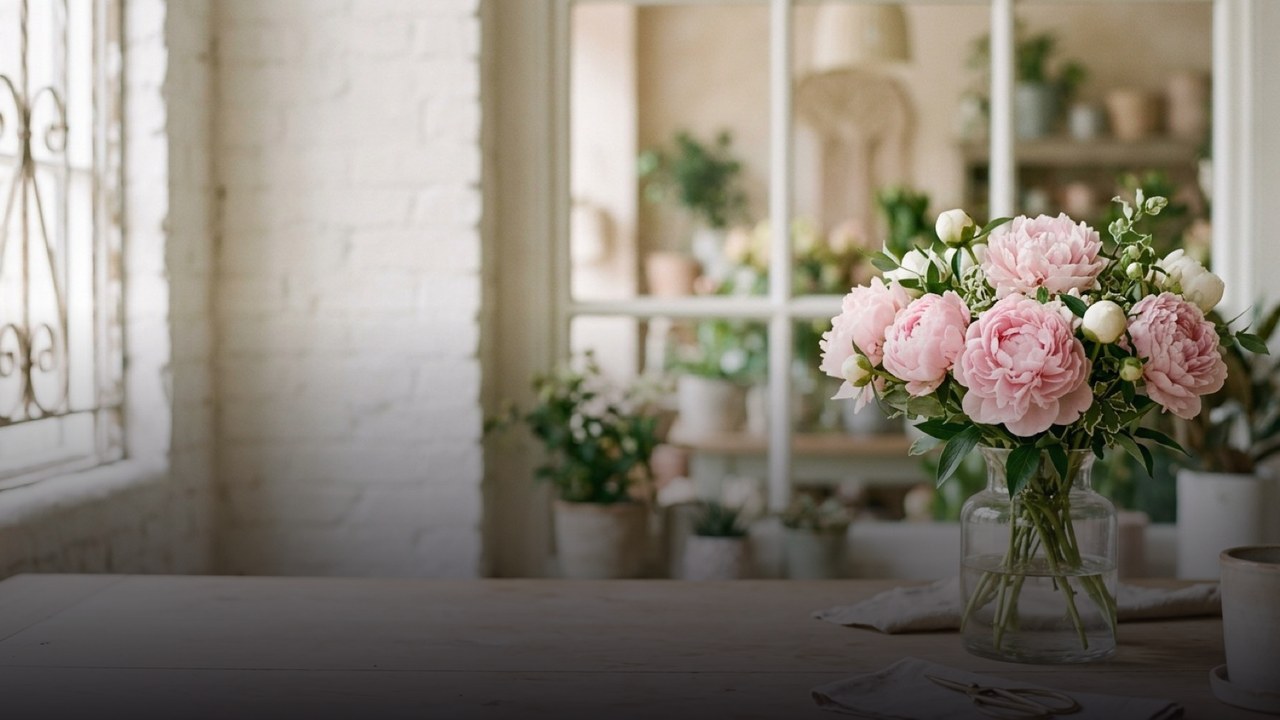
You usually should not put ice in your flower vase: fresh, cool tap water is a better everyday choice for most mixed bouquets. Ice is not a substitute for cleaning the vase, refreshing the water or keeping flowers away from heat. If you have already added a couple of cubes, there is usually no reason to discard the bouquet; simply return to normal vase care.
Customers often ask about ice when a bouquet looks tired or their home feels too warm. At Pyat Tsvetov (5 Flowers), established in Saint Petersburg in 2011, we approach that concern through the whole care routine: the water, the condition of the stems and the place where the vase stands. The useful distinction is between keeping flowers comfortably cool and trying to chill their water as much as possible. Different flowers have different needs, so any care instructions supplied for the particular bouquet should take priority.
Why ice cubes are not a useful daily routine
Ice lowers the water temperature temporarily, but it does not remove the bacteria or plant debris already in a vase. Once the cubes melt, the room continues to warm the water, leaving the original care problems unresolved. Adding more ice can therefore turn into a repeated task with little practical benefit. A clean vase filled with fresh water gives you a more useful starting point than a vase of old water topped up with cubes.
There is also no single reason to make every bouquet's water ice-cold, particularly when it contains several flower varieties. Avoid treating advice for one flower as a rule for all cut stems, and do not borrow ice-cube watering instructions intended for potted plants. Cut flowers in a vase need access to liquid water through their stems. Our guide to ice water for vase flowers explains the distinction between ordinary cool water and deliberately chilling a bouquet.
Choose fresh water and prepare the vase properly
For a typical mixed bouquet, start with fresh, cool tap water rather than water made icy with cubes. Wash the vase with washing-up liquid, rinse it thoroughly and check the inside for slippery residue before filling it. Choose a vessel that holds the stems without packing them so tightly that you cannot inspect the water. If the bouquet comes with specific preparation instructions, follow those instead of applying a general rule to every stem.
Remove leaves that would sit below the waterline, because submerged foliage decays and adds debris to the water. With clean, sharp scissors or secateurs suitable for the stems, trim a small amount from their ends and place them in water promptly. If you have cut-flower food, measure it according to its packet and the volume of water you use; adding extra is not an improvement. For more detail on the starting water, see our practical guide to cold water for flowers.
Bouquets we can deliver




In a warm room, change the position before adding ice
A bouquet beside a radiator or in direct sun will continue to experience that heat even if its vase contains ice. Move it to a cooler part of the room, away from heating appliances, hot windowsills and the warm air around cooking equipment. Bright surroundings are fine, but cut flowers do not need a sunny windowsill to grow. Keep them clear of a strong fan or an air-conditioning outlet that blows directly across the petals.
Check the water level more frequently during warm weather, since the stems must remain in contact with water as the level falls. If the vase water has become warm, replace it with fresh, cool water rather than repeatedly adding cubes. A less exposed position is easier to maintain than a cycle of heating and chilling. Do not assume that a household refrigerator is a suitable alternative: arrangements may be crowded, pressed against food or exposed to conditions unsuitable for some of their flowers.
Help a tired bouquet without relying on an ice bath
If flowers start to droop, first check whether the vase has run low and whether all the cut stem ends actually reach the water. A short stem can sit above the surface even when the vase looks reasonably full. Take the bouquet out carefully, wash the vase and replace the water, removing any foliage that has slipped below the waterline. Recut the stems with a clean, sharp tool and return them promptly to the prepared vase.
Give the flowers time in a cool position, then assess them again rather than adding a succession of household remedies. Some wilting is connected with water uptake, but age, physical damage and the condition of individual stems can also be involved. Neither ice nor fresh water can reliably reverse every cause, and visibly deteriorating flowers may need to be removed from the arrangement. Avoid dunking the whole bouquet in ice water or pouring boiling water over mixed stems without reliable instructions for those particular flowers.
Use a simple inspection routine to keep the water useful
Look at the water level and the condition of the flowers each day, even if the arrangement still looks attractive from a distance. Cloudy water, an unpleasant smell or slippery residue are reasons to clean the vase and refresh its contents immediately. With plain water, replace it regularly rather than letting repeated top-ups become the entire routine. If you use flower food, follow its directions for preparing and renewing the solution, including the correct dilution.
Choose the water depth to suit the stems and vase, keeping foliage out of the water and checking that every cut end is submerged. A wide, shallow vessel can lose useful depth before you notice, while a tall opaque vase can hide a low level. Our guide to how much water to put in a vase helps with that decision. Keep melting ice out of your maintenance calculation: inspect the actual water level instead of assuming the cubes supplied enough.
Sending flowers to Russia: make the handover easy
When sending flowers to someone in Russia, choose a delivery period when they can receive the bouquet and put it in water. We deliver flowers across Russia; in large cities, express delivery is available within 1–2 hours after order confirmation. You can also arrange delivery at an exact time with a margin of ±30 minutes, choose a window of 09–12, 12–15, 15–18 or 18–21, or pre-order 1–30 days ahead. Delivery operates around the clock in Saint Petersburg; city delivery costs 500 RUB, while the operator confirms the price for remote districts and suburbs when confirming the order.
Browse the bouquets catalogue, and add a free card with your message; a short care reminder can simply say to use a clean vase and fresh water. Delivery is anonymous by default, so include your name in the card if you want the recipient to know who sent it. The courier calls the recipient about 15 minutes before arrival, which helps them prepare for the handover. Online checkout uses CloudPayments; check the payment options displayed there rather than assuming every foreign card will be accepted, and call 8 (812) 507-67-05 with questions. We deliver bouquets across Russia in 1–2 hours.
Frequently asked questions
Will one ice cube ruin my flowers?
One ice cube is usually not a reason to worry or throw the flowers away. Check the water level and continue with fresh, cool water and normal vase care.
Should I put ice in a vase of roses?
Ice is not a necessary part of routine care for cut roses. Start with a clean vase, fresh water and trimmed stems, and follow any specific instructions supplied with the bouquet.
Can ice replace changing the vase water?
No, melting ice does not remove debris or clean the vase. Refresh the water and wash the vessel when needed, especially if the water becomes cloudy or smells unpleasant.
Is room-temperature water acceptable for a mixed bouquet?
Fresh water at a comfortable room temperature is generally suitable for many mixed bouquets. Follow any flower-specific instructions, and avoid treating either very hot or icy water as a universal requirement.
What happens if the recipient is out when the flowers arrive?
If the recipient is absent, we agree a second delivery the same day or arrange to hand the flowers to a neighbour or concierge with the sender's consent. The courier calls the recipient about 15 minutes before arrival.
Ready to send a bouquet?
Pick a city, choose the flowers, and we will hand them over with a photo confirmation.
Choose a city →