
What Was the Soviet Union’s National Flower?
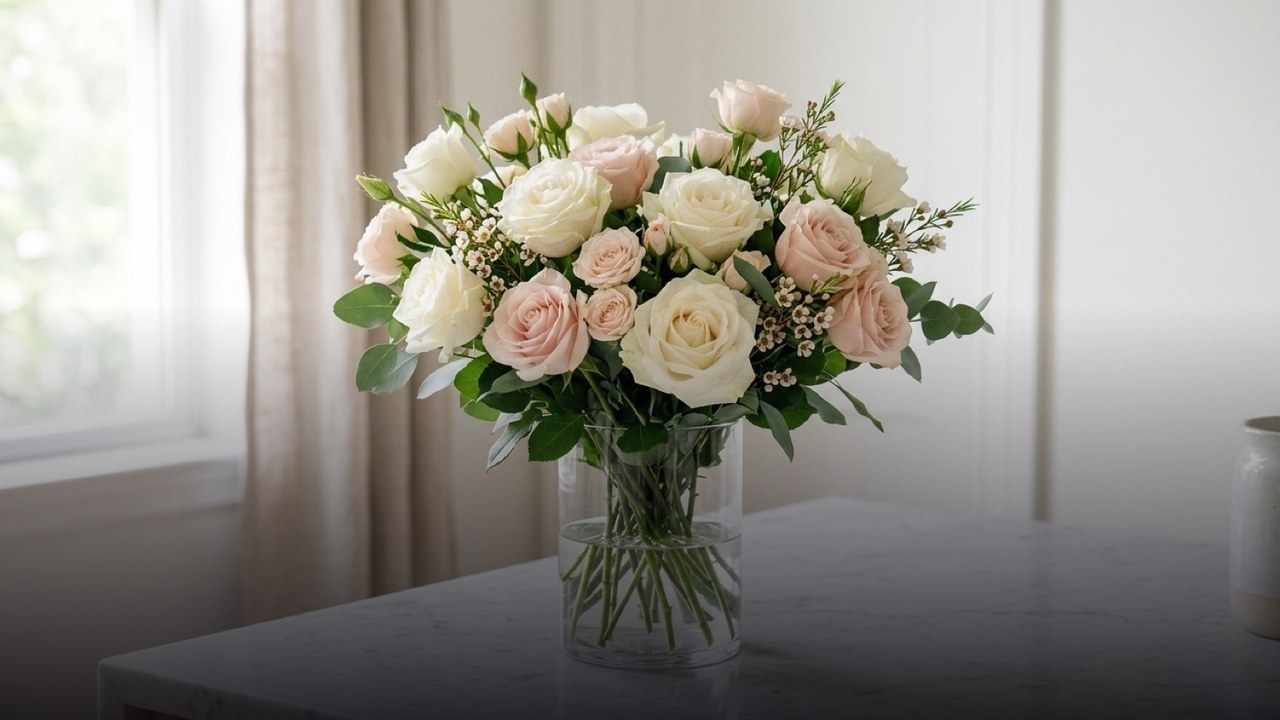
No single flower is generally recognised as the Soviet Union’s official national flower. Red carnations are the closest familiar answer to this search because of their strong associations with Soviet public celebrations, remembrance and revolutionary imagery. That cultural symbolism should not be confused with an official national designation.
At Pyat Tsvetov (5 Flowers), the useful starting point for a bouquet is the occasion and the recipient’s own associations. A red carnation can recall a public ceremony, a family celebration or flowers someone received decades ago; those meanings can overlap. From our Saint Petersburg flower shops, operating since 2011, we approach such requests by considering the colour, arrangement and message together.
Why red carnations became the familiar Soviet symbol
Red carnations appeared prominently in Soviet ceremonial life, including public celebrations and tributes at memorials. Their red colour connected readily with the visual language of revolution and the state, helping explain why English searches often treat them as a national flower. Yet a flower used repeatedly in public life does not automatically acquire official national status. Describe the carnation as a flower strongly associated with the Soviet period, rather than presenting it as a formally designated emblem.
For a personal gift, that distinction changes the choice of arrangement. A compact bunch of red carnations may look deliberately commemorative, while a mixed bouquet containing carnations can feel more like an everyday present. Neither reading is universal, particularly across generations and families. If you want to evoke a happy memory, name that memory in the accompanying card so the recipient understands the intention without having to interpret the flowers alone.
Other flowers that belong in the Soviet picture
The Soviet Union covered many republics, climates and cultural traditions, so one flower cannot represent every household’s experience. Yellow mimosa, familiar in connection with International Women’s Day, offers a different association from the ceremonial red carnation. The florist’s flower commonly called mimosa is usually a flowering acacia, rather than the sensitive plant sold under the botanical name Mimosa. Its small yellow flower clusters make it visually distinct from a bouquet of large, individual blooms.
Gladioli are another familiar part of Soviet and Russian flower memories, especially around the start of the school year. Their tall stems create a formal silhouette, which can suit someone who remembers carrying them to school but may be awkward for a recipient with limited space. Choose the memory you mean to recall before choosing the flower. Our guide to Soviet flowers and their meanings explores carnations, mimosa and gladioli in more detail.
Bouquets we can deliver




Choose the message before choosing the colour
For a birthday or a warm family greeting, the recipient’s preferences deserve more weight than a historical association. Red carnations may be welcome to someone who loves them, but they are less clear as a cheerful surprise when you know little about the person. Pink or pale carnations can suggest a gentler mood, although colour meanings are not fixed rules. Consider a mixed palette if you want carnations for their shape and texture without making the bouquet an obvious historical reference.
For remembrance, keep the wording direct and respectful, and follow the family’s customs where you know them. In Russia, an odd number of flowers is customary for a gift, while an even number is traditionally associated with mourning; this matters most in bouquets of clearly countable stems. A large mixed arrangement is less immediately read by counting, but it still needs an appropriate overall tone. Avoid assuming that a Soviet association tells you anything definite about the recipient’s political views.
Help carnations and seasonal flowers last at home
For cut carnations, start with a clean vase and remove any leaves that would sit below the waterline. Recut the stem ends with a clean, sharp tool before placing them in water, and use cut-flower food according to its instructions if you have it. Check the water daily, replenish it as needed and replace it when it becomes cloudy. Keep the bouquet away from direct sunlight, radiators and ripening fruit, which can shorten the useful life of cut flowers.
Mimosa needs attention because its delicate yellow clusters can dry out and lose their soft appearance. Put cut stems into a clean vase promptly, keep foliage out of the water and avoid positioning the arrangement beside a heater. With gladioli, use a stable vase that supports the tall stems, and remove individual faded florets carefully as the display develops. Vase life varies with the flowers’ condition and the room, so a fixed promise of how many days they will last would be misleading.
Send flowers to Russia with a clear personal brief
When ordering from abroad, begin with the recipient’s city, delivery address, phone number and the occasion. Then decide whether the bouquet should recall a particular flower or simply convey affection, thanks or remembrance. Browse the bouquets catalogue for a suitable arrangement, and use the card text to explain a personal reference. A card with your text is free; write names as the recipient knows them, especially if you usually speak together in a language other than English.
We deliver flowers across Russia, and city delivery costs 500 RUB. For remote districts and suburbs, the operator confirms the delivery price when confirming the order. Online checkout uses CloudPayments; check the payment options displayed there, since acceptance of every foreign card cannot be guaranteed. The delivery and payment information covers the practical details, and questions can be discussed by phone on 8 (812) 507-67-05.
Plan the timing and make the handover straightforward
In large cities, express delivery is available in 1–2 hours after the order is confirmed. You can also choose delivery at an exact time with a tolerance of 30 minutes either side, or a window of 09–12, 12–15, 15–18 or 18–21. Orders can be placed 1–30 days ahead, which helps when arranging a birthday or anniversary from another time zone. Delivery around the clock is available in Saint Petersburg; use the recipient’s local time when planning the handover.
Delivery is anonymous by default: the courier does not name the sender, so sign the card if you want the recipient to recognise the gift. The courier calls the recipient about 15 minutes before arrival, which means the delivery may involve a short advance conversation even when the bouquet is a surprise. If the recipient is absent, we agree a second delivery that day or, with the sender’s consent, a handover to a neighbour or concierge. Provide a reachable recipient number and choose a time when they are likely to be available.
Frequently asked questions
Did the Soviet Union have an official national flower?
No single flower is generally recognised as its official national flower. Red carnations are strongly associated with Soviet ceremonies and imagery, which explains why they are often given as the answer.
Were red carnations only used for funerals?
No, they also appeared in public celebrations and personal gifts. Their meaning depends on the occasion, presentation and recipient’s associations; in Russia, even numbers of clearly countable flowers are traditionally linked with mourning.
Is mimosa another name for the Soviet national flower?
Mimosa is associated with International Women’s Day, rather than an official Soviet national-flower designation. The yellow stems commonly sold under that name are usually flowering acacia.
Can I send a bouquet to Russia while living abroad?
Yes, we deliver flowers across Russia, with online payment through CloudPayments. Check the options displayed at checkout, because acceptance of every foreign card is not guaranteed.
Will the recipient know who sent the flowers?
The courier does not name the sender because delivery is anonymous by default. A card with your text is free, so include your name if you want the recipient to know the gift is from you.
Ready to send a bouquet?
Pick a city, choose the flowers, and we will hand them over with a photo confirmation.
Choose a city →