
What to Do When Vase Water Freezes Around Cut Flower Stems
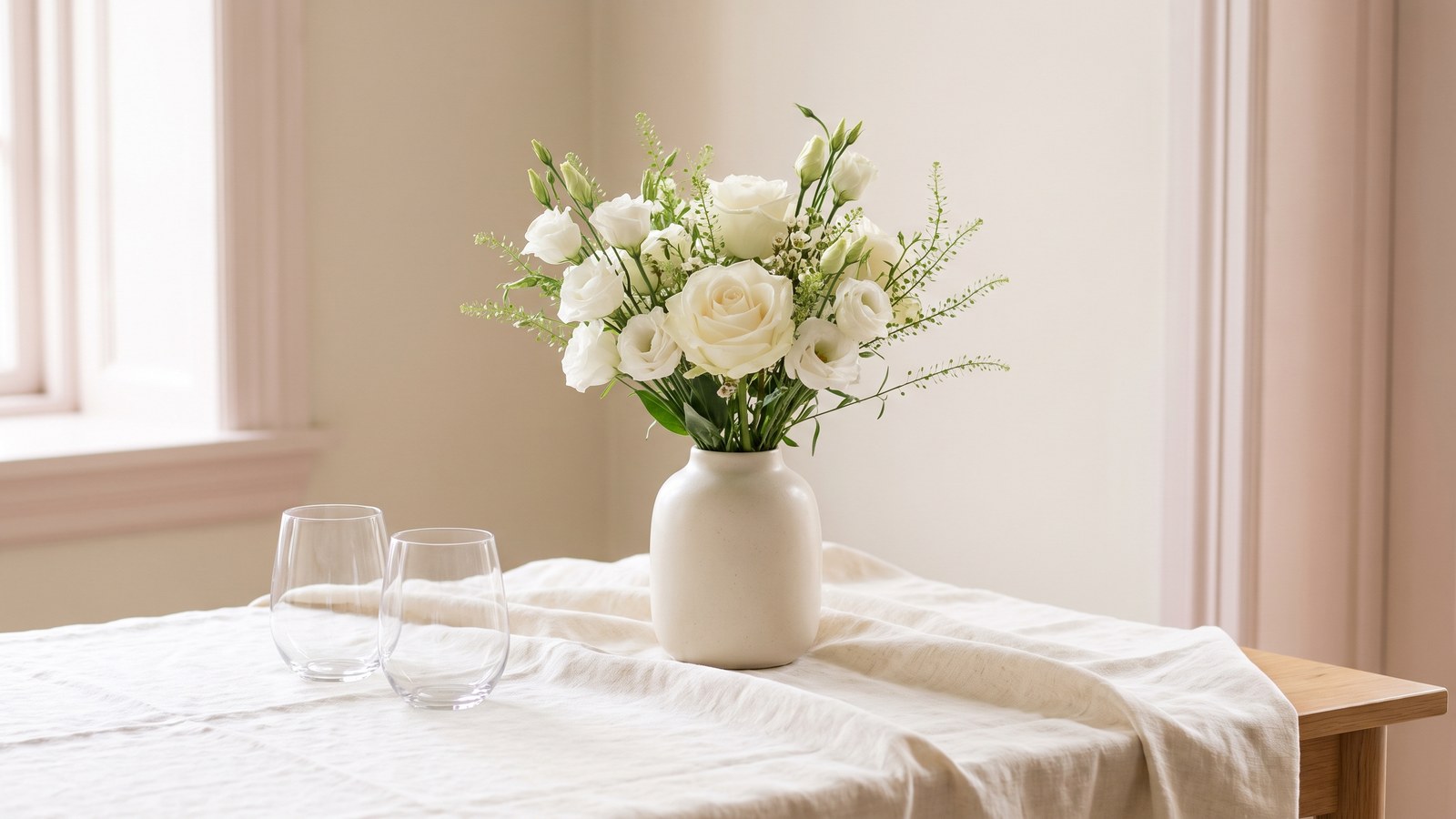
If vase water freezes around cut flower stems, move the arrangement away from the cold and let the ice melt gradually in a cool indoor spot, away from radiators and direct sunlight. Do not pull the stems free, break the ice around them or pour hot water into the vase. Once the ice has melted, check the container and stems, then place any sound flowers in a clean vase with fresh water.
Customers sometimes ask us whether a bouquet left beside a cold window can recover once its water has frozen. At Pyat Tsvetov (5 Flowers), our starting point is to distinguish trapped stems from visibly damaged plant tissue: ice in the vase does not tell you exactly what has happened to every flower. Some stems may remain usable, while others become soft or collapse after thawing. The practical aim is to release the bouquet without adding damage, then judge each stem by its condition.
Let the ice melt without forcing the stems
Set the vase somewhere stable, out of draughts, with a waterproof tray beneath it if you can move it safely. Frozen water can damage a container, and a crack may become apparent only as the ice melts. Keep the arrangement upright and allow space around the flower heads so they are not pressed against a wall or curtain. If the vase is cracked or unstable, avoid carrying it through the house; contain possible leaks where it stands.
Leave the ice to melt naturally rather than using a radiator, hairdryer, hot tap or warm-water bath. Sudden temperature changes can also be a problem for glass, so trying to speed things up may put both the vase and bouquet at risk. Do not twist individual stems to test whether they are loose, because part of a stem may still be held inside the ice. Wait until the water is liquid and the stems lift out without resistance; there is no useful fixed thawing time for every vase.
Check the vase before sorting the bouquet
Once the stems are free, support the bouquet as you lift it out and inspect the container for cracks, chips or leaks. Use another vase if there is any doubt about its condition, and handle damaged glass carefully. Empty the thawed water rather than treating it as a fresh supply for the flowers. Wash an intact vase thoroughly, rinse away cleaning residue and refill it with fresh water before returning any stems.
Choose a container that supports the remaining flowers without squeezing them together. If several stems have to be shortened, a smaller vase may hold them more securely than the original tall one. Remove leaves that would sit below the new waterline, and keep loose petals and other debris out of the water. Our vase cleaning and water-change guide covers the routine care to follow once the arrangement has been assessed.
Bouquets we can deliver




Assess damage after the flowers have thawed
Make your main assessment after thawing, because a frozen stem can feel rigid even when its tissue has been damaged. Look for areas that become translucent, dark, unusually soft or unable to support the flower head. Leaves or petals may look water-soaked, while a stem may develop a weak section that bends under the bloom. These signs help you decide what to remove, but they do not establish a precise temperature or length of exposure.
Compare the lower stem, upper stem and flower head separately instead of discarding the whole bouquet at once. A firm flower with damage confined to the bottom of its stem may still be worth keeping, provided enough sound stem remains for a shorter arrangement. A bloom that has become mushy or a stem that collapses through its middle is a poorer candidate. Avoid rubbing petals, squeezing stems repeatedly or opening buds by hand to inspect them, as handling can add bruising.
Recut sound stems and rebuild a smaller arrangement
For stems that remain firm, use a clean, sharp cutting tool to make a fresh cut above any visibly damaged lower section. Check the cut area as you work: if the remaining stem is still soft or crushed, shortening it slightly may not solve the problem. Return a usable stem to fresh water promptly, with its cut end submerged and its leaves above the waterline. Follow our guide to cutting flower stems for a vase for the basic technique.
Let the sound material determine the new arrangement rather than trying to preserve its original height and shape. A few shorter stems in a small vase can be easier to support and inspect than a full bouquet containing weak sections. Remove damaged foliage and spent flowers carefully, retaining healthy leaves where practical. Do not bind a softened stem tightly to keep it upright; a support can change its position, but it cannot restore damaged tissue.
Watch the survivors and prevent another freeze
Keep the salvaged flowers in a cool room, away from direct heat, strong sunlight and the cold spot where the vase froze. Recheck them later that day and the following day, since some damage becomes clearer after the initial thaw. Remove stems that turn soft or begin to decay, and refresh the water if it becomes cloudy or contains debris. Flowers that stay firm may remain presentable, but their remaining vase life cannot be predicted from appearance alone.
Reconsider the vase's position, particularly if it stood against window glass, beside an exterior door or in an unheated porch. A room can feel comfortable while the immediate area beside a cold surface is much colder. Move the display farther into the room before another cold night, and keep petals and leaves from touching the window. For ongoing care, use our guide to water temperature for fresh-cut flowers; hot water is not a general remedy for freezing damage.
Arrange a fresh gift to Russia when the bouquet cannot be saved
If the flowers were a gift, a brief, practical message is enough: explain that the vase water froze and that you are checking which stems can be kept. Avoid promising the recipient that every bloom will recover, especially before the bouquet has thawed. If you decide to send fresh flowers, Pyat Tsvetov delivers across Russia, and you can choose an arrangement from our bouquets catalogue. We have been serving customers since 2011 and have three of our own flower shops in Saint Petersburg.
For someone ordering from abroad, choose a delivery period when the recipient can receive the flowers and bring them indoors. Express delivery in large cities is available 1–2 hours after order confirmation; other options include an exact time within ±30 minutes, the 09–12, 12–15, 15–18 or 18–21 windows, and pre-orders 1–30 days ahead. City delivery costs 500 RUB, while the operator confirms the price for remote districts and suburbs when confirming the order. Delivery in Saint Petersburg is available around the clock.
The courier calls the recipient about 15 minutes before arrival, so provide contact details that will help them connect. Delivery is anonymous by default, and a card with your text is free; add your name to the message if you want the recipient to know who sent it. Online checkout uses CloudPayments, and customers abroad should check the payment options displayed there rather than assume a particular foreign card will be accepted. For questions about an order, call 8 (812) 507-67-05. Check our delivery information; confirm the timing for your order.
Frequently asked questions
Can cut flowers survive if their vase water freezes?
Some flowers may remain usable, but frozen vase water alone does not reveal the extent of damage. Let the ice melt, then assess whether the stems and flower heads remain firm.
Should I pour warm water over ice around the stems?
Let the ice melt gradually instead of pouring warm or hot water into the frozen vase. Avoid sudden heating, and wait until the stems release without pulling.
How long should I wait before deciding the flowers are ruined?
Assess them once fully thawed, then check the retained stems later that day and the following day. Remove flowers that become mushy or collapse, since fresh water cannot restore visibly damaged tissue.
Can I cut off the frozen part of a flower stem?
After thawing, you can remove a damaged lower section if enough firm stem remains above it. Use a clean, sharp tool and a shorter vase, then monitor the flower for further deterioration.
Will flower food repair freezing damage?
Flower food cannot repair tissue damaged by freezing. If you have a cut-flower food sachet, use it according to its instructions for the flowers you keep, alongside a clean vase and fresh water.
Ready to send a bouquet?
Pick a city, choose the flowers, and we will hand them over with a photo confirmation.
Choose a city →