
Chrysanthemums in Russia: Year-Round Choice Explained
Customers call us and ask whether chrysanthemums are 'in season' before ordering, and the honest answer is that they almost always are. Unlike peonies or tulips, which have hard seasonal windows of eight to twelve weeks, chrysanthemums arrive at Saint Petersburg wholesale markets every week of the year from domestic greenhouses in the Leningrad, Moscow and Krasnodar regions, supplemented by imports from the Netherlands and Colombia. That consistency makes them one of the most practical choices for a gift bouquet, a table arrangement or a corporate order — but it does not mean every variety is always available at the same price or the same stem length. What follows is a florist's breakdown of what you will actually find, what it costs across different tiers, and how long it will last on the recipient's table.
Why Chrysanthemums Stay Available Across All Twelve Months
The core reason chrysanthemums do not disappear from Russian flower shops in winter is that they are a photoperiod plant: growers can manipulate day length artificially inside greenhouses to trigger flowering on demand. Large domestic producers in the Leningrad Oblast run year-round cutting schedules, harvesting in rotation so that supply to Saint Petersburg is never interrupted even in January and February when outdoor growing is impossible. Dutch auction houses also ship weekly to Russia, and their own greenhouse calendars are staggered to fill any gap domestic growers leave. The practical result for a customer is that when you order on a Tuesday in November, the stems arriving at our cold storage that morning were likely cut two to four days earlier, which is well within the safe transit window for chrysanthemums. Cold chain matters here: chrysanthemums travel best between two and five degrees Celsius, and reputable suppliers maintain that temperature from the cutting facility to the delivery van. What does shift month to month is the mix of varieties on offer and the wholesale price, which feeds into retail. Summer months bring a wider range of novelty spray types and bi-colour pompons because domestic outdoor plots contribute to supply. January and February narrow the selection slightly and push prices upward by roughly fifteen to twenty percent compared to the autumn peak, when Russian-grown field chrysanthemums flood the market from September through November and represent the best value of the year.
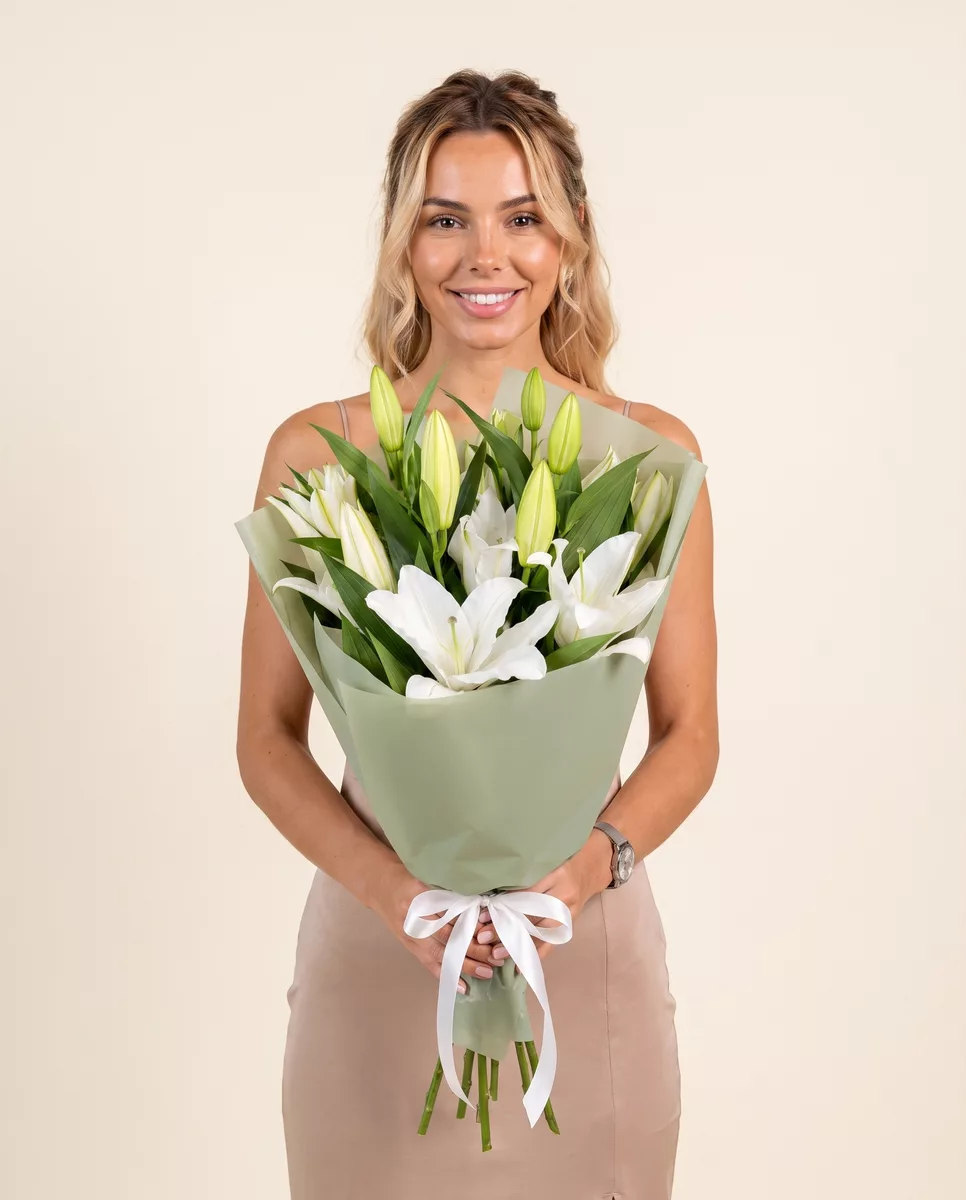
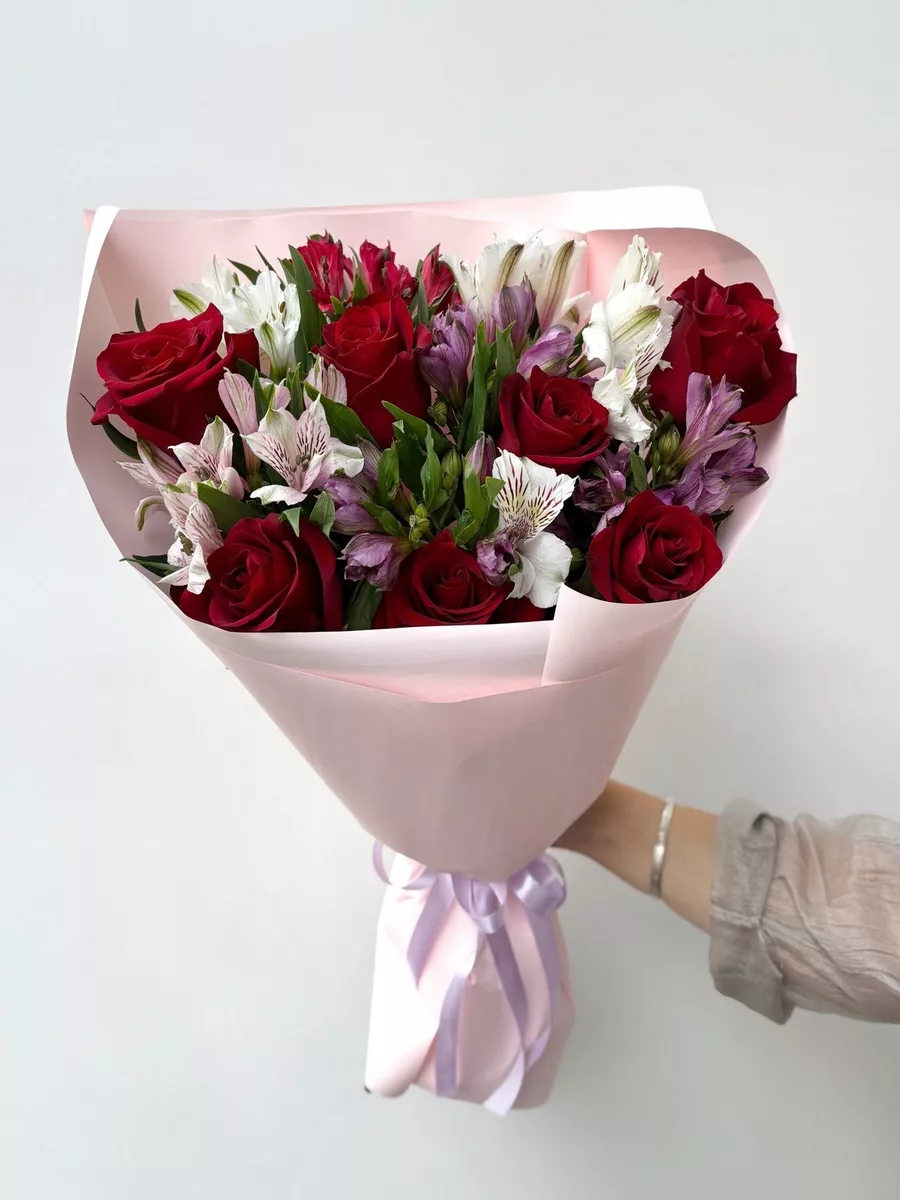
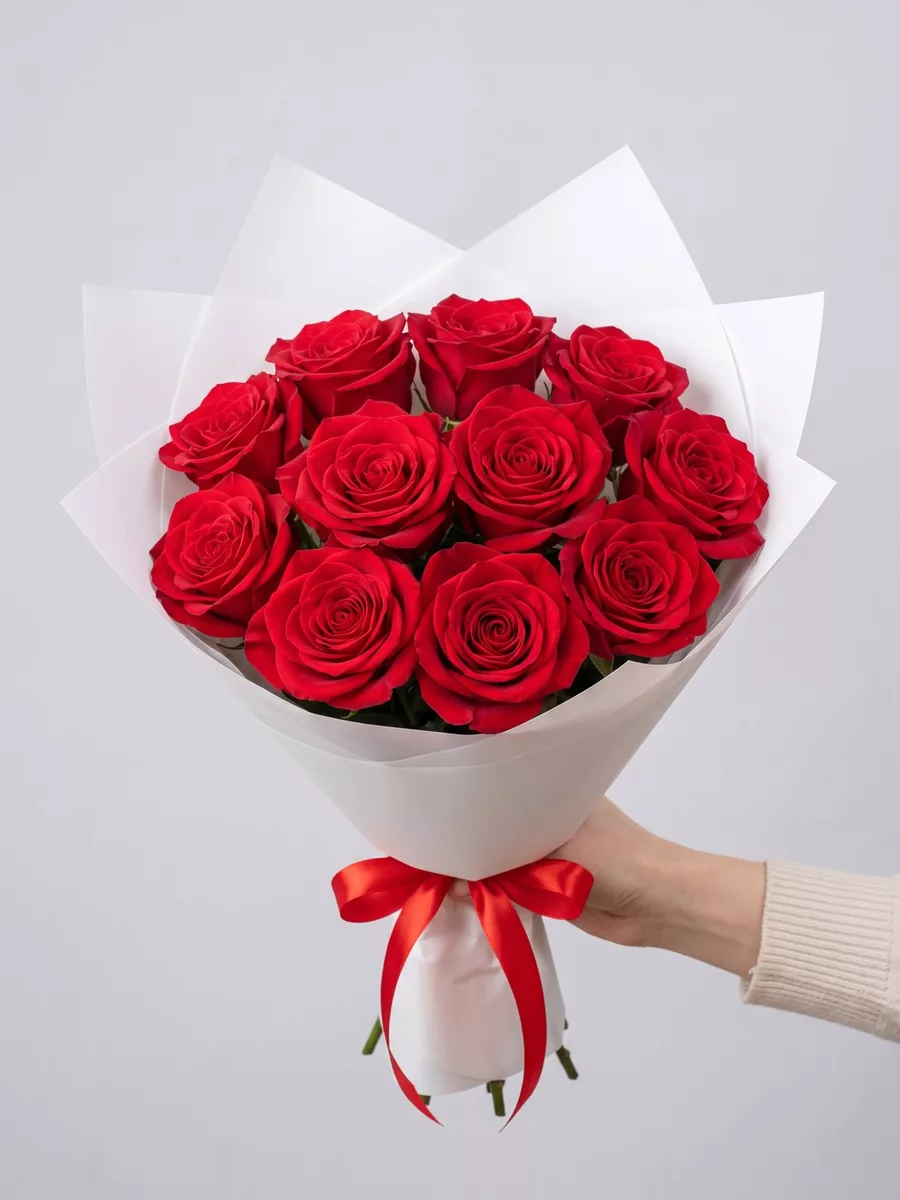
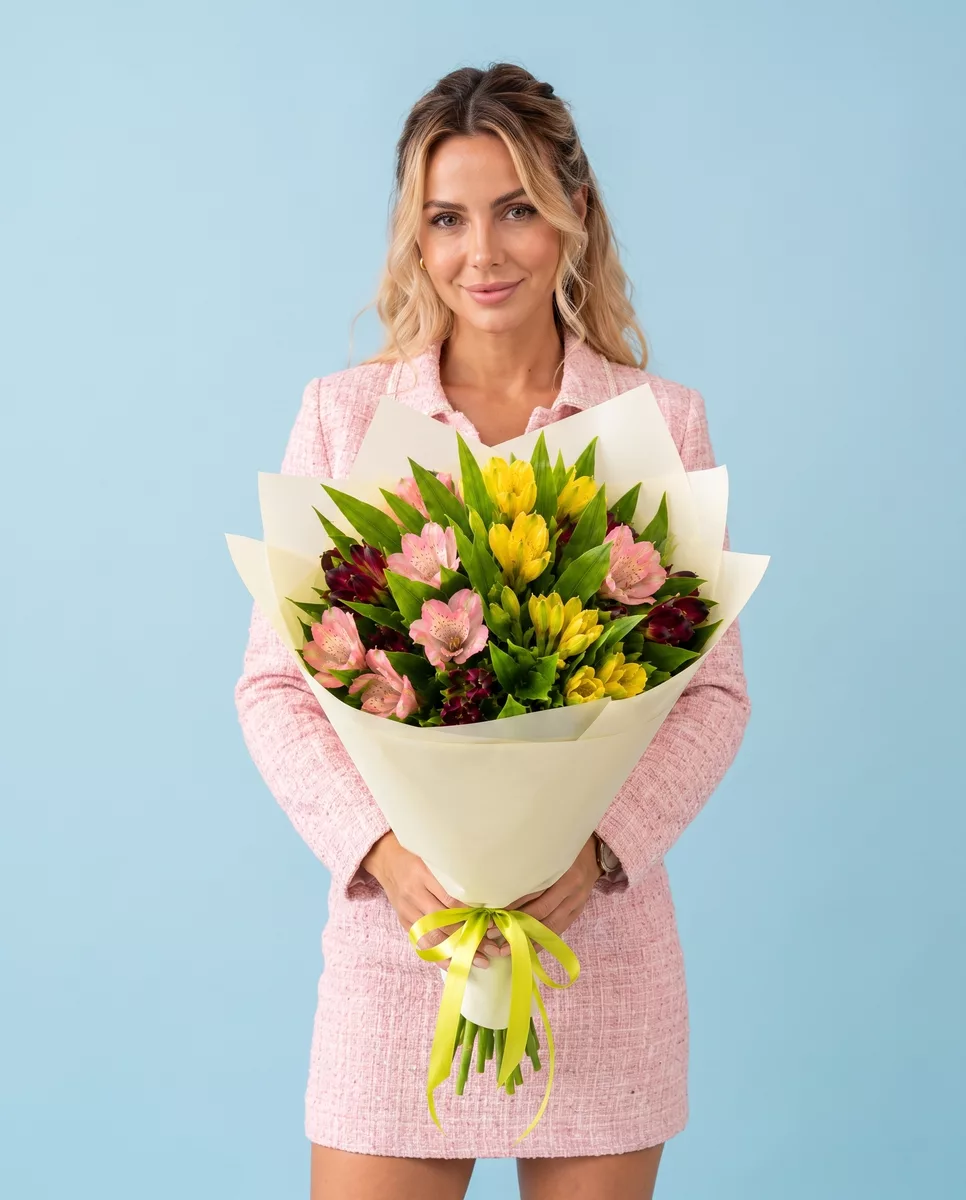
Bouquets we can deliver
Single-Stem Versus Spray: Choosing the Right Form for Your Bouquet
The first thing a florist asks when a customer wants chrysanthemums is whether they picture one large bloom per stem or a branching cluster of smaller flowers. These are two structurally different products with different uses. Single-stem chrysanthemums, often called disbud or standard types, have one large terminal flower per stem, typically eight to fourteen centimetres in diameter. Varieties like Anastasia, Reagan and Zembla are the names you will hear most often in Russian wholesale. Anastasia is a spider type with long, curved petals that give a loose, almost wild look; Reagan is a classic rounded bloom available in white, yellow, bronze and pink; Zembla is a dense, fully double white that photographs very cleanly. These single-stem varieties work well as focal flowers in structured bouquets and in arrangements where you want a clear visual anchor. Spray chrysanthemums carry multiple smaller blooms on branching lateral stems, usually five to ten flowers per stem. Santini is the most compact spray type, with button-sized blooms two to four centimetres across, and it comes in yellow, green, white and bicolour. Fuego is a larger spray with semi-double flowers in orange and red tones. Spray types give volume and fill space efficiently, which is why florists use them to build out mid-range bouquets without adding bulk cost. A common customer mistake is ordering a bouquet described as 'chrysanthemum' and expecting large single blooms, then receiving sprays — always specify which form you want when placing an order.
Colour Range and What Is Realistically in Stock on Any Given Day
Chrysanthemums cover a wider natural colour range than most flowers available year-round in Russia. White, yellow and bronze are the backbone of supply and are almost never out of stock at a working shop. Pink shades, from pale blush to deep cerise, are consistently available in Reagan and in several spray varieties. Green chrysanthemums, particularly the Kermit spray type, have grown significantly in popularity over the past five years and are now a standard item rather than a special order. Purple and lavender tones exist in varieties such as Feeling Purple and Purple Reagan, but availability is less predictable and they often carry a small premium. Red is present mainly in spray types like Fuego and in some standard varieties imported from the Netherlands, but true deep red single-stem chrysanthemums are not as common in Russia as red roses, so if red is the specific requirement, confirm stock before placing the order. Bi-colour varieties with contrasting petal tips or centres appear seasonally and depend heavily on what the Dutch auction is shipping that week. A practical approach when ordering for a specific occasion is to name two or three acceptable colours rather than one, which gives the florist room to build a better-quality bouquet from what is actually fresh in the cooler that morning. Chrysanthemums dyed with floral ink in blue or electric turquoise are available but are a processed product, not a natural variety — the dye affects vase life and we generally do not recommend them for gifts where longevity matters.
Price Tiers: What Moves the Cost Up or Down
Chrysanthemums sit across a wide price range depending on three variables: variety, stem length and origin. Domestic spray chrysanthemums in standard colours are the most affordable option and form the base tier. Dutch single-stem varieties in large sizes, particularly stems over seventy centimetres with heads above twelve centimetres, sit at the top of the range. The middle tier covers most Reagan and Anastasia types at standard lengths of fifty to sixty centimetres, which is what the majority of gift bouquets use. Seasonality shifts these tiers: the autumn field harvest from September through November pushes domestic chrysanthemum prices to their annual low, making this the best time to order large-volume arrangements for events or corporate deliveries. January and February are the most expensive months because everything comes from heated greenhouses or long-haul imports, and energy and freight costs are reflected in wholesale pricing. Stem count is the clearest driver of total bouquet cost. A bouquet of eleven single-stem Reagan chrysanthemums costs noticeably more than a bouquet of the same visual size built with spray stems, because spray stems provide multiple blooms per unit. Customers sometimes ask why a chrysanthemum bouquet costs more than they expected — usually it is because they asked for large-headed single stems in a non-standard colour during winter. If budget is a constraint, asking for spray types in white or yellow during autumn gives the most flower per rouble. We price bouquets on the site by stem count and variety tier so customers can compare directly without guessing.
Vase Life: What to Expect and What Ruins It Early
A properly conditioned chrysanthemum cut and delivered fresh will last ten to fourteen days in a vase under normal indoor conditions, which makes it one of the longest-lasting cut flowers available in Russia. That number assumes the stems were harvested at the right stage, held at correct temperature through the chain, and that the recipient follows basic care. The biggest killer of chrysanthemum vase life is warm, stagnant water. The stems should be cut at an angle with a clean knife or sharp scissors, placed in cool water, and the water should be changed every two days. Leaves below the waterline must be removed immediately — they rot quickly and contaminate the water with bacteria that block the stem's vascular tissue. Direct sunlight and proximity to fruit are the two environmental factors that shorten life fastest. Ethylene gas emitted by ripening fruit, particularly apples and bananas, accelerates petal ageing in chrysanthemums noticeably. A windowsill above a fruit bowl is the worst placement a customer can choose. Room temperature matters: at eighteen to twenty degrees Celsius, a vase life of twelve days is realistic; at twenty-five degrees or above, that drops to seven or eight. Florists sometimes add a small sachet of flower food to the delivery, which contains a biocide and a sugar source — using it correctly adds two to three days. One common mistake we see is customers placing chrysanthemums in a very deep vase with warm tap water straight from the tap, which introduces both heat and chlorine. Let tap water stand for thirty minutes before filling the vase, or use filtered water at room temperature.
Chrysanthemums as Gifts in Russia: Context a Non-Russian Buyer Should Know
Chrysanthemums carry different cultural associations in different countries, and customers ordering for recipients in Russia sometimes arrive with assumptions from their home market. In several Western European countries and in Japan, chrysanthemums are strongly associated with memorial and cemetery use, which makes some buyers hesitant. In Russia, that association is much weaker and less universal. Chrysanthemums are a mainstream gift flower sold in supermarkets, flower kiosks and florists' shops for birthdays, anniversaries, teacher appreciation days and ordinary visits. They are particularly popular for the first of September, when children bring flowers to teachers at the start of the school year, and for Women's Day on the eighth of March. The autumn field harvest aligns perfectly with the September school season, which is one reason large pompom chrysanthemums became a symbol of that occasion in Russian collective memory. If you are sending flowers to a Russian recipient and you are uncertain whether chrysanthemums are appropriate, the safe answer is yes for most celebratory occasions. The only context where extra thought is warranted is a hospital visit, and that is less about chrysanthemums specifically and more about Russian hospital etiquette around flowers in general — some facilities restrict cut flowers in wards for hygiene reasons, so it is worth checking the hospital's policy before ordering delivery to a ward address. For home delivery to someone recovering, chrysanthemums are a practical choice precisely because of their long vase life: a recipient who cannot immediately tend to flowers benefits from a stem that tolerates some neglect.
What to Check When Ordering Chrysanthemums for Delivery
Several specific details make the difference between a bouquet that arrives in good condition and one that disappoints. First, confirm whether you want single-stem or spray type and name a variety if you have a preference — Reagan, Anastasia, Santini and Zembla are all names a florist will recognise immediately. If you leave the choice entirely open, you will receive whatever is freshest that day, which is not necessarily wrong, but it may not match your expectation. Second, specify stem count rather than bouquet size descriptions like 'medium' or 'large', which mean different things to different people. Eleven stems is a concrete instruction; 'medium' is not. Third, if the delivery address is an office building or apartment block with restricted access, note that in the order comments — chrysanthemums in a box or sleeve tolerate a thirty-minute wait in a cool corridor, but a warm lobby in summer will start wilting the outer petals within an hour. Fourth, for same-day delivery, place the order before noon when possible. Chrysanthemums are conditioned and arranged in the morning from the fresh wholesale delivery, and afternoon orders draw on the same stock, which may have a narrower colour selection by then. Fifth, if the recipient has a known allergy to the Asteraceae plant family, choose a different flower — chrysanthemums are members of that family and can trigger reactions in sensitive individuals. Pollen exposure is lower with fully double varieties like Zembla than with open-centred types, but the foliage itself can also cause contact sensitivity. Mentioning this to the florist when ordering allows them to suggest an alternative if needed.
Chrysanthemums earn their place as a year-round option in Russia not through marketing but through genuine supply reliability, a colour range that covers almost every brief, and a vase life that consistently outperforms most alternatives at the same price point. The practical knowledge a buyer needs is straightforward: name the form you want, pick a realistic colour, order with enough lead time for same-day delivery, and pass on the basic care instructions to the recipient. The flower does the rest. We deliver bouquets across Russia in 1–2 hours.
Frequently asked questions
Are chrysanthemums available for delivery in Russia in January and February?
Yes. Domestic greenhouse producers in the Leningrad and Moscow regions supply chrysanthemums throughout winter. Selection narrows slightly compared to autumn, and prices are around fifteen to twenty percent higher due to heating and freight costs, but white, yellow and standard pink varieties are available every week of the year without exception.
How long will chrysanthemums last after delivery?
Fresh chrysanthemums delivered in good condition last ten to fourteen days in a vase at normal room temperature of eighteen to twenty degrees Celsius. Change the water every two days, recut the stems at an angle, remove submerged leaves, and keep the vase away from fruit bowls and direct sunlight. Warmer rooms shorten vase life noticeably.
What is the difference between Reagan and Anastasia chrysanthemums?
Reagan is a classic rounded single-stem bloom with dense petals, available in white, yellow, bronze and pink, and gives a neat, structured look. Anastasia is a spider type with long, curved, loosely arranged petals that create a more open, textural appearance. Both are single-stem disbud varieties, but they suit different bouquet styles.
Is it appropriate to send chrysanthemums as a gift in Russia?
Yes, for most occasions including birthdays, anniversaries and the first of September school season. The cemetery association common in some Western European countries is much weaker in Russia. Chrysanthemums are sold in mainstream retail for everyday gifting and are among the most recognised celebratory flowers in the country.
Why does a chrysanthemum bouquet sometimes cost more than expected?
Price depends on variety, stem length and season. Large single-stem disbud types like Anastasia in non-standard colours cost more than domestic spray varieties. Winter orders carry a greenhouse premium. Specifying spray types in white or yellow during autumn gives the best value — more visual volume per stem at the lowest point in the annual price cycle.
Ready to send a bouquet?
Pick a city, choose the flowers, and we will hand them over with a photo confirmation.
Choose a city →